 Rigworthy
The Best Anti-Fatigue Mats for Standing Desks in 2026
By Rigworthy Editorial Team · Updated July 30, 2026
Rigworthy is reader-supported: we may earn a commission if you buy through our links, at no cost to you. How we make money
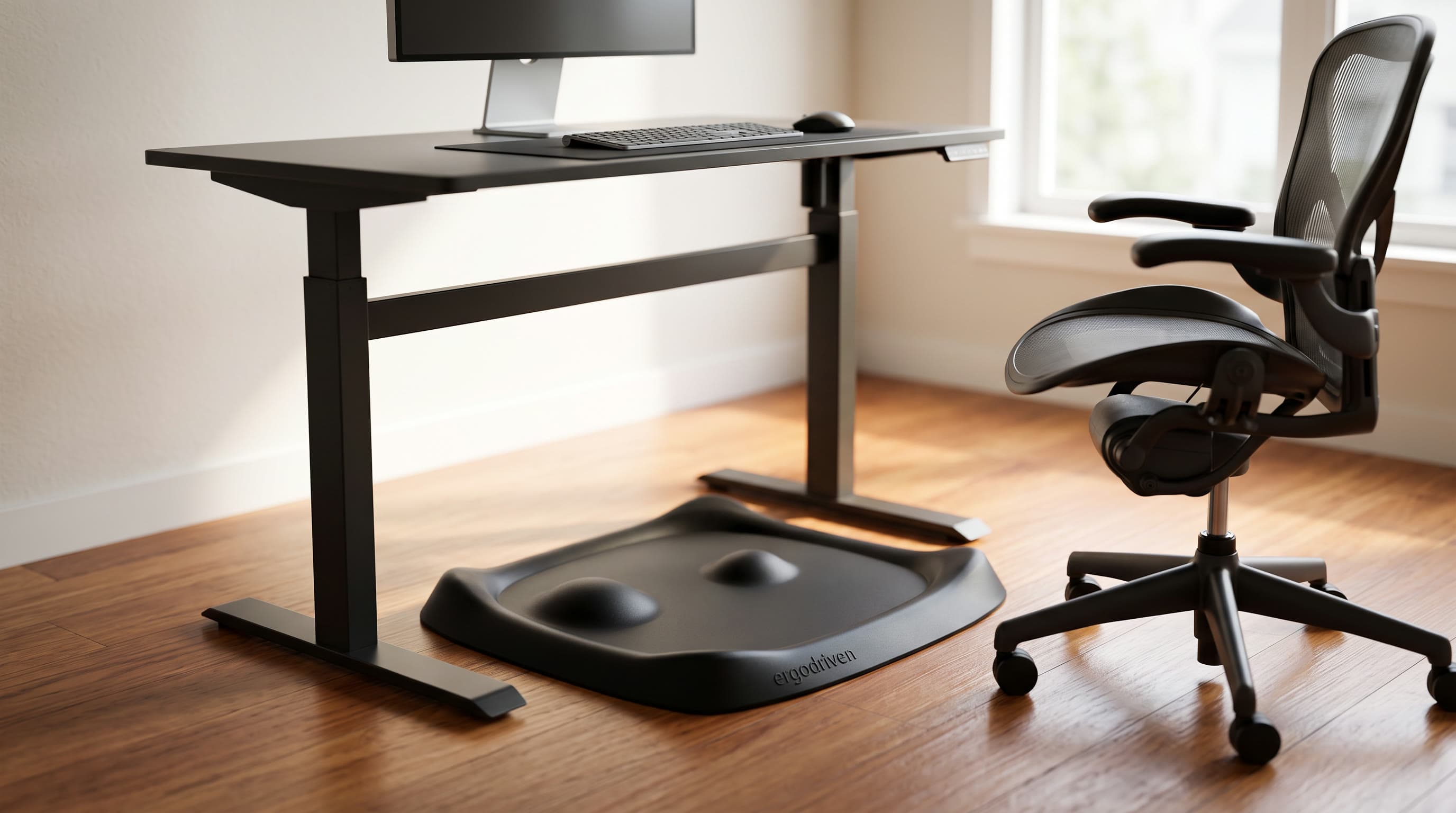
A standing desk fixes the wrong problem if you stop there. Trading a chair for a hard floor doesn't erase the strain of a long day — it just relocates it, from your lower back to your heels, calves, and the balls of your feet. Within a week or two most people quietly stop raising the desk, and the expensive frame becomes a very sturdy sitting desk. An anti-fatigue mat is the cheap, unglamorous fix that makes standing something you'll actually keep doing.
The catch is that "anti-fatigue mat" covers two genuinely different tools. One camp is flat and cushioned — thick foam or polyurethane that softens a static stance. The other is contoured 'terrain' that deliberately keeps your feet moving, because standing dead-still on even the softest surface still cuts circulation. We picked the standout in each style and at each price, and were clear about which kind of stander each one suits.
Our top picks at a glance
- 1
- 2
- 3
- 4
- 5
- 6
How we chose
- Real support underfoot — thickness and foam density that hold up over a full day
- Whether the surface encourages movement or just cushions a static stance
- Beveled, no-curl edges that won't become a trip hazard on the raise
- Non-slip backing that stays put on hardwood, tile, and low-pile carpet
- Honest value: where a $30 foam mat is enough, and where the premium build earns it
Our picks come from spec research, long-term owner feedback, and category expertise — not sponsorships. Read the full methodology.
Compared side by side
| Product | Award | Surface | Thickness | Typical price |
|---|---|---|---|---|
| Ergodriven Topo | Best Overall | Active terrain | Up to 2.7 in | ~$99 |
| ComfiLife Anti-Fatigue Mat | Best Value | Flat memory foam | 3/4 in | ~$30 |
| Imprint CumulusPRO Commercial | Best Cushioned | Flat, plush PU | 3/4 in | ~$75 |
| WellnessMats Original | Best Premium | Sealed firm PU | 3/4 in | ~$150 |
| Ergodriven Topo Mini | Best for Small Desks | Active terrain | Up to 2.5 in | ~$79 |
| Gorilla Grip Anti-Fatigue Mat | Best for Hard Use | Textured foam | 3/4 in | ~$40 |
1. Best Overall
Ergodriven Topo
Typically around $99
- All-day standing
- Fidgeters
- Reducing static fatigue
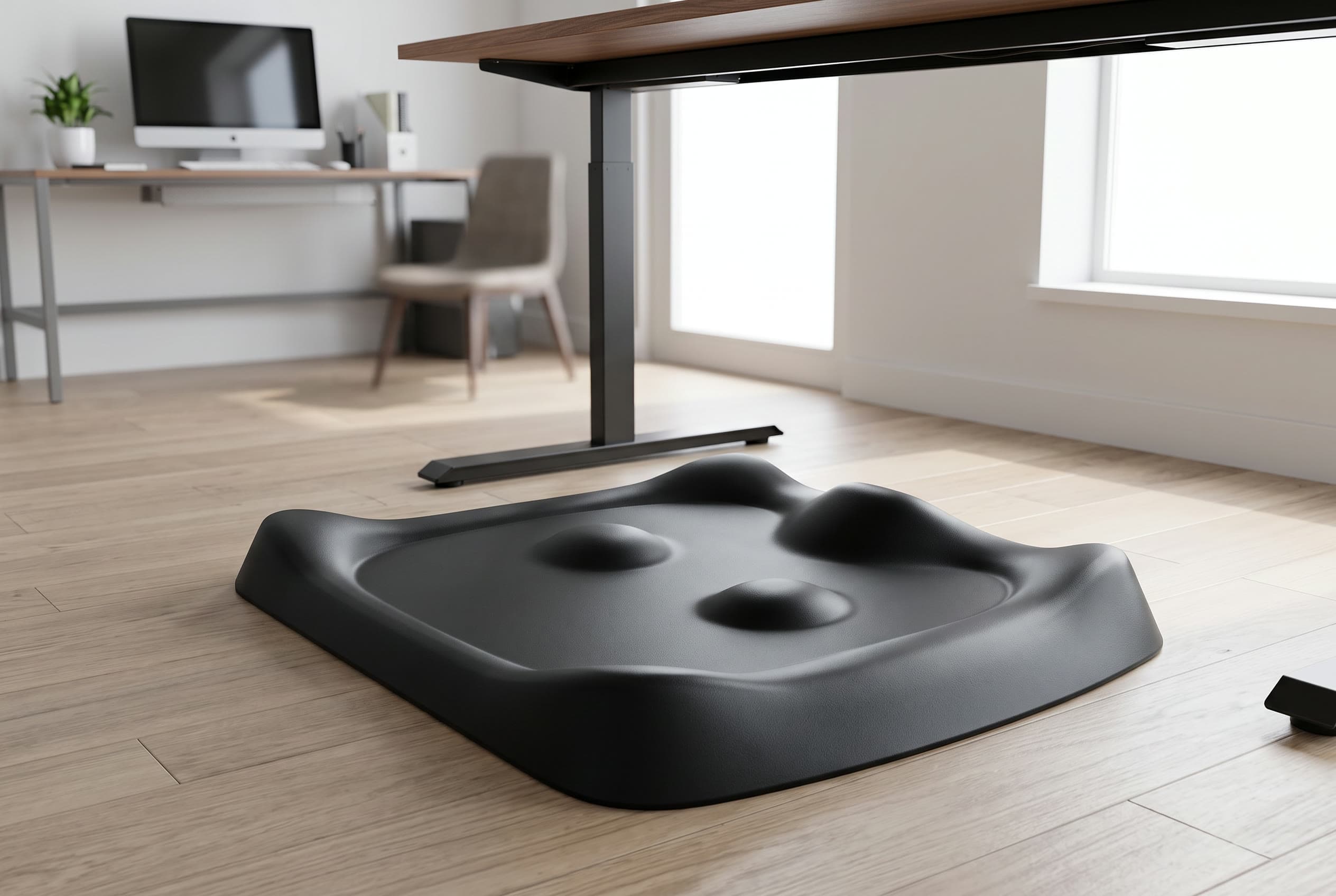
Almost every other mat here asks you to stand still on a soft cushion; the Topo asks you to keep moving, and that's why it wins. Instead of a flat pad, its surface is a sculpted, PVC-free polyurethane terrain — raised perimeter rails, a couple of mounds, a central 'pothole' — that your feet naturally explore over an hour. You lean on an edge, stretch a calf on a mound, shift to the pothole, and that steady micro-movement is what actually fights fatigue, because a static stance on any surface still cuts circulation.
It's the closest thing this market has to a consensus pick, with a long track record as a Wirecutter favorite and a 16-year warranty that outlasts most budget mats several times over. The full-size Topo measures a generous 26.25 x 29 inches, and the terrain is firm rather than plush — people expecting a squishy memory-foam feel are sometimes surprised. Two honest caveats: at around 8 lbs it's less portable than a flat mat, and on slick hardwood the hard foam can slide, so it's happiest on textured floor or low-pile carpet.
What we like
- Contoured terrain encourages the micro-movement that actually reduces fatigue
- Durable PVC-free foam with a lengthy 16-year warranty
- Doubles as a subtle stretching and foot-massage surface
Worth knowing
- Firm, not plush — not for people who want a soft cushion
- Hard foam can slide on smooth hardwood; heavy to move
- Surface
- Sculpted 'not-flat' terrain
- Size
- 26.25 x 29 in
- Thickness
- Up to ~2.7 in at peaks
- Material
- PVC-free polyurethane foam
- Warranty
- 16 years
2. Best Value
ComfiLife Anti-Fatigue Mat
Typically around $30
- First standing mat
- Tight budgets
- Soft-cushion preference
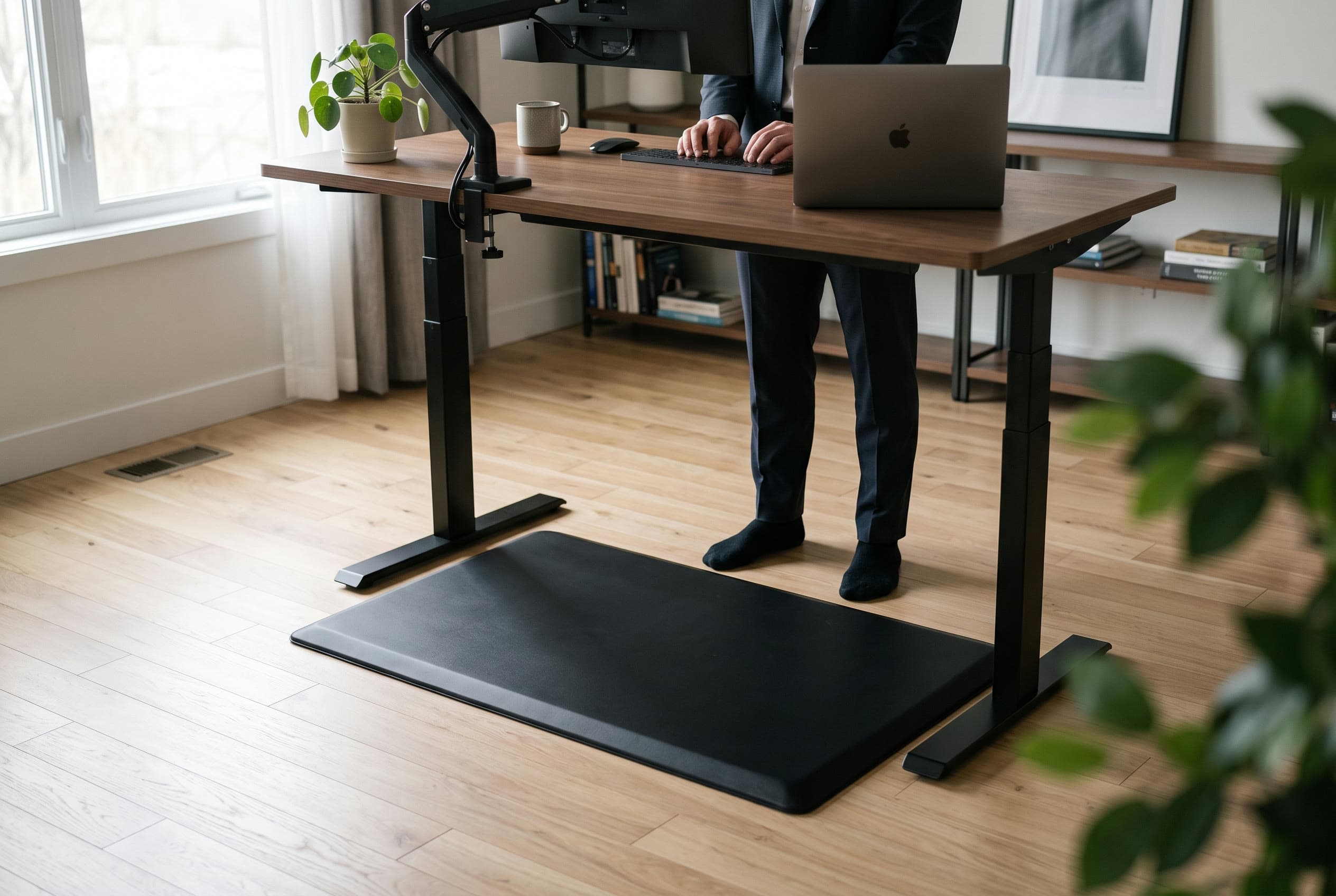
If you just want proven relief underfoot without overthinking it, the ComfiLife is the mat we'd point most people to first. It's a straightforward 3/4-inch slab of high-density memory foam that conforms to your feet and spreads your weight instead of concentrating it on your heels — exactly what helps if you tend to plant your feet and stay put rather than shift around. At roughly $30 it costs a third of the Topo and delivers most of the day-to-day comfort.
The rubber backing grips hardwood and tile well, the surface wipes clean, and the gently sloped bevel edges make it almost impossible to trip over when your desk rises. The trade-off versus a firmer mat is longevity and stance: pure memory foam softens over time and doesn't prompt you to move, so a dedicated stander who barely shifts will still stiffen up eventually. For the price, it's the easiest recommendation in the lineup.
What we like
- Genuine all-day comfort for well under half the premium price
- Soft memory foam suits people who stand mostly still
- Non-slip backing and trip-safe beveled edges
Worth knowing
- Memory foam compresses and softens over time
- Flat surface doesn't encourage movement like a terrain mat
- Surface
- Flat, smooth top
- Size
- 20 x 32 in (multiple sizes)
- Thickness
- 3/4 in
- Material
- High-density memory foam
- Backing
- Non-slip rubber
3. Best Cushioned
Imprint CumulusPRO Commercial
Typically around $75
- Long stationary shifts
- Harder floors
- People who want plush
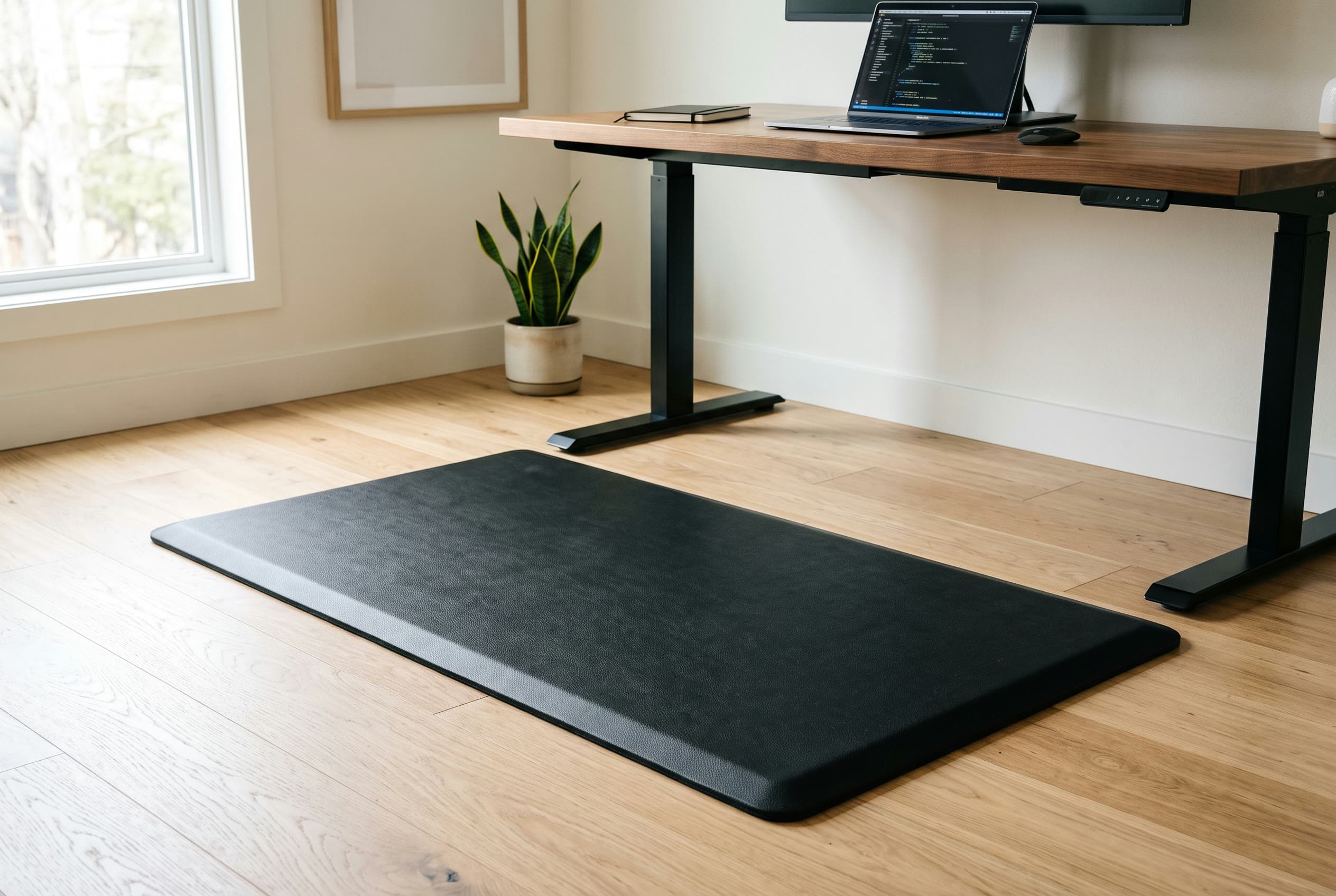
The CumulusPRO is the mat for people who want to sink into cushion and stay put. It's a solid, one-piece 3/4-inch polyurethane slab with a firm high-density core under a softer top — Imprint calls it Cushion-Core — so it feels plush without bottoming out the way cheap foam does after a few months. It's certified by the National Floor Safety Institute and made by an American Chiropractic Association partner, which is more third-party backing than most mats in this category carry.
Where it shines is a long, mostly stationary stint on an unforgiving floor: the deep, even cushion is more forgiving than the firm Topo if you're not the type to fidget. The contoured, no-curl beveled edges resist the peeling that plagues foam mats, and the non-slip base stays planted. It's heavier and pricier than the budget foam pads, and like any flat mat it won't nudge you to move — but for pure comfort per hour standing still, it's the standout.
What we like
- Deep, even cushion that resists bottoming out over time
- One-piece PU with no-curl edges — no peeling or delamination
- NFSI-certified and chiropractor-backed
Worth knowing
- Flat surface doesn't promote movement
- Heavier and pricier than budget foam mats
- Surface
- Flat, contoured edges
- Size
- 20 x 30 / 24 x 36 in
- Thickness
- 3/4 in
- Material
- One-piece polyurethane
- Certification
- NFSI / ACA partner
4. Best Premium
WellnessMats Original
Typically around $150
- Buy-it-for-life
- Spill-prone desks
- Kitchen/office crossover
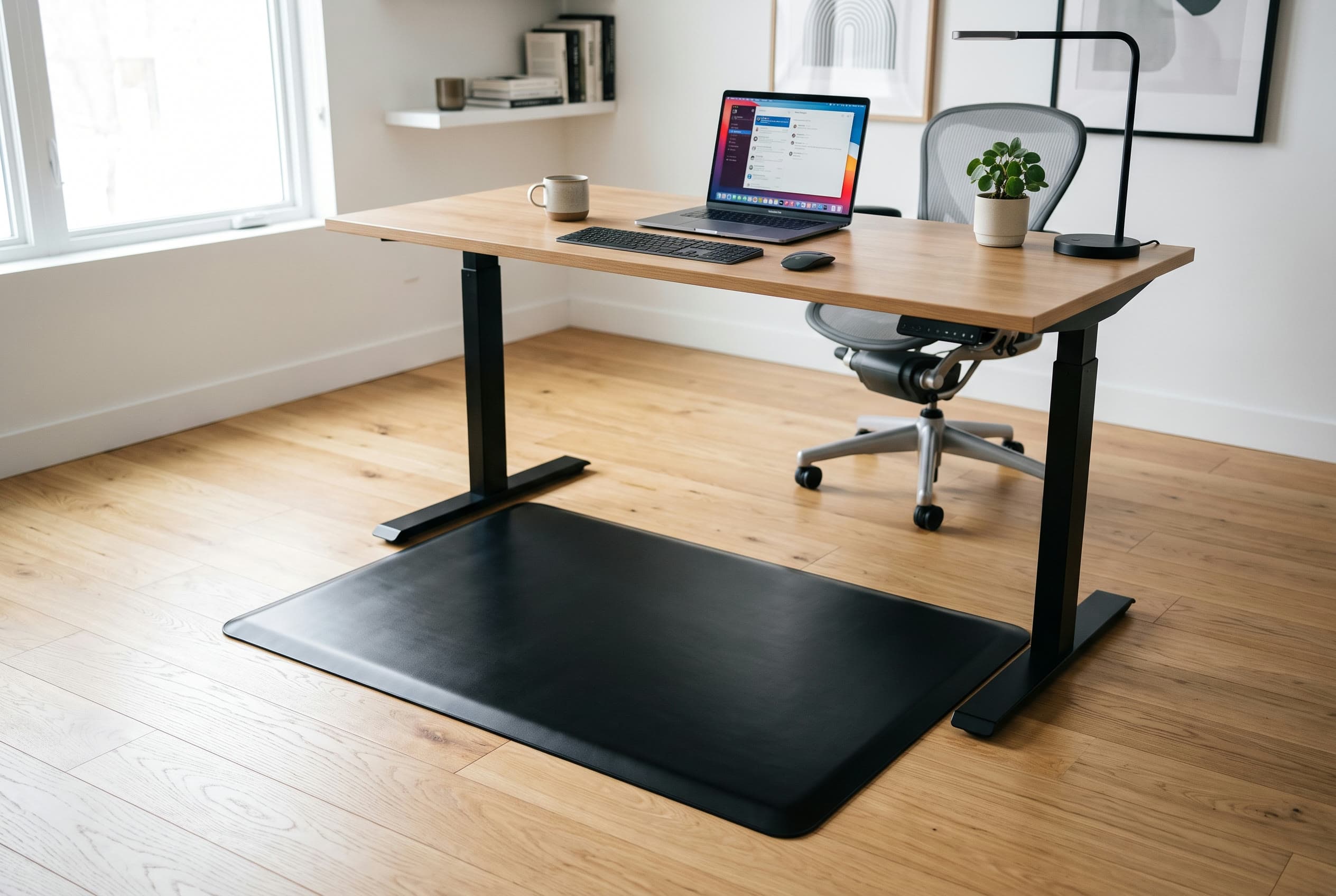
The WellnessMats is what you buy when you want to buy once. It's a sealed, one-piece polyurethane mat made entirely in the USA, with a smooth non-porous top that has no fabric or foam to peel, absorb spills, or harbor crumbs — you wipe it down like a countertop. That construction is why it carries a 20-year residential warranty, an order of magnitude beyond the budget mats, and why the same design sells into commercial kitchens where mats get abused daily.
Underfoot it's firm and supremely stable rather than pillowy — the support comes from a dense, resilient core that never packs out, not from a soft surface layer. That makes it a superb long-term stander and a genuine crossover mat if your 'home office' is a corner of the kitchen or a garage workbench. The catch is simply price: at around $150 it costs several times a foam pad, and if you specifically want plush cushion, the Imprint feels softer for less.
What we like
- Sealed, seamless top wipes clean and never peels or absorbs spills
- Made in USA with a 20-year residential warranty
- Dense core stays supportive for years; great kitchen/office crossover
Worth knowing
- Firm rather than plush — support, not softness
- Several times the price of a budget foam mat
- Surface
- Sealed, seamless top
- Size
- From 3 x 2 ft
- Thickness
- 3/4 in
- Material
- One-piece polyurethane, made in USA
- Warranty
- 20 years (residential)
5. Best for Small Desks
Ergodriven Topo Mini
Typically around $79
- Compact setups
- Moving between rooms
- Smaller feet
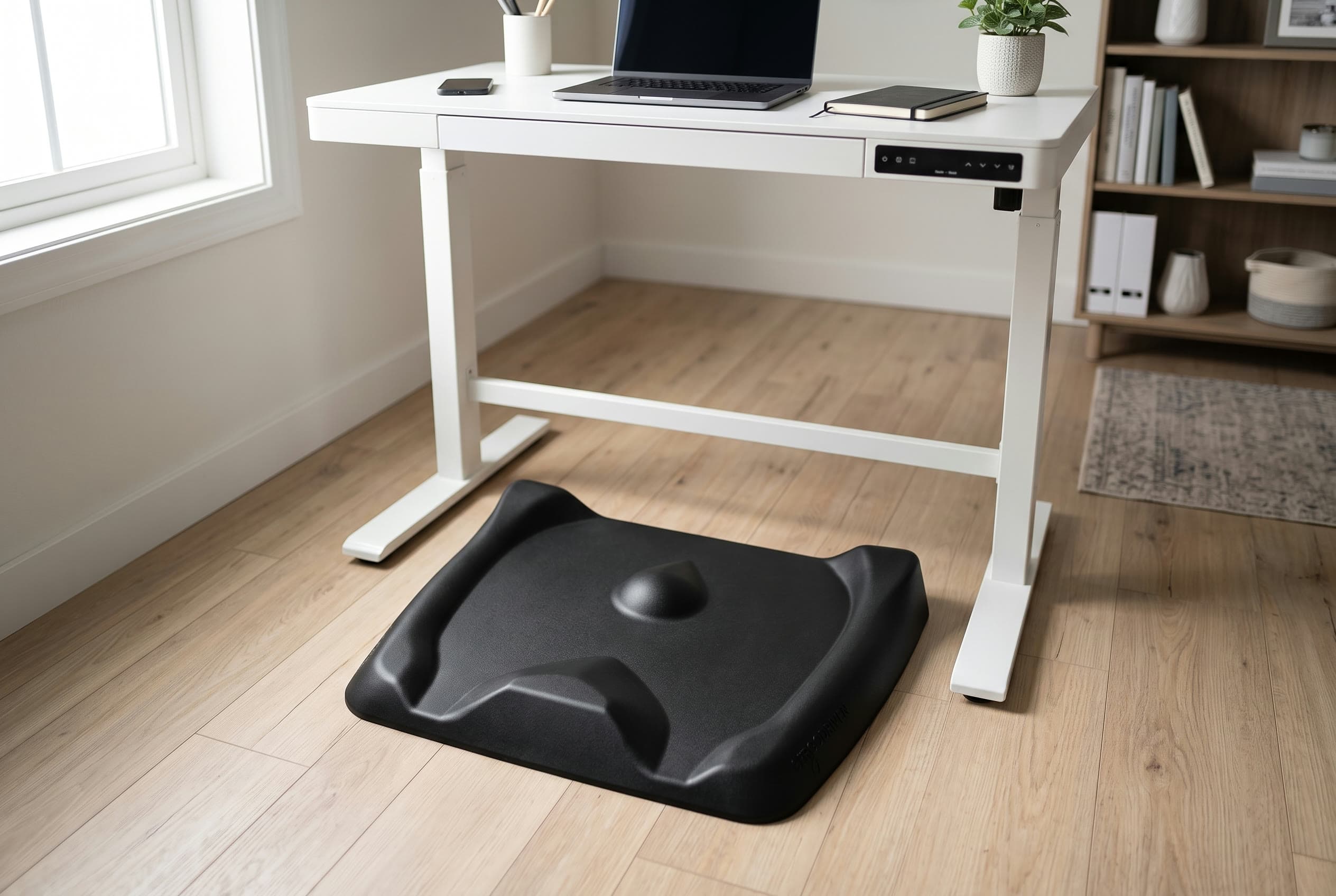
The Topo Mini is the full Topo's philosophy in a smaller, lighter footprint. It keeps the same calculated terrain — the rails, mounds, and pothole that invite your feet to keep exploring — but shrinks to about 25.2 x 19.2 inches and just 4 lbs, half the weight of the standard Topo. That makes it the pick for a tight desk nook, a narrow standing zone, or anyone who slides the mat aside when they sit and wants it easy to move.
The terrain feel and the PVC-free build are the same, and it carries the same 16-year warranty, so you're not giving up durability for the smaller size — just coverage. If you have room to spread out or larger feet that want more area to roam, the full Topo is the better buy; if space or portability is the constraint, the Mini delivers the same active-standing benefit without dominating the floor.
What we like
- Same movement-promoting terrain in a compact, portable size
- Half the weight of the full Topo — easy to move daily
- Same PVC-free build and 16-year warranty
Worth knowing
- Less coverage — tight for larger feet or wide stances
- Firm terrain feel won't suit cushion-seekers
- Surface
- Sculpted 'not-flat' terrain
- Size
- 25.2 x 19.2 in
- Thickness
- Up to ~2.5 in at peaks
- Weight
- 4 lbs
- Warranty
- 16 years
6. Best for Hard Use
Gorilla Grip Anti-Fatigue Mat
Typically around $40
- Garage/utility desks
- Spill-prone areas
- Bigger sizes
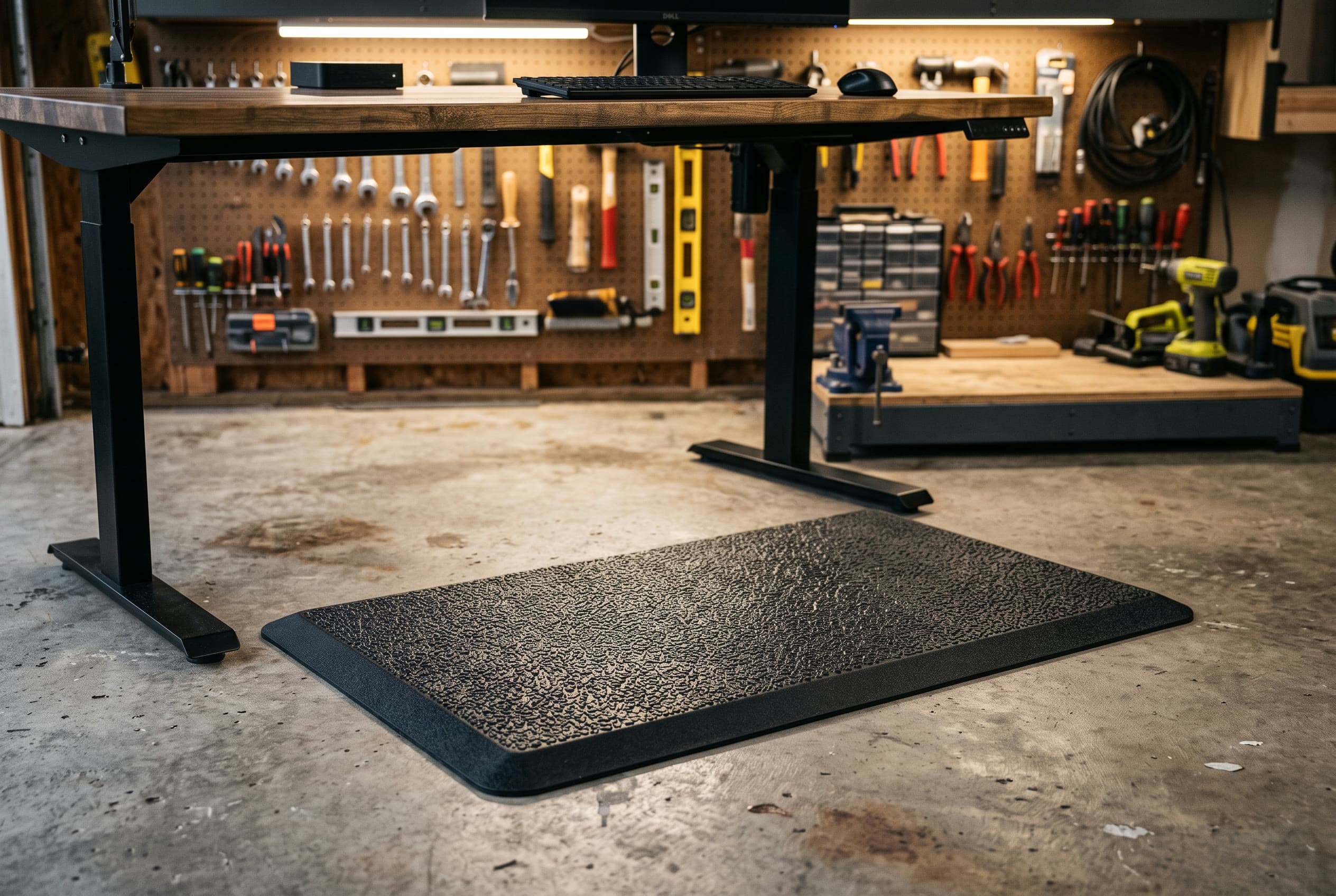
If your standing desk lives somewhere that takes abuse — a garage workbench, a utility corner, a kitchen-adjacent counter — the Gorilla Grip is the rugged, wipe-anything option. Its 3/4-inch foam has a waterproof, scratch-resistant pebbled top that shrugs off spills and gives a tactile, secure footing that smooth mats don't, and it comes in more sizes than almost anything else here, including long runs for a wide or shared workstation.
It's less of a precision ergonomic tool than the Topo and less plush than the Imprint — this is a do-everything mat that happens to work great under a standing desk, rather than one engineered solely for it. But that versatility is the point: one durable, waterproof mat that handles a messy multi-use space, in the exact size your spot needs, for around $40. For a clean carpeted home office, the office-focused foam mats are a better fit; for anywhere that gets dirty, this is the smart buy.
What we like
- Waterproof, textured top handles spills and hard use
- Widest range of sizes, including long runs
- Rugged multi-use value at a low price
Worth knowing
- General-purpose, not engineered specifically for standing ergonomics
- Firm foam is less plush than a dedicated cushion mat
- Surface
- Textured pebbled top
- Size
- Many sizes incl. long runs
- Thickness
- 3/4 in
- Material
- Waterproof foam
- Backing
- Non-slip
The verdict
For most people, the Ergodriven Topo is the mat that keeps standing sustainable: its sculpted terrain does the one thing a flat cushion can't — nudge you to keep moving — and it's built to outlast a decade of workdays. The Topo Mini delivers the same active-standing benefit for a tight desk or anyone who moves the mat around.
If you'd rather have plush cushion for a mostly stationary stance, the budget ComfiLife covers the essentials for around $30, and the Imprint CumulusPRO steps up to a deeper, longer-lasting cushion. Spend once and the made-in-USA WellnessMats Original — sealed, wipeable, and warrantied for 20 years — is the buy-it-for-life pick, while the rugged, waterproof Gorilla Grip is the one to get if your standing spot doubles as a garage or kitchen.
Frequently asked questions
If you stand for more than an hour a day, yes. Standing on a hard floor concentrates pressure on your heels and the balls of your feet and keeps your leg muscles statically loaded, which is what produces that end-of-day ache — and it's the number-one reason people quit standing and go back to sitting all day. A good mat spreads that pressure and, in the case of terrain mats, encourages the small weight shifts that keep blood moving. It's the cheapest thing you can add to make standing sustainable rather than a chore.
They solve different problems. A terrain mat like the Ergodriven Topo fights fatigue by prompting constant micro-movement — leaning on edges, stretching on mounds — which matters because standing perfectly still on any surface, however soft, still restricts circulation. A flat cushioned mat like the Imprint or ComfiLife simply reduces the pressure of a static stance and feels plusher underfoot. If you naturally fidget and want to keep active, go terrain; if you tend to plant your feet and want pure softness, go flat and cushioned.
About 3/4 inch is the sweet spot for flat mats — enough cushion to matter without making you feel unstable or tipping you toward the desk. Thinner mats bottom out under your weight; much thicker soft foam can feel wobbly and actually tire your stabilizing muscles. Terrain mats like the Topo measure taller at their peaks, but that height is sculpted contour you move across, not uniform squish, so it behaves differently from a thick flat pad.
It can be if you pick the wrong one, which is why beveled, no-curl edges and a non-slip backing are on our criteria list. Look for a mat with gently sloped edges that taper to the floor rather than a hard lip, and a grippy base rated for your floor type. One real caveat: firm terrain mats like the Topo can slide on slick hardwood or polished concrete — on those surfaces, a mat with a rubberized non-slip backing (or a thin rug pad underneath) is the safer choice.
Yes, and it still helps — carpet alone doesn't provide the targeted, resilient support these mats do, and low-pile carpet actually solves the sliding problem that affects hard mats on hardwood. On thick or plush carpet, a firmer mat (the WellnessMats or Imprint) feels more stable than a soft memory-foam pad, which can feel vague stacked on top of existing cushion. Either way, make sure the mat lies flat and doesn't rock on an uneven pile.
Keep building your setup
Desks
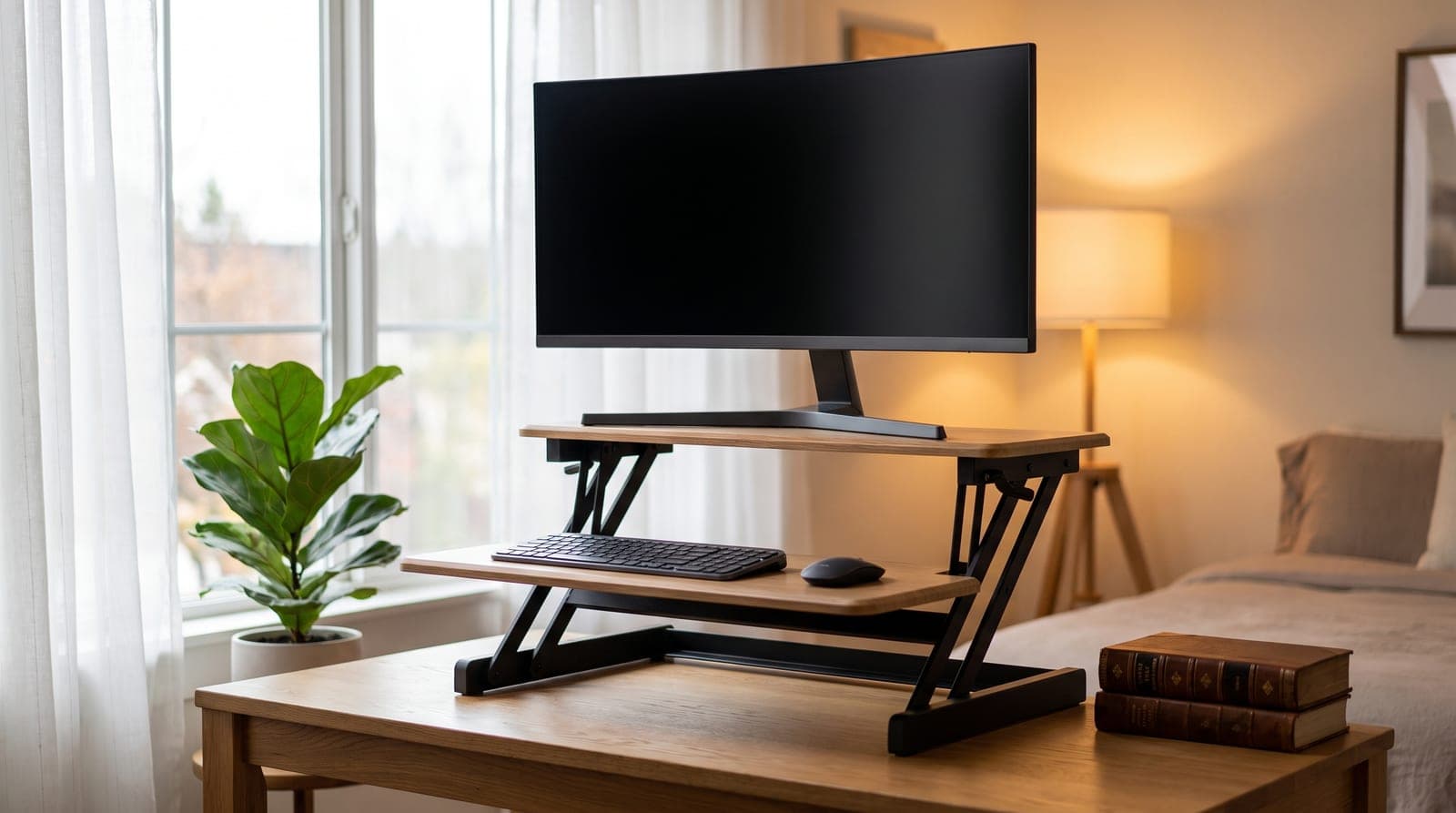
The Best Standing Desk Converters in 2026
You don't have to replace your desk to stand up. Five sit-stand risers that drop on top of the desk you already own — from a rock-solid manual Z-lift to a one-touch electric deck with outlets built in.
Updated July 28, 2026
Desks
The Best Standing Desks Under $500 in 2026
The $250–$500 range is where standing desks stop being a gamble. Five desks that hold real setups steady at height — compared on published capacity, which here changes with the size you order, and on what the warranty actually covers once you read past the banner.
Updated September 14, 2026
Ergonomics
The Best Office Chair Mats for Carpet and Hardwood in 2026
Buy the wrong chair mat and it either gouges your hardwood or sinks into your carpet. Six mats — polycarbonate, vinyl, tempered glass and bamboo — sorted by the floor they're actually built for.
Updated August 6, 2026
Get the next guide in your inbox
One short email when we publish or meaningfully update a buying guide. No spam, no daily deals firehose.