 Rigworthy
The Best Under-Desk Treadmills (Walking Pads) in 2026
By Rigworthy Editorial Team · Updated July 31, 2026
Rigworthy is reader-supported: we may earn a commission if you buy through our links, at no cost to you. How we make money
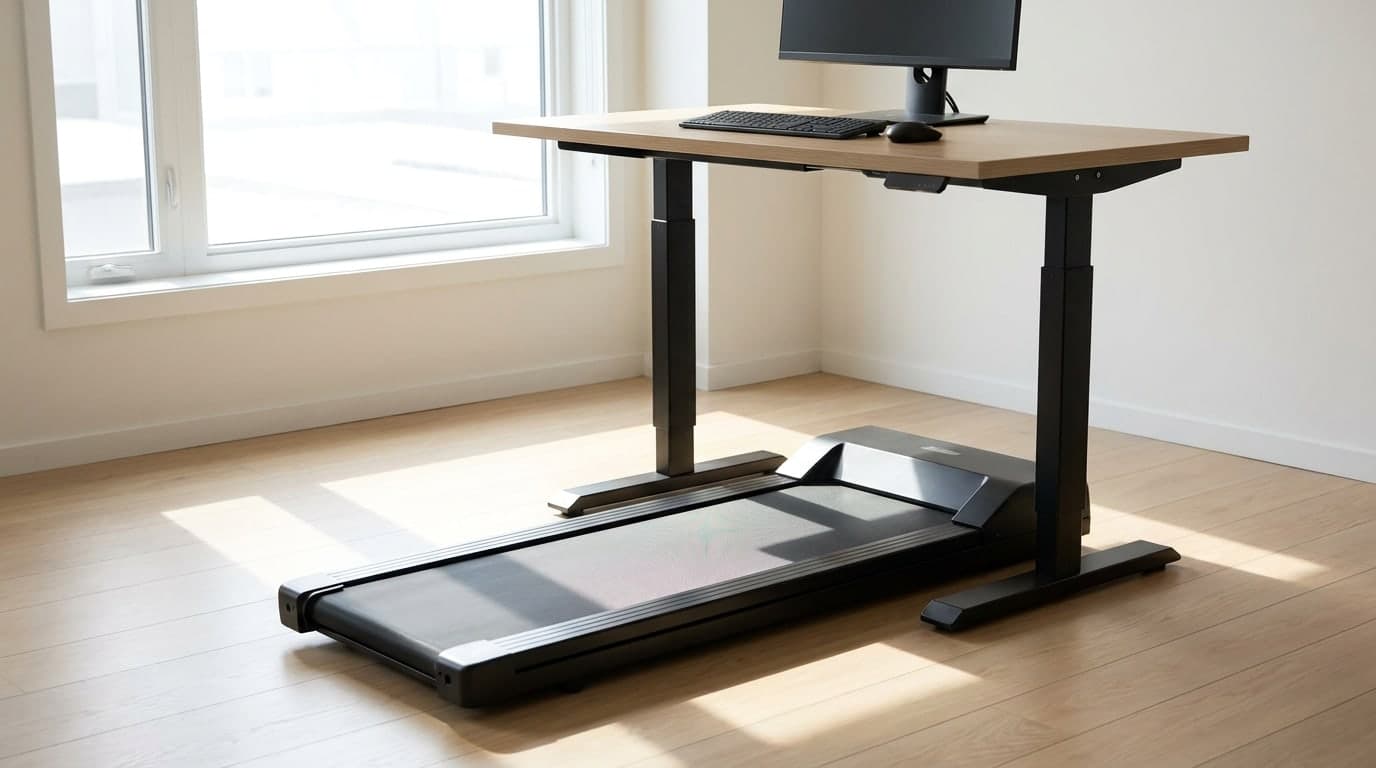
A standing desk solves half the problem. It gets you out of the chair — but plenty of people trade sitting still for standing still, locked in one spot with their weight parked on their heels. An under-desk treadmill, or "walking pad," closes the other half: it adds slow, steady motion to the desk you already own, turning sedentary hours into a few thousand quiet steps without breaking your focus.
The catch is that this is a category built on hype, and the quality gap is enormous. A good pad is a slim, near-silent brushless machine that disappears under your desk; a bad one is a loud, flimsy motor that regulators have warned about. It's also a class of product that lives entirely under the rest of your setup — it doesn't replace your desk, mat, or converter, it works with them. We sorted the genuinely good pads by the three things that decide whether one fits your life: deck length for your height, real capacity and motor quality, and how much room it needs to run and to store.
Our top picks at a glance
- 1
- 2
- 3
- 4
- 5
- 6
How we chose
- Deck length that fits a real walking stride — short belts clip anyone tall
- Honest weight capacity with headroom, and a brushless motor for quiet, long life
- Noise level low enough to stay on calls without a treadmill drone in the mic
- How much height a pad adds underfoot — and whether your standing desk can rise to match
- Build quality and safety track record; we excluded any pad under an active safety warning
Our picks come from spec research, long-term owner feedback, and category expertise — not sponsorships. Read the full methodology.
Compared side by side
| Product | Award | Belt length | Top speed | Max user weight | Typical price |
|---|---|---|---|---|---|
| WalkingPad C2 | Best Overall | 40 in | ~3.7 mph | 220 lb | ~$400 |
| DeerRun Q1 Mini | Best Budget | ~39 in | ~3.7 mph | 220 lb | ~$160 |
| Goplus 2-in-1 Treadmill | Best for Walking + Jogging | 39.3 in | 3.8 / 7.5 mph | 300 lb | ~$290 |
| Egofit Walker Pro | Best for Small Spaces | 34 in | 3.1 mph | 220 lb | ~$400 |
| UREVO SpaceWalk 5L | Best for Incline & Heavier Users | ~40 in | ~4 mph | 320 lb | ~$290 |
| WalkingPad P1 | Best for Tall Users | 47 in | ~3.75 mph | 220 lb | ~$480 |
1. Best Overall
WalkingPad C2
Typically around $400
- Under a standing desk
- Small apartments
- Storing out of sight
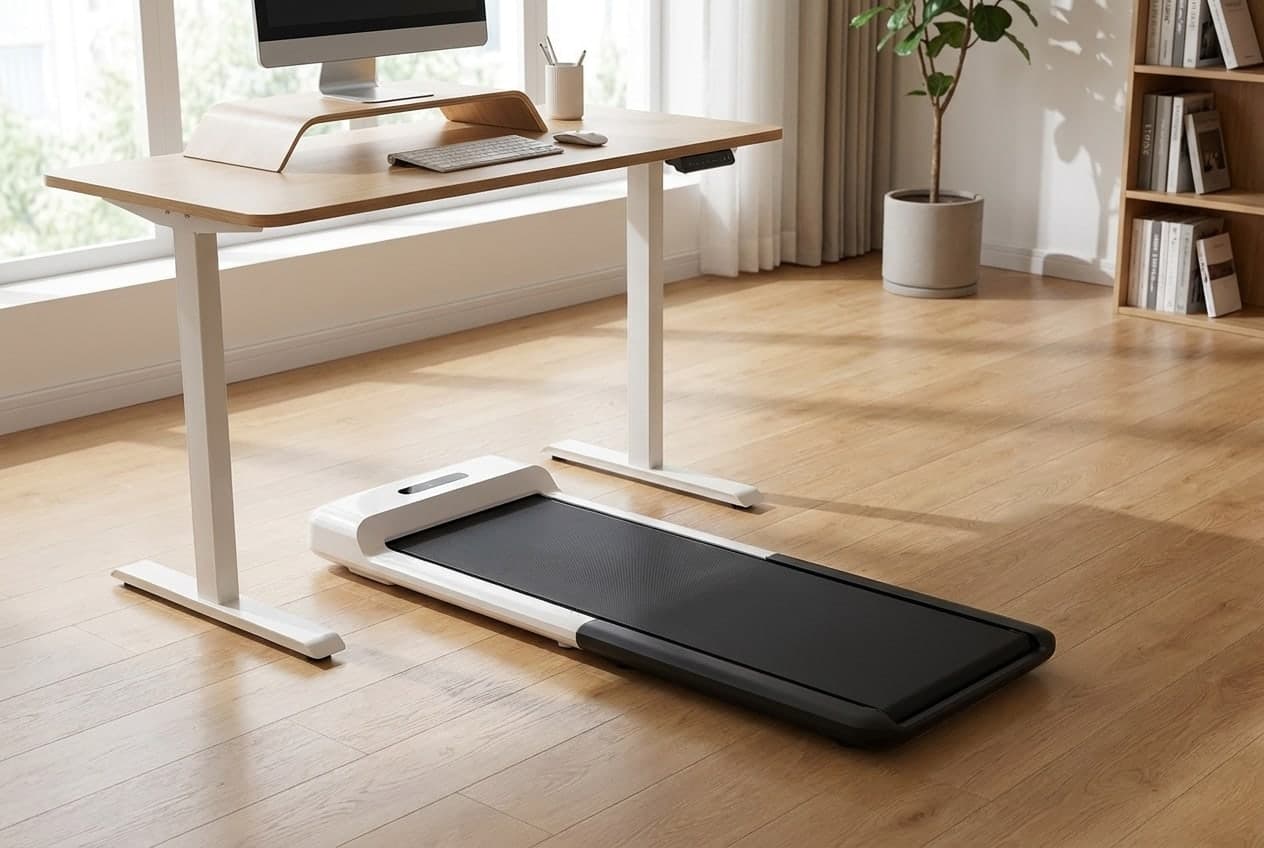
WalkingPad essentially defined this category, and the C2 is the model that gets the balance right for most desks. It's a genuinely slim, walking-focused pad with a quiet operation of roughly 48 dB — about the level of a soft conversation — so you can keep it running through calls without a treadmill drone leaking into your mic. The belt is 16.5 by 40 inches, which comfortably fits a natural walking stride at desk pace, and the whole thing tops out around 3.7 mph, which is exactly where you want a work-while-you-walk pad to sit.
Its party trick is storage: the C2 folds in half, so it stands up in a closet or slides flat under a couch when you're done, rather than living permanently across your floor. It runs from a wrist remote or the KS Fit app, and the deck holds up to 220 lbs. Two honest caveats — the 40-inch belt is on the shorter side if you're over about six foot two, and this is a walk pad, not a runner, so don't buy it expecting to jog. For the vast majority of people adding movement under an existing desk, it's the safe, proven pick.
What we like
- Quiet (~48 dB) — stays out of your microphone on calls
- Folds in half for genuinely easy out-of-sight storage
- Proven, well-supported design from the brand that defined the category
Worth knowing
- 40-inch belt is short for very tall walkers
- Walking-focused — not built for jogging or running
- Belt
- 16.5 x 40 in
- Top speed
- ~3.7 mph (walk)
- Capacity
- 220 lb
- Motor
- ~2.0 HP
- Storage
- Folds in half (180°)
2. Best Budget
DeerRun Q1 Mini
Typically around $160
- First walking pad
- Tight budgets
- Sliding away daily
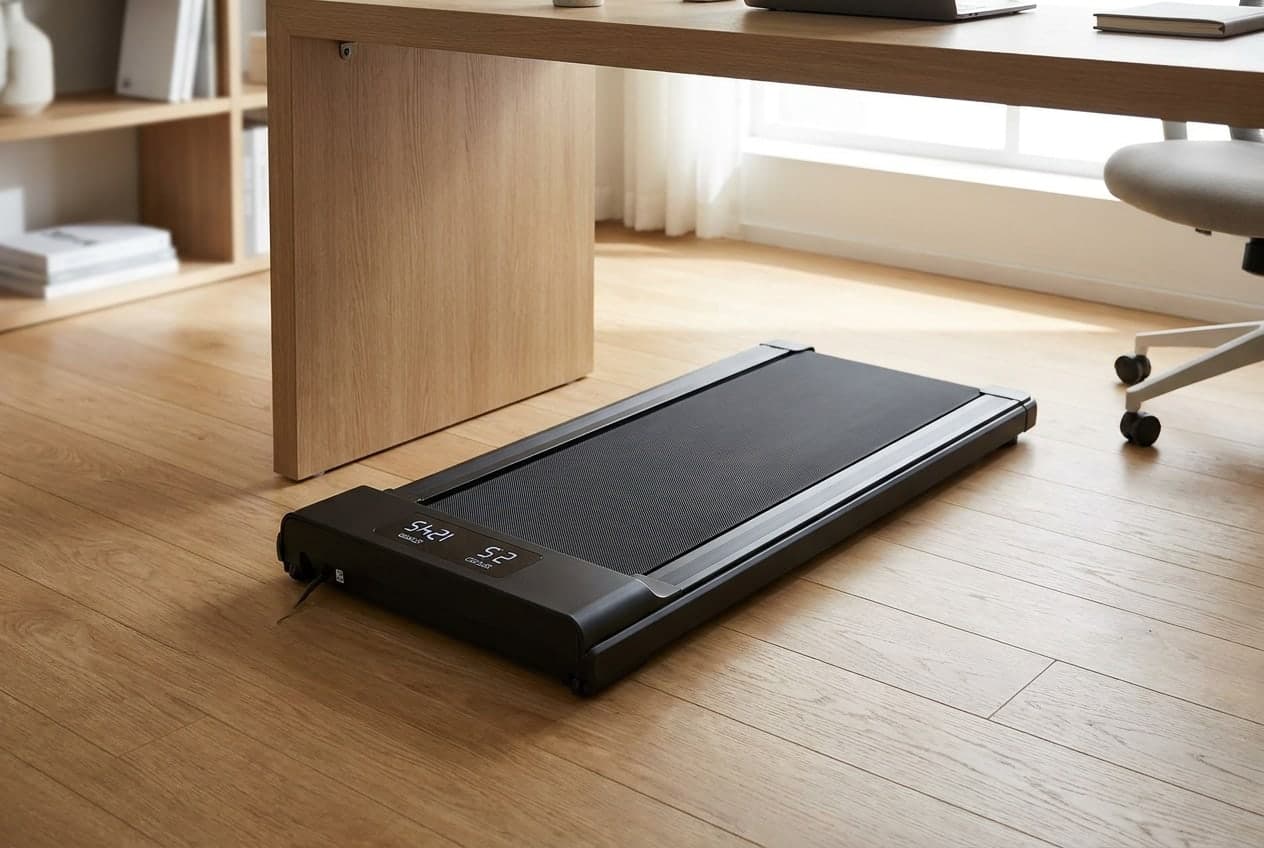
If you want to try walking at your desk without committing several hundred dollars, the DeerRun Q1 Mini is the low-risk way in. It routinely sells around $160, yet it covers the fundamentals that actually matter: a brushless motor that runs quieter and lasts longer than the cheap brushed motors in a lot of no-name pads, a simple LED readout for speed and steps, and a wrist remote so you're not bending down to change pace. At about 38 lbs and only 4.5 inches tall, it's one of the easiest pads to nudge aside with your foot or stand up against a wall.
The compromises are the ones you'd expect at this price. The deck is on the shorter side, so tall walkers will feel the belt length, and the build doesn't have the reassuring heft of the pricier pads — this is a starter unit, not a buy-it-for-life one. But as a way to find out whether a walking desk actually fits your workflow before spending more, it's hard to argue with. Plenty of people never feel the need to upgrade past it.
What we like
- Genuine walking pad for around a third of the premium price
- Brushless motor — quieter and longer-lived than budget brushed units
- Light (~38 lb) and low-profile; easy to move and stow
Worth knowing
- Shorter deck; tight for taller strides
- Lighter-duty build than the pricier pads
- Belt
- ~39 in deck
- Top speed
- ~3.7 mph
- Capacity
- 220 lb
- Motor
- Brushless
- Weight
- ~38 lb
3. Best for Walking + Jogging
Goplus 2-in-1 Treadmill
Typically around $290
- Walk at the desk, jog after
- One machine for both
- Heavier users
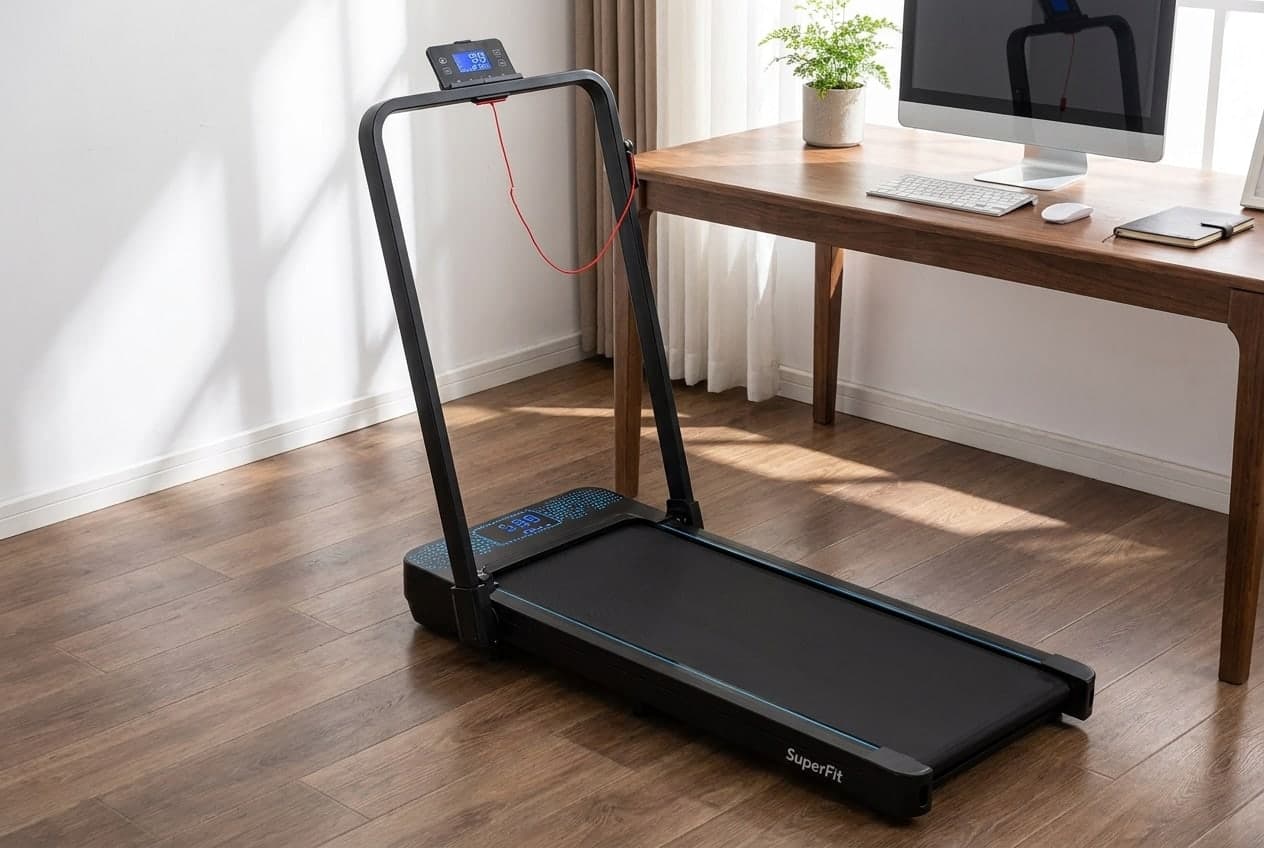
Most walking pads make you choose between a slim under-desk unit and a real treadmill you can run on. The Goplus 2-in-1 refuses to. Flat, with the handlebar folded down, it slides under your desk and walks at 0.6–3.8 mph like any pad. Raise the fold-up handrail and it becomes a proper treadmill that climbs to about 7.5 mph, so the same machine that carried your morning steps can handle an afternoon jog. A 2.25 HP motor and a 300 lb capacity give it more headroom than most pads here, which also makes it a sensible pick for heavier users regardless of the running feature.
The trade-offs are physical. The handrail is fixed at roughly 3.5 feet, so it stands taller than a bare pad and takes more room when raised, and the 16 by 39-inch running deck is fine for jogging but not generous for a full sprint. It also weighs more than a slim walk-only pad, so it's less of a slide-it-aside unit. But if you want one device that does desk-walking and cardio without buying two machines, nothing else on this list matches its range.
What we like
- Two machines in one — flat desk pad and upright jogging treadmill
- Strong 300 lb capacity and 2.25 HP motor
- Fold-up handrail with console for higher-speed use
Worth knowing
- Heavier and taller than a walk-only pad
- Deck is fine for jogging, tight for true running
- Deck
- 16 x 39.3 in
- Top speed
- 3.8 walk / 7.5 mph run
- Capacity
- 300 lb
- Motor
- 2.25 HP
- Handrail
- Fold-up, ~3.5 ft
4. Best for Small Spaces
Egofit Walker Pro
Typically around $400
- Very small rooms
- Shorter users
- Built-in incline
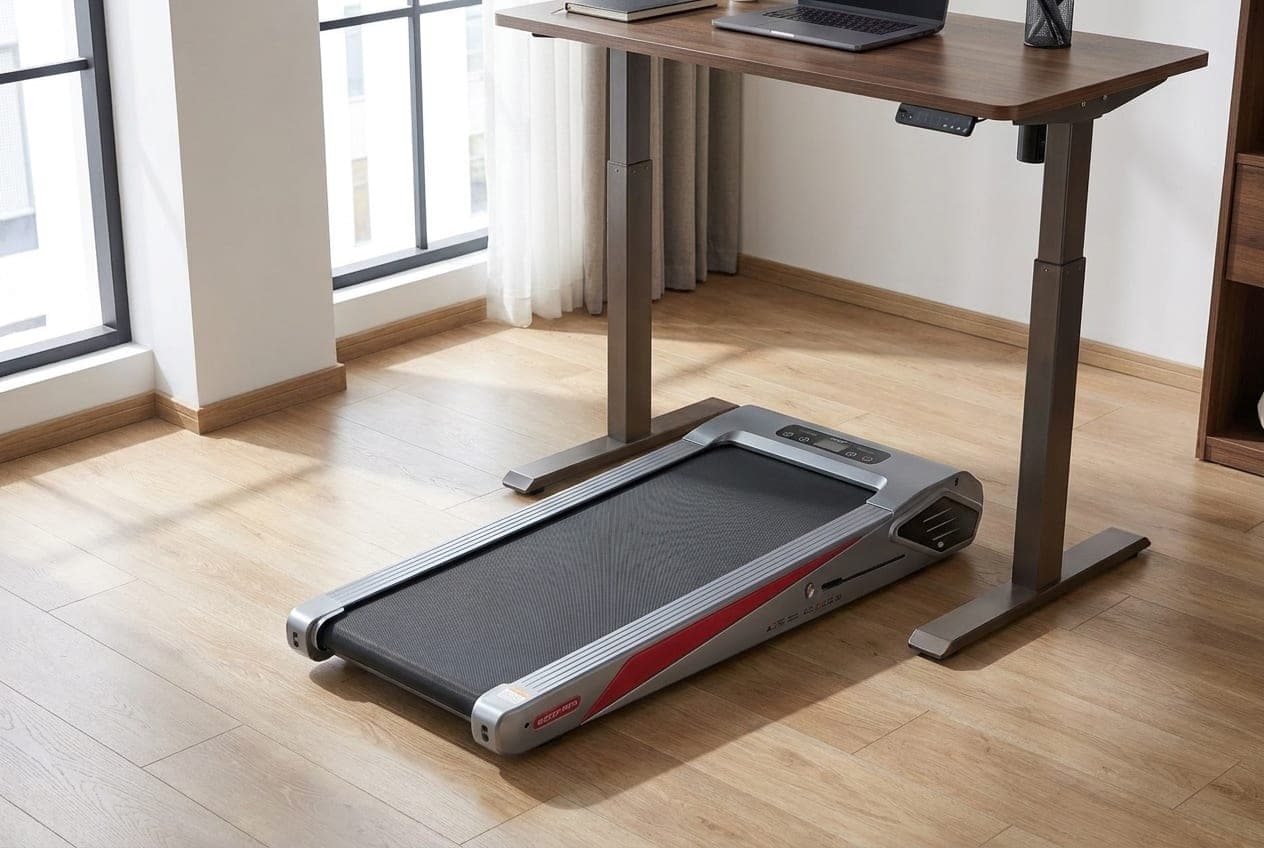
The Egofit Walker Pro is the pad for rooms where a full-size walking treadmill simply won't go. It takes up less than six square feet of floor and pairs a short 34-inch deck with a 2.0 HP motor and — unusually for something this small — a fixed 5% incline. That built-in grade means you burn noticeably more at the same slow speed, which is the whole point: it's engineered to make a compact, low-speed pad still worth stepping onto. It tops out at a gentle 3.1 mph and holds up to 220 lbs, with an LCD readout plus app and remote control.
That tidy footprint is also its main limitation. The 34-inch deck is the shortest here, so it fits shorter users and smaller strides best; anyone tall will find it cramped. It's pre-assembled out of the box and easy to live with, but you pay a premium for the compactness — it costs more than roomier flat pads. If your constraint is space or you specifically want incline without a bigger machine, though, nothing else here tucks away this neatly.
What we like
- Smallest footprint here — fits where other pads can't
- Fixed 5% incline raises the burn at low, quiet speeds
- Pre-assembled, with LCD, app, and remote
Worth knowing
- Short 34-inch deck is cramped for taller users
- Compact-premium pricing for the size
- Belt
- 34 in deck
- Top speed
- 3.1 mph
- Incline
- Fixed 5%
- Capacity
- 220 lb
- Footprint
- Under 6 sq ft
5. Best for Incline & Heavier Users
UREVO SpaceWalk 5L
Typically around $290
- Adjustable incline
- Higher weight capacity
- Quiet operation
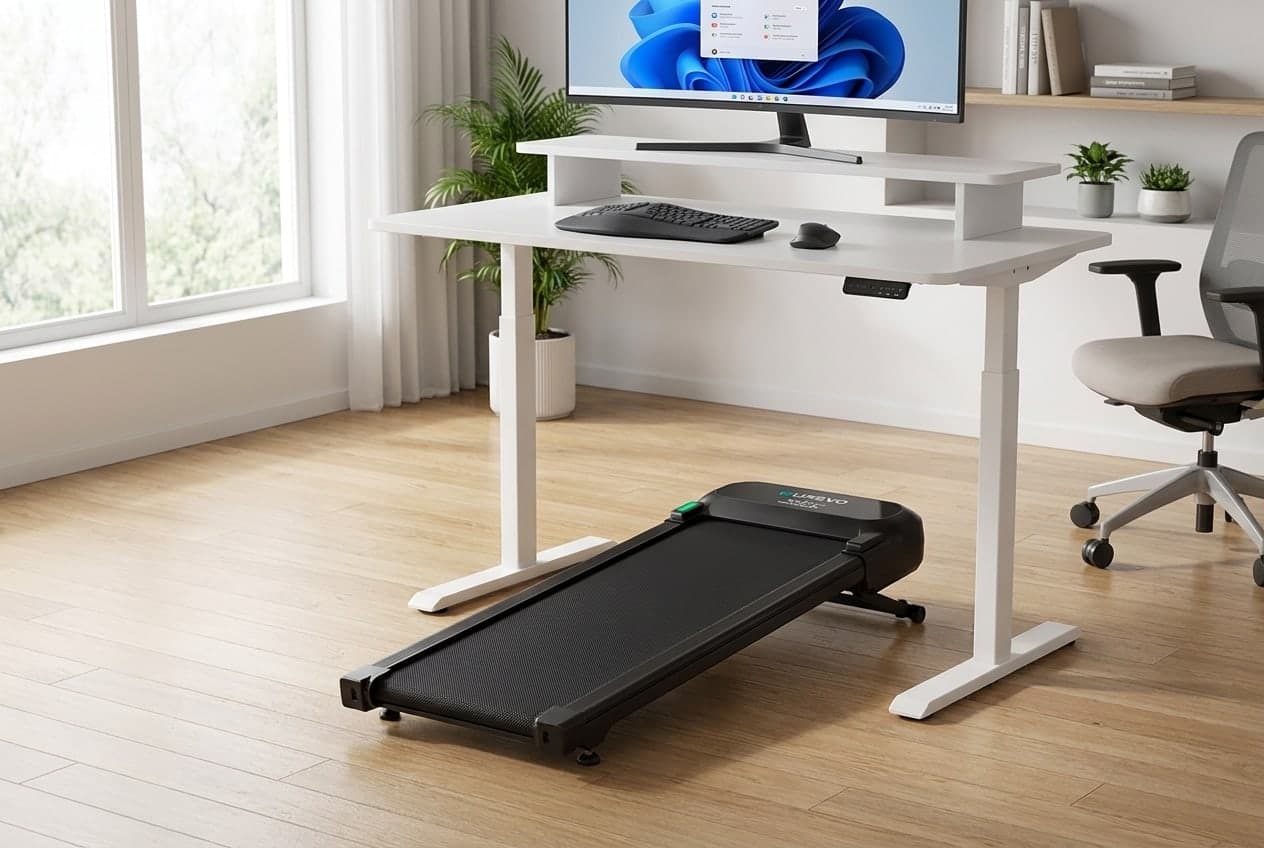
UREVO has quietly become one of the most reliable names in walking pads, and the SpaceWalk 5L is its do-more pick. Where most pads are flat, the 5L offers an adjustable incline up to 9%, letting you dial the effort up without speeding up — ideal if you want a real cardio nudge while still typing. A 2.5 HP dual brushless motor drives it, which is both quieter and far longer-lived than the brushed motors in cheaper pads, and it carries a 320 lb capacity, the highest in this lineup, so it suits heavier users and gives everyone else generous headroom.
It's walking-paced by design — this isn't a jogger — and the incline mechanism and beefier motor make it a bit heavier to move than a bare slim pad. UREVO also earns points for the small things: its pads are known for not constantly beeping the way many rivals do, which matters when the thing lives under your desk all day. If you want more than a flat belt — real incline, real capacity, quiet power — without stepping up to a full treadmill, this is the value sweet spot.
What we like
- Adjustable incline up to 9% for more effort at walking pace
- Highest capacity here (320 lb) and quiet dual brushless motor
- Doesn't nag with constant beeps like many rivals
Worth knowing
- Heavier to move than a flat slim pad
- Walking-paced only — not for jogging
- Belt
- ~40 in deck
- Top speed
- ~4 mph (walk)
- Incline
- Adjustable, up to 9%
- Capacity
- 320 lb
- Motor
- 2.5 HP dual brushless
6. Best for Tall Users
WalkingPad P1
Typically around $480
- Taller walkers
- Longer strides
- Walking-only setups
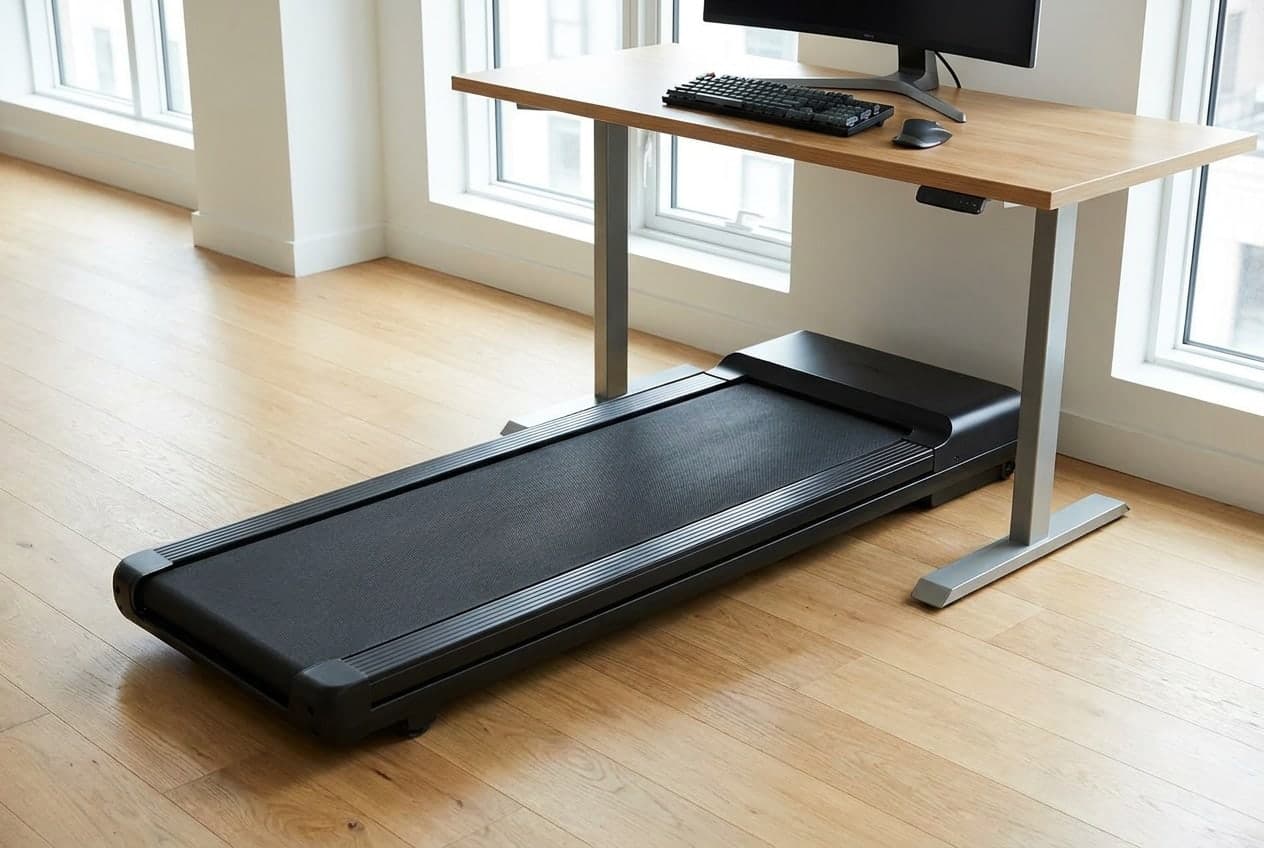
If short decks are the recurring frustration with walking pads, the WalkingPad P1 is the answer. Its belt runs a full 47 inches — the longest here by a clear margin — which gives a taller walker or anyone with a longer stride the room to move naturally instead of shortening their gait to stay on the belt. It's a walking-only pad (no fold-in-half trick, no run mode) that keeps things simple: a low, slim profile, a quiet motor, a 220 lb capacity, and a top speed around 3.75 mph, tuned for comfortable desk-pace walking.
The catch is size and price. That longer belt means it takes up more floor than a compact pad and, at around $480, it sits at the top of this list. It also doesn't fold as small as the C2. But if you've tried a stubby pad and hated feeling boxed in — or you're simply tall — the extra deck length is the single upgrade that fixes the experience, and no other pad here gives you as much of it in a slim, walking-focused package.
What we like
- 47-inch belt — the longest here, ideal for tall users
- Slim, quiet, walking-focused design
- Roomy stride without stepping up to a bulky treadmill
Worth knowing
- Largest floor footprint; doesn't fold in half
- Priciest pick in the lineup
- Belt
- 47 in (long)
- Top speed
- ~3.75 mph
- Capacity
- 220 lb
- Weight
- ~62 lb
- Mode
- Walking only
The verdict
For most people adding movement under an existing desk, the WalkingPad C2 is the pick: quiet enough for calls, long enough belt for a normal stride, and it folds in half to disappear when you're done. If you're just testing the idea, the DeerRun Q1 Mini delivers a real brushless pad for around $160 with little to lose.
From there it's about your constraint. Tall walkers should go straight to the long-belt WalkingPad P1; tight rooms and shorter users are best served by the compact, incline-equipped Egofit Walker Pro. If you want more effort without more speed — or you're a heavier user — the UREVO SpaceWalk 5L brings adjustable incline, the highest capacity here, and a quiet dual brushless motor. And if you want one machine that both walks under the desk and converts to a real jog, the Goplus 2-in-1 is the only pick here that raises a handrail and runs. Whatever you choose, remember the height math: the pad lifts you a few inches, so make sure your desk can rise to meet it.
Frequently asked questions
Effectively, yes — a walking pad is meant to slide under a desk you can raise to standing height, and it works best with a height-adjustable standing desk or a sit-stand converter. Here's the part people miss: the pad itself adds roughly 4 to 5 inches under your feet, so your desk has to rise that much higher than your normal standing height to keep your elbows at about 90 degrees. Before you buy, check that your desk's maximum height clears your standing elbow height plus the pad's thickness. If it's borderline, a taller-range frame from our standing desk guide solves it.
Most slim pads here are roughly 4.5 to 6 inches tall and 40-something inches long, so they live in the footprint directly under your desk. The compact Egofit fits in under six square feet; the long-belt WalkingPad P1 needs more floor. The bigger question is storage: if you'll want it out of the way when you sit, prioritize a pad that folds in half (like the C2) or is light enough to stand against a wall (like the DeerRun). A jog-capable 2-in-1 with a raised handrail takes the most room of all.
The good ones are. A quality pad at walking speed runs somewhere around 45 to 50 dB — quieter than normal speech — and a brushless motor (as in the DeerRun and UREVO here) is both quieter and longer-lived than the brushed motors in bargain-bin units. Two practical tips: keep your speed at a genuine walking pace, since noise climbs with speed, and use a headset mic rather than your laptop's built-in mic so any low hum stays out of the call. At a slow desk pace, most people on the other end won't know you're walking.
Slower than you'd think. Most people type and read comfortably at about 1 to 2 mph — fast enough to keep blood moving and rack up steps, slow enough that your hands stay steady on the keyboard and mouse. That's why the pads here are tuned for walking, not running: a top speed near 3.7 mph is plenty for desk work, and you'll rarely use all of it. If you want to actually sweat, stop typing, or step up to a 2-in-1 like the Goplus and raise the handrail for a proper faster session.
This is the one category where we'd urge genuine caution. Consumer testing has repeatedly flagged budget walking pads for shoddy build quality and safety issues, and at least one popular model has been the subject of a formal safety warning from regulators over fall, burn, and fire hazards — we deliberately left those pads off this list. Stick to a reputable brand, look for a brushless motor and an honest weight capacity with headroom, and make sure the unit has a responsive remote or auto-stop. Spending a bit more on a known-good pad is worth it here.
It's modest but real. A walking pad won't replace a workout, but it turns hours of otherwise sedentary desk time into low-intensity movement — the kind of steady, non-exercise activity that adds up across a day for circulation, energy, and step counts. Think of it as the movement layer on top of a standing desk: the desk gets you upright, an anti-fatigue mat helps when you're standing still, and a walking pad adds gentle motion. Used a couple of hours a day at a slow pace, it's one of the easier ways to claw back activity from a desk job.
Keep building your setup
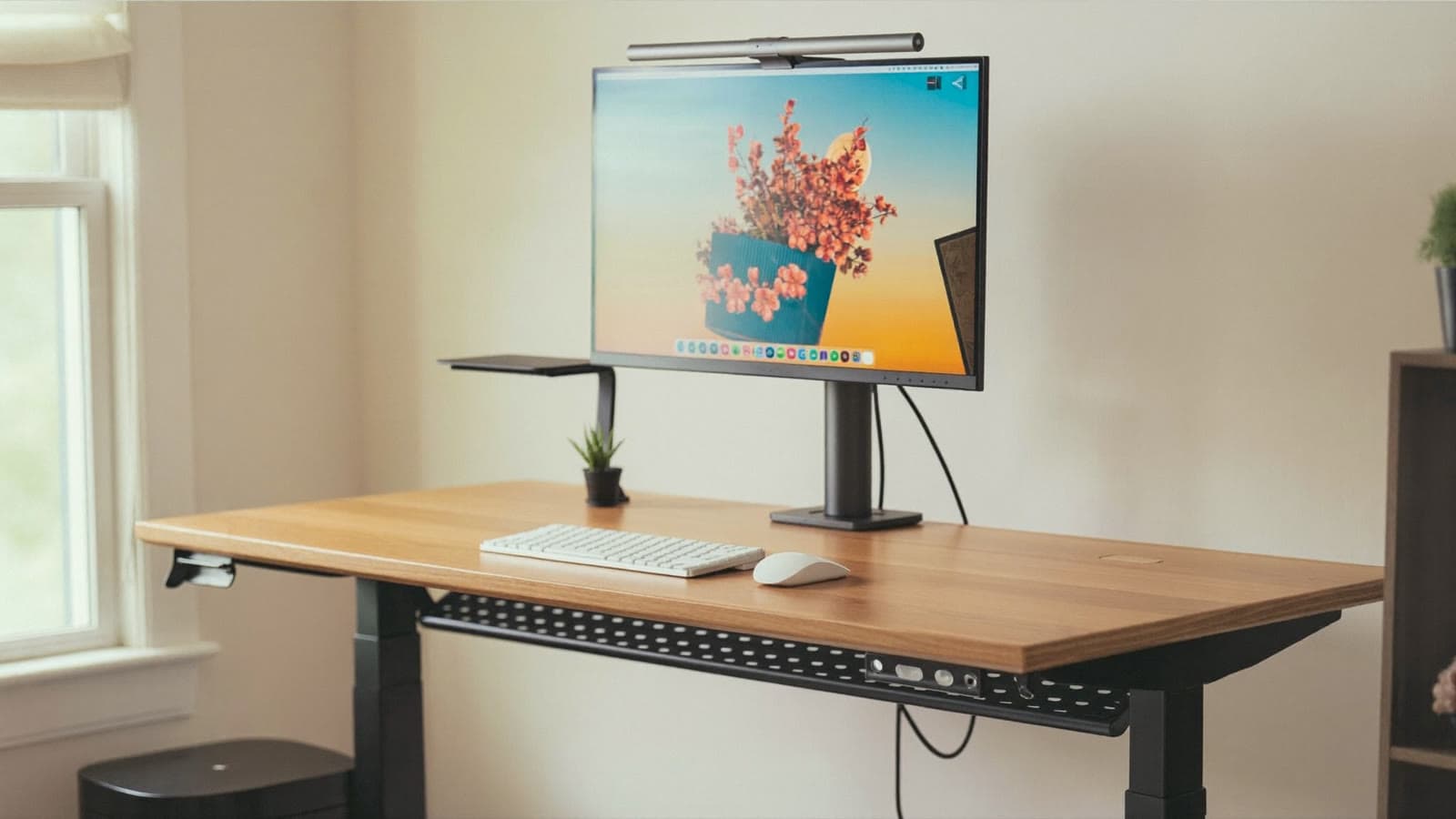
Desks
The Best Standing Desks Under $500 in 2026
The $250–$500 range is where standing desks stop being a gamble. Five desks that hold real setups steady at height — compared on published capacity, which here changes with the size you order, and on what the warranty actually covers once you read past the banner.
Updated September 14, 2026
Desks
The Best Standing Desk Converters in 2026
You don't have to replace your desk to stand up. Five sit-stand risers that drop on top of the desk you already own — from a rock-solid manual Z-lift to a one-touch electric deck with outlets built in.
Updated July 28, 2026
Desks
The Best Anti-Fatigue Mats for Standing Desks in 2026
A standing desk without a mat just moves the ache from your back to your feet. Six anti-fatigue mats — active terrain, thick memory foam, and made-in-USA polyurethane — sorted by how you actually stand.
Updated July 30, 2026
Get the next guide in your inbox
One short email when we publish or meaningfully update a buying guide. No spam, no daily deals firehose.