 Rigworthy
The Best Standing Desks for Heavy Setups in 2026
By Rigworthy Editorial Team · Updated September 22, 2026
Rigworthy is reader-supported: we may earn a commission if you buy through our links, at no cost to you. How we make money
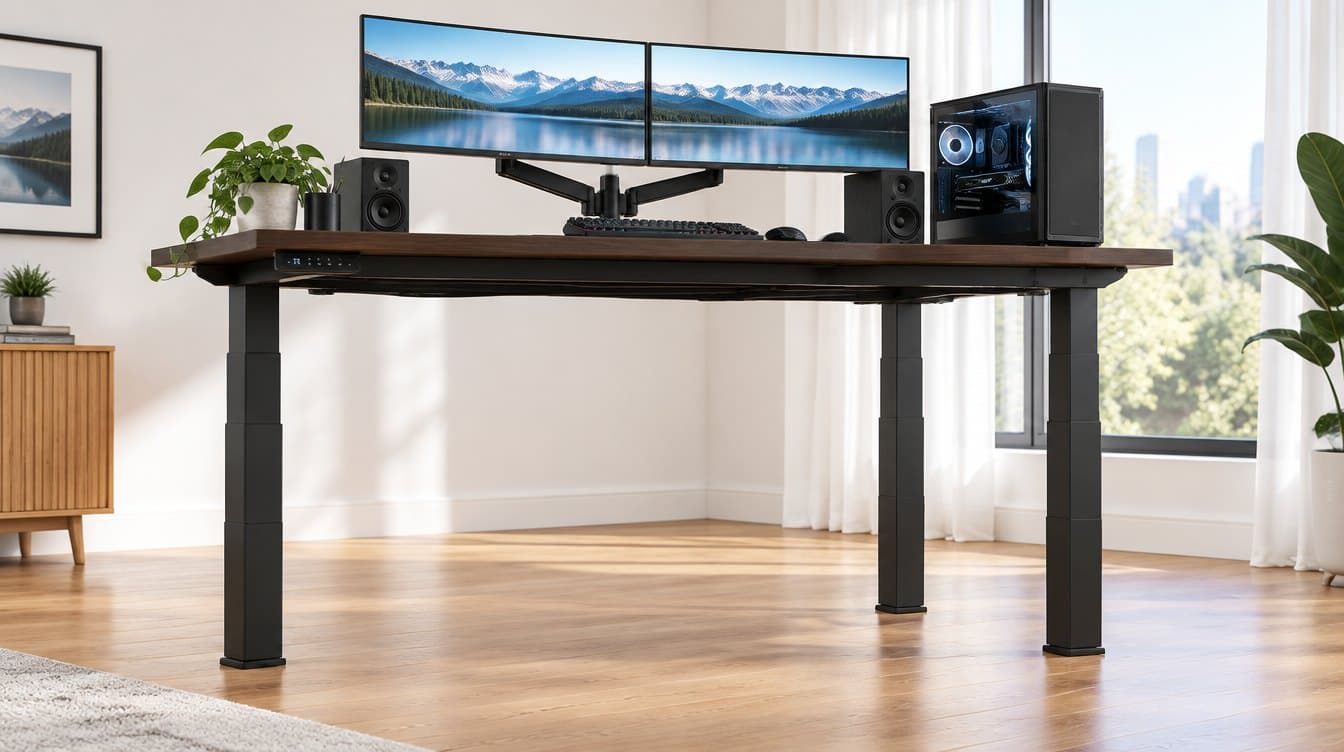
Most standing desk advice is written for a laptop, a single monitor and a mug of coffee. This guide isn't. When the surface has to lift two heavy ultrawides on an arm, a full desktop tower sitting on top, speakers and a hub of gear — and hold all of it dead steady at 48 inches while you type — the capacity rating on the box stops being a marketing number and starts being the whole point.
The catch is that the numbers on those boxes are not measured the same way. One maker's capacity already has its own 56-pound desktop inside it; another publishes lifting and static loads that differ by 120 lbs; heights come frame-only on the two FlexiSpots, both ways from UPLIFT and Autonomous, and top-included on the Secretlab. One maker even sells two different frames under the same model name, six inches apart at the ceiling. This update normalises all of it, and adds warranty and leg configuration as columns, because the guide's own criteria named both and the table carried neither. Prices and specs are what manufacturers publish as of September 2026; street prices in this bracket move often, especially around sales.
Our top picks at a glance
- 1
- 2
- 3
- 4
- 5
How we chose
- Published lifting capacity with real headroom — and stated on the same basis, since one maker's number includes its own desktop
- Stability at full standing height — leg count, leg stages and foot spread, not just the capacity number
- Height range wide enough to fit tall users standing and shorter users seated, normalised to one measuring convention
- Warranty length and, just as much, what the term actually covers, since heavy loads run motors harder
- Frame width and desktop compatibility for the large tops heavy setups tend to need
Our picks come from spec research, long-term owner feedback, and category expertise — not sponsorships. Read the full methodology.
Compared side by side
| Product | Award | Height range | Capacity | Legs & motors | Warranty | Typical price |
|---|---|---|---|---|---|---|
| FlexiSpot E7Q (Odin) | Best Overall | 25.8–51.6 in (frame) | 440 lbs lifting / 660 static | 4 legs, 4 motors, 3-stage | 15 yrs frame + electronics | From $899.99 |
| UPLIFT V3 2-Leg Standing Desk Frame | Best Warranty | 21.6–47.7 in (frame) | 355 lbs lifting | 2 legs, 2 motors, 3-stage | 15 yrs everything incl. top | $469 frame / $599 desk |
| FlexiSpot E7 Plus | Best Value | 26–51.6 in (frame) | 440 lbs lifting / 540 static | 4 legs, 2 motors, 3-stage | 15 yrs frame + electronics | $599.99 |
| Secretlab MAGNUS Pro | Best for Gaming | 25.6–49.2 in (with top) | 265 lbs incl. 56.2 lb top | 2 legs, 2 motors | Up to 5 yrs; 2 yrs electronics | $899 |
| Autonomous Desk Pro (3-stage) | Best Value for Tall Users | 26–51.5 in (frame) | 330 lbs | 2 legs, 2 motors, 3-stage | Lifetime frame; 2 yrs top | $599 |
1. Best Overall
FlexiSpot E7Q (Odin)
Typically from $899.99
- Maximum weight capacity
- Very large desktops
- Dual ultrawide + tower rigs
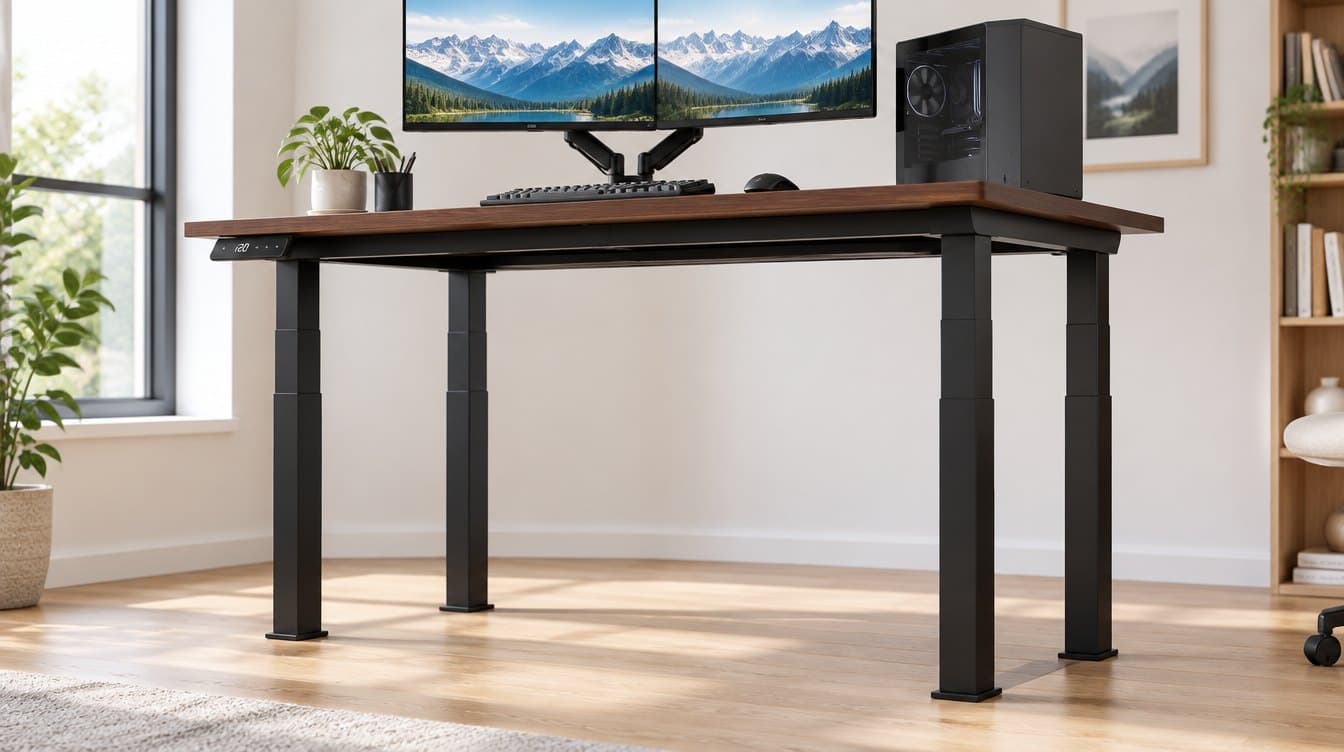
The E7Q — sold as the Odin — is FlexiSpot's answer to the question 'how heavy can this get before it wobbles.' Four motors, one in each leg, drive four three-stage carbon-steel columns with two support rails running the length of the underside, and the result is a 440 lb lifting rating and a 660 lb maximum static load that stays genuinely steady at the top of its travel. Height runs 25.8 to 51.6 inches — frame-only figures, as FlexiSpot publishes them, so add your desktop's thickness to both ends — and the frame telescopes from 43.3 to 74.8 inches wide, taking tops up to 94.5 by 35.4 inches, so it swallows the oversized desktops heavy multi-monitor setups usually need — the E7 Plus below stops around 80 inches long.
The reason to pay for it over the E7 Plus below is not the lifting number, which the two share at 440 lbs. It is the static figure and the width. Static load is what a desk holds once it has stopped moving, and the E7Q's 660 lbs is 120 more than the E7 Plus's 540 — the honest measure of how much gear can simply sit there. The four-motor drive also keeps all four corners synchronised under an asymmetric load, which is the case that makes two-motor quad-leg frames hesitate: a tower at one end and nothing at the other.
Note a correction, because it reverses what this guide previously told you. We published the E7Q with a 5-year frame warranty and argued that you were buying quad-motor hardware rather than a longer guarantee. FlexiSpot publishes 15 years on frame, motor and other mechanisms, and another 15 on the controller and electronics, the same terms it applies across its electric desks. The desktop is covered separately — 2 years on chipboard and solid-wood-texture tops, 5 on solid wood. There is no warranty penalty for choosing the E7Q, and the earlier version of this page invented one.
What we like
- 660 lb maximum static load — 120 lbs above the E7 Plus, the only other desk here that publishes a static figure
- Four motors keep all four corners level under an off-centre load like a tower at one end
- Telescopes to 74.8 in — the widest frame span here, against 72.2 for the UPLIFT and 62.6 for the E7 Plus
- 15 years on frame, motor and electronics alike
Worth knowing
- From $899.99, and an oversized bamboo or solid-wood top pushes a finished desk past $1,000
- Same 440 lb lifting rating as the E7 Plus at $300 less — you are paying for static load and width
- Desktop depth is limited to 30–35.4 in, so a shallow 24-inch top is not an option
- Height range
- 25.8–51.6 in (frame only)
- Capacity
- 440 lbs lifting; 660 lbs max static
- Legs and motors
- Four 3-stage legs, four motors
- Frame width
- 43.3–74.8 in; tops up to 94.5 × 35.4 in, 30 in minimum depth
- Warranty
- 15 yrs frame, motor and mechanisms; 15 yrs electronics; top 2 yrs chipboard / 5 yrs solid wood
2. Best Warranty
UPLIFT V3 2-Leg Standing Desk Frame
Typically $469 frame; desks from $599
- Buy-it-for-a-decade shoppers
- Shorter users who sit low
- Deep accessory ecosystems
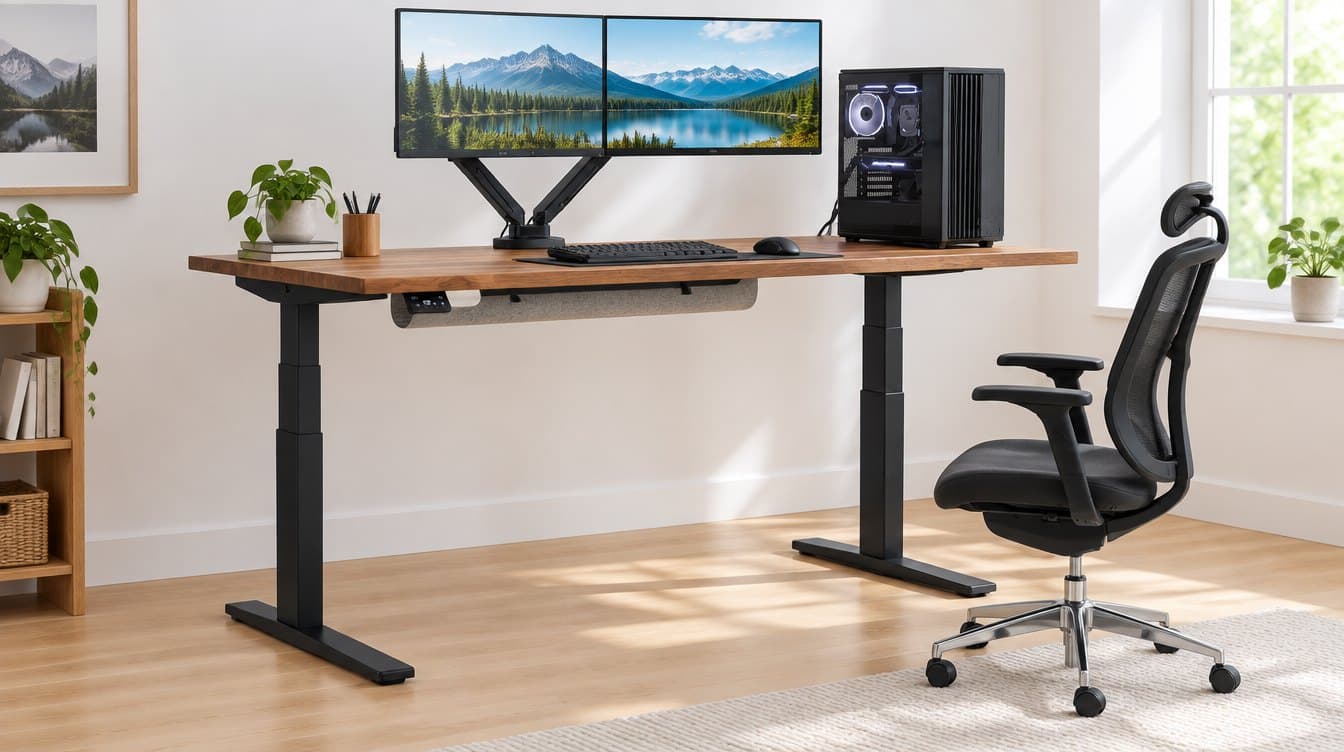
Buy this one by its generation. UPLIFT announced the V3 frame in September 2025, and the catalogue has since moved over wholesale: its desk frames page now lists V3 frames only, and the old V2, V2 4-leg and V2-Commercial product URLs — including the V2-Commercial this guide previously recommended — all serve the V3 today. One frame now carries the commercial model's three-stage legs and 355 lb lifting capacity as standard. If you were shopping the old model on our recommendation, the V3 is the desk you were actually looking for, and it is better specified.
The numbers are the V2-Commercial's, kept: three-stage legs give 21.6 to 47.7 inches frame-only, 22.6 to 48.7 with a 1-inch top, and 23.8 to 49.9 if you fit the foot spacers. That low floor is the quiet reason to buy it — it is the rare heavy-duty frame a shorter user can actually sit at, and it is the only desk here whose maker ties the range to ANSI/BIFMA G1-2013 and hits it on the nose. The frame adjusts from 41.3 to 72.2 inches for tops between 42 and 80 inches wide, in 24- or 30-inch depths. The V3 also drops the lower crossbar entirely, which is worth knowing if you have ever barked a shin on one; stability comes from I-beam rails under the top instead. Motors move it at 2 inches per second at under 48 dB — the fastest frame in this guide, and about a third quicker than the V2 it replaces.
Two things separate it from the FlexiSpot camp, and the first is not the number of years. FlexiSpot also publishes 15. The difference is scope: UPLIFT's 15 years covers the frame, the motors, the electronics and, uniquely here, the desktop, where FlexiSpot's 15-year term stops at the frame and gives a chipboard top 2 years, and where the Autonomous below covers its frame for life but its top for two. Nobody else here covers everything for the same length of time. Second is UPLIFT's accessory ecosystem — wire trays, hammocks, casters, CPU holders and hooks all built for these rails — which is why the frame ages into whatever your setup becomes. It is a two-leg desk, so it cannot match the E7Q's quad-motor rigidity at full extension, but for most heavy setups it is the smarter long-term buy.
What we like
- 15 years covering frame, motors, electronics and desktop — the only all-inclusive term here
- Lowest floor here at 21.6 in frame-only, and the only one whose maker ties the range to ANSI/BIFMA G1-2013
- 2 in/s is the fastest published lift here — a third quicker than the V2 it replaces — at under 48 dB
- No lower crossbar, and a first-party accessory ecosystem built for the frame rails
Worth knowing
- 355 lbs trails both quad-leg FlexiSpots by 85 lbs, though it clears the Secretlab and the Autonomous
- Lowest ceiling of the five on either convention — 47.7 in frame-only, 48.7 with a 1 in top
- Two-leg frame flexes slightly more than quad-leg desks at full height
- Height range
- 21.6–47.7 in (frame only); 22.6–48.7 in with a 1 in top; 23.8–49.9 in with foot spacers
- Capacity
- 355 lbs lifting
- Legs and motors
- Two 3-stage legs, dual motor; 2 in/s at under 48 dB
- Frame width
- 41.3–72.2 in; desktops 42–80 in wide, 24 or 30 in deep
- Warranty
- 15 years, all parts including motors, electronics and desktop
3. Best Value
FlexiSpot E7 Plus
Typically $599.99 (frame promos near $499.99)
- Quad-leg stability on a budget
- Heavy loads without four motors
- Tall users who don't want to overspend
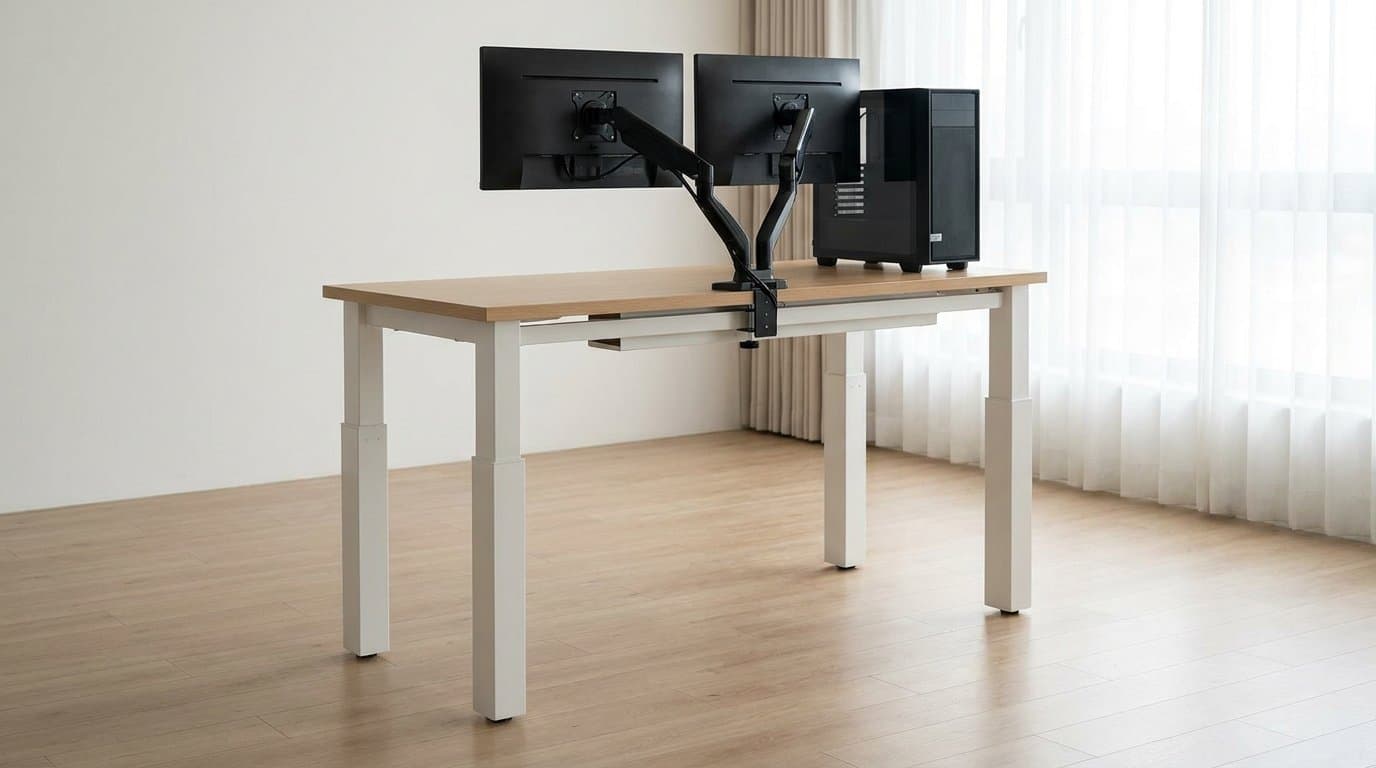
The E7 Plus is the value shortcut into four-leg territory, and after this year's check it is a stronger pick than this guide previously made it look. It carries the same 440 lb lifting rating as the E7Q on four three-stage legs, for the flat, planted feel two columns cannot give you, and drives them with two motors rather than four — which is how FlexiSpot lands it at $599.99 against the E7Q's $899.99, with frame promotions dipping near $499.99. It fits tops from 47 to 80 inches long and 28 to 35 inches wide, and carries the same 15-year frame and electronics warranty.
The ceiling correction matters more than anything else on this page, and the reason behind it is something to know before you order. We previously published the E7 Plus at 24 to 45.7 inches frame-only and warned that anyone over about 6'1" would be left hunched. FlexiSpot publishes the E7 Plus at 26 to 51.6 inches frame-only — the same ceiling as the E7Q, so that warning was wrong and this desk reaches as high as anything here. The 45.7 figure was not invented, though. It belongs to a different frame: FlexiSpot sells two four-leg frames under the E7 Plus name and lists both in its own product data, the E7 Plus at 26–51.6 in and the E7 Plus Fit at 24–45.7 in, each rated 540 lbs static. The Fit is the short-travel version, with a ceiling 5.9 inches lower, and the range we printed was the Fit's under the E7 Plus's name. So check which of the two a listing is actually selling before you pay — if you are tall, the one you want is the plain E7 Plus at 51.6 inches.
What you actually give up against the E7Q is static load and width: 540 lbs rather than 660, and a frame that stops short of the oversized 74.8-inch span. Two motors also move an off-centre load slightly less smoothly than four. For the great majority of heavy setups — two large screens on an arm, a tower on the surface, speakers, and a top under 72 inches — none of that is the binding constraint, and the E7 Plus is the sweet spot of this guide.
What we like
- 440 lb lifting rating and four 3-stage legs for $300 less than the E7Q
- 26–51.6 in frame-only — level with the E7Q for the tallest frame ceiling here
- 15 years on frame, motor and electronics
- Takes tops 47–80 in long and 28–35 in wide, the fullest desktop range FlexiSpot publishes here
Worth knowing
- 540 lb static load against the E7Q's 660 — less headroom once everything is sitting still
- Dual-motor drive is slightly less composed than four motors under an asymmetric load
- Sold as a frame at $599.99; a large bamboo or solid-wood top is extra
- FlexiSpot's near-identically named E7 Plus Fit stops at 45.7 in — confirm the variant before you order
- Height range
- 26–51.6 in (frame only); the separate E7 Plus Fit frame is 24–45.7 in
- Capacity
- 440 lbs lifting; 540 lbs static
- Legs and motors
- Four 3-stage legs, dual motor
- Frame width
- 38.9–62.6 in; desktops 47–80 in long, 28–35 in wide
- Warranty
- 15 yrs frame, motor and mechanisms; 15 yrs electronics; top 2 yrs chipboard / 5 yrs solid wood
4. Best for Gaming
Secretlab MAGNUS Pro
Typically $899
- Heavy gaming rigs
- Cable-free surfaces
- Magnetic accessory ecosystem
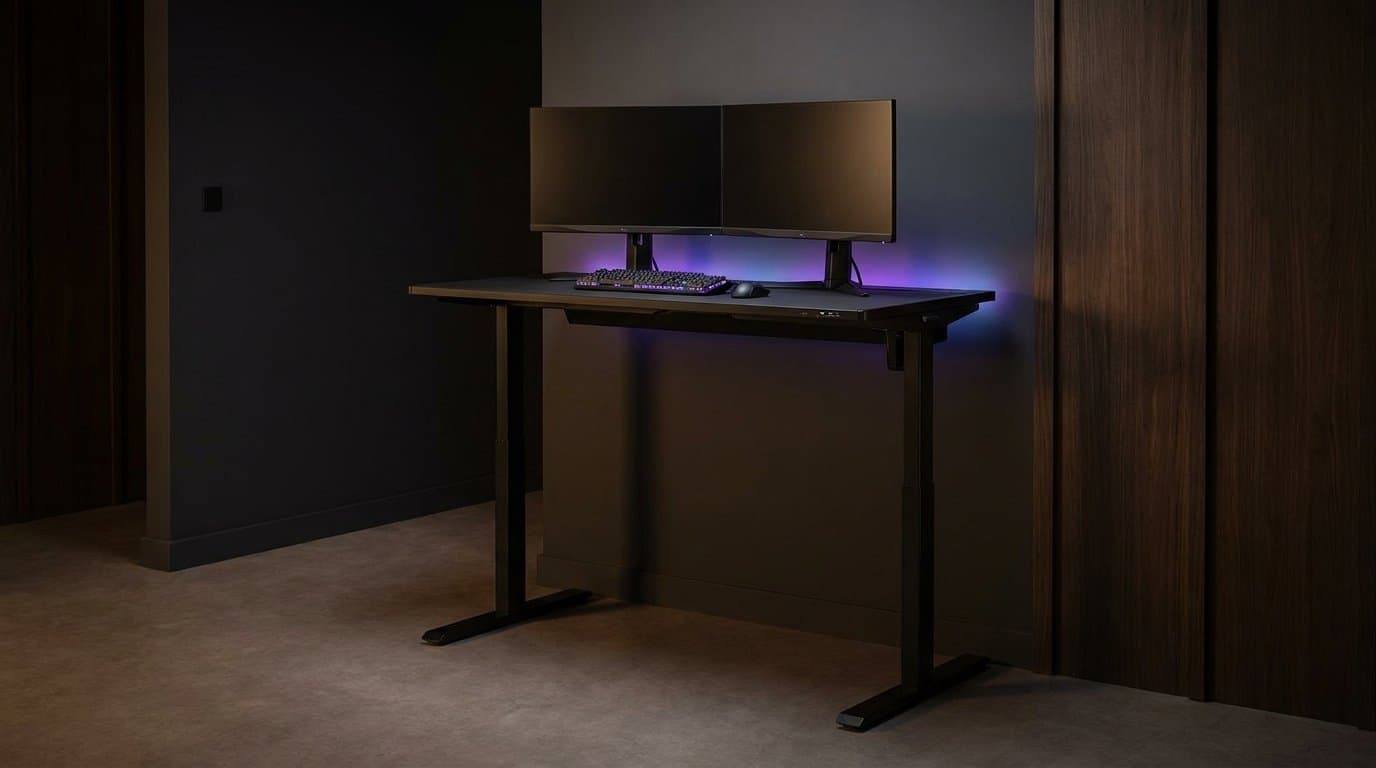
The MAGNUS Pro is the outlier here, and it earns its place a different way. The desktop is a single sheet of powder-coated steel with a magnetic surface, so the whole ecosystem — cable sheaths, a magnetic anchor, the RGB hood, headphone hangers — snaps on without a screw, and the Pro routes power through the legs so the surface stays genuinely clear. For a heavy gaming setup that rigid steel deck simply does not flex the way a laminate top can. It is $899 for a 59.1 by 27.6 inch desk, with a 70.0 by 31.5 inch XL above it, and — like the Autonomous below, and unlike the three frames above — it arrives as a finished desk rather than a base you must pair with a top.
Now the number, because it is not comparable to the rest of this table as published and we had been treating it as though it were. Secretlab rates the MAGNUS Pro at 265 lbs, and the label on its own spec sheet is not "lifting capacity" but "Maximum Distributed Load Capacity," footnoted in Secretlab's own words: "maximum distributed load capacity includes weight of Metal Desk Top." Secretlab publishes that top at 56.2 lbs. Every other capacity in this guide is a frame lifting rating measured with no desktop attached, so the like-for-like figure here is about 209 lbs of your gear, not 265. That is still ample for two large monitors, a tower and speakers, which commonly total 90 to 160 lbs. But the gap to the next-lowest frame is not 65 lbs, it is more like 120, and the headroom margin this guide argues for is thinner than the printed number suggests.
Two more things to weigh. Height runs 25.6 to 49.2 inches, and because the desk ships as one unit with its steel top that is already a with-desktop figure — compare it against the FlexiSpots' frame-only numbers plus your top, not directly. And the warranty is the weakest here: Secretlab publishes up to 5 years, conditional on registering for the extension, with the electronic control panel and control box covered for 2. If your priority is a heavy tower plus dual monitors with zero visible cable, it is superb. If you are maxing out capacity or want a decade of coverage, the FlexiSpots and the UPLIFT both do more for less.
What we like
- Rigid one-piece steel deck that will not flex under a heavy rig
- The only magnetic deck here — sheaths, anchors, hoods and hangers snap on with no screws
- Pro model routes power internally for a truly clear surface
- Arrives as a finished desk — no separate desktop to price, choose or fit
Worth knowing
- 265 lbs is a distributed rating that includes the 56.2 lb steel top — roughly 209 lbs of gear
- Up to 5 years, and only 2 on the control panel and control box — the shortest coverage here
- Fixed 59.1 × 27.6 in top (or the XL); no choice of size, depth or material
- Height range
- 25.6–49.2 in (complete desk, top included)
- Capacity
- 265 lbs maximum distributed load, stated by Secretlab as including the 56.2 lb metal top
- Legs and motors
- Two legs, dual motor; 30 mm/s (about 1.2 in/s)
- Desktop
- Magnetic powder-coated steel, 59.1 × 27.6 in (XL 70.0 × 31.5 in)
- Warranty
- Up to 5 years; electronic control panel and control box 2 years
5. Best Value for Tall Users
Autonomous Desk Pro (3-stage)
Typically $599 (list $699)
- Very tall users
- A finished desk under $600
- Simple dual-motor setups
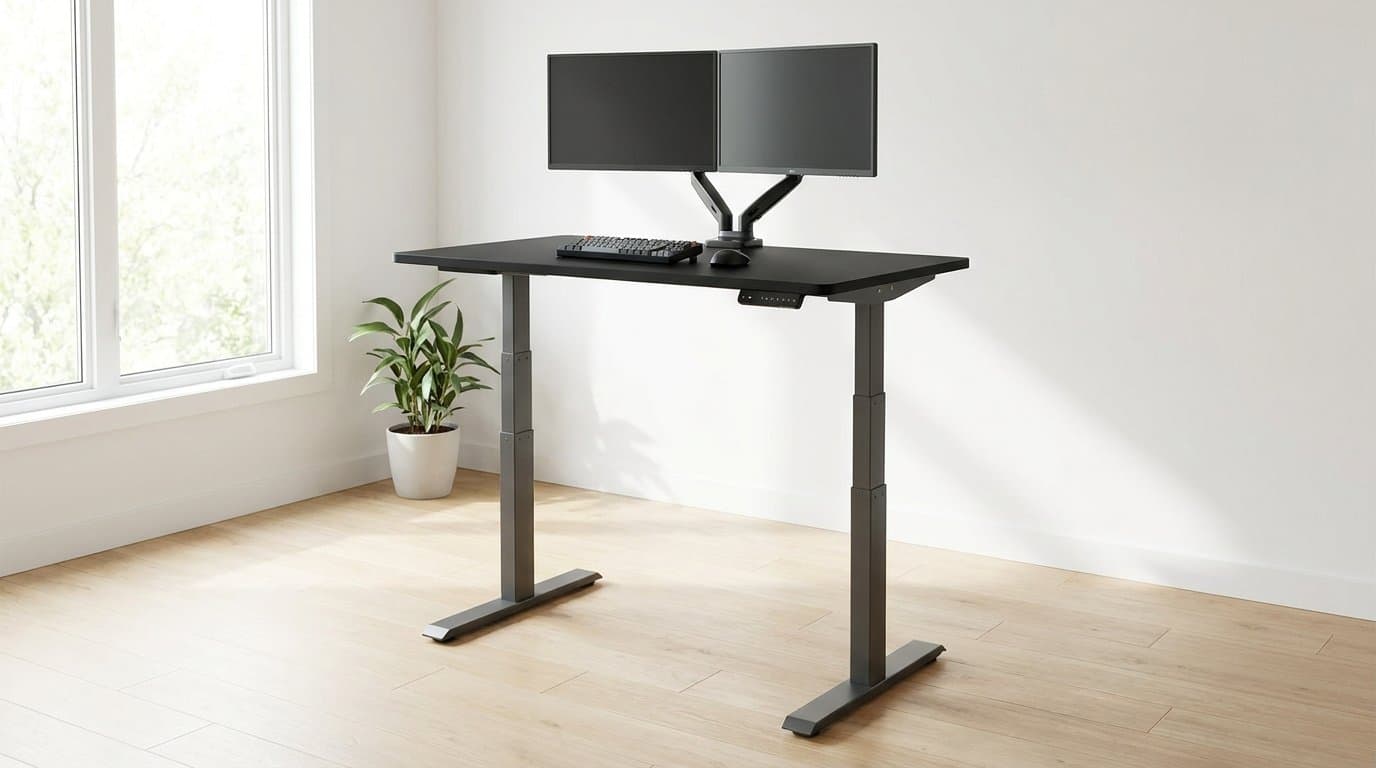
Buy this one by its SKU, not its name. Autonomous renamed the line — what we previously listed as the SmartDesk Pro is now simply the Desk Pro, and there are two of them at two prices. The standard Desk Pro at $499 runs 29.5 to 48.5 inches, which does not clear the desks above it. The three-stage version, $599 against a $699 list, is the one to buy: 27.2 to 52.7 inches measured with the desktop on, and 26 to 51.5 without it. The two share the same 330 lb rating and the same lifetime frame term, so the extra $100 buys travel and a slightly quicker lift.
Autonomous publishes both height conventions for the same frame, which makes cross-shopping easy — UPLIFT does the same, and the two FlexiSpots publish frame-only figures you will need to add your top to. Use the 26 to 51.5 inch pair against the FlexiSpots. On that basis the ceiling is essentially level with them rather than ahead: 51.5 inches against 51.6 for both. With its own top fitted it reaches 52.7, the highest single figure in the guide, and the point is not that it towers over the alternatives but that it gets you there as a finished desk for $599 — where matching it on a FlexiSpot means $599.99 or $899.99 for a frame and a desktop on top of that. If you are 6'3" and every standing desk you have owned stops an inch short, that is the cheapest fix here.
The dual-motor frame is rated for 330 lbs, comfortably above a typical two-monitor-and-PC load, and Autonomous publishes a 1.6 inch-per-second lift at under 30 dB. Both are real disclosures, but they are not unique ones and they do not win: UPLIFT publishes 2 inches per second, and Secretlab publishes 30 mm/s, which puts the Autonomous in the middle of the three makers here who state a speed at all. Autonomous backs the frame for life and the top for two years, so the frame term is the longest here outright while the desktop term is the shortest. It is a two-leg desk, so it cannot match the quad-leg FlexiSpots for rigidity at maximum extension under a truly extreme load, and its 26-inch floor sits well above the UPLIFT's 21.6.
What we like
- 52.7 in with its top on — the highest single height figure in the guide
- A finished desk with its desktop for $599, where the taller FlexiSpots are frames only
- 330 lb capacity and the only lifetime frame term here
Worth knowing
- 51.5 in frame-only is fractionally short of both FlexiSpots, not ahead of them
- Two-leg frame is less rigid than quad-leg desks at full extension
- Lifetime term covers the frame only; the desktop gets 2 years, level with FlexiSpot's chipboard tops
- Height range
- 27.2–52.7 in with top; 26–51.5 in frame only
- Capacity
- 330 lbs
- Legs and motors
- Two 3-stage legs, dual motor; 1.6 in/s at under 30 dB
- Desktop
- Included; sold as a complete desk
- Warranty
- Lifetime frame; 2 years top
The verdict
For the heaviest, widest setups the FlexiSpot E7Q is the desk that doesn't flinch — four motors, a 660 lb static load and the widest frame span here at 74.8 inches. It starts at $899.99, and, contrary to what this page used to say, it carries the same 15-year frame and electronics warranty as everything else in FlexiSpot's electric line. There is no warranty penalty for buying it.
But the smarter buy for most heavy setups is the FlexiSpot E7 Plus: the same 440 lb lifting rating, the same four three-stage legs and the same 15-year term for $300 less. This guide previously capped it at 45.7 inches and warned tall users away; FlexiSpot publishes the E7 Plus at 26 to 51.6 inches, so that warning was wrong and the desk clears essentially anyone. The catch is that 45.7 belongs to a real frame — the E7 Plus Fit, sold under almost the same name — so confirm the variant at checkout.
The UPLIFT V3 is the buy-it-for-a-decade pick, and it is also a generation change you should know about: UPLIFT moved its frame catalogue to the V3 in late 2025, and the V2-Commercial page we used to point you at now sells the V3 instead. Its 15 years is the only term here that covers the desktop as well as the frame, motors and electronics, and its 21.6-inch floor is more than four inches below anything else — the one genuinely good option if you are short and sit low.
The Secretlab MAGNUS Pro is for heavy gaming rigs where a rigid steel deck and invisible cables matter more than raw pounds. Read its 265 lbs carefully: Secretlab states that figure includes its own 56.2 lb metal top, so you have about 209 lbs of gear to play with, and its up-to-5-year term is the shortest coverage in the guide.
And the Autonomous Desk Pro (3-stage) is the cheapest route to a genuinely tall desk — 52.7 inches with its top fitted, supplied as a finished desk for $599 where the FlexiSpots are frames only. Buy it by the SKU: the $499 standard Desk Pro stops at 48.5 inches.
Whichever frame you pick, put an under-desk cable tray and a properly rated monitor arm on the same order — a heavy desk that moves needs its cables and screens to move with it.
Frequently asked questions
Add up the real load: two large or ultrawide monitors run 15–25 lbs each with arms, a desktop tower on the surface adds 20–40 lbs, and speakers, a laptop and desk gear add more. A serious multi-monitor-plus-tower setup commonly lands between 90 and 160 lbs. Then leave at least 30–40% headroom so the motors aren't lifting near their limit every cycle — that margin is what keeps a heavy desk smooth for years. One caution when you compare the numbers: check what each figure includes. Four of the five desks here quote a frame lifting rating measured with no desktop attached, but Secretlab's 265 lbs is a maximum distributed load that its own spec sheet says includes the 56.2 lb metal top, so the comparable figure is nearer 209. A capacity number is only useful once you know what has already been subtracted from it.
Lifting capacity is what the motors will raise and lower; static load is what the frame will simply hold once it has stopped moving. The two FlexiSpots make the distinction clearly: both are rated 440 lbs lifting, but the E7Q's static limit is 660 lbs against the E7 Plus's 540. Shop on the lifting number, because a sit-stand desk you never raise is just a desk — but the static figure is the better guide to how planted a heavily loaded top will feel at rest, and it is the main thing the E7Q's extra $300 buys you.
For heavy, wide setups, four legs genuinely help. A two-leg desk cantilevers its top off two central columns, so the far corners of a wide desktop have the most give — you feel it as a slight sway when you lean or type hard at standing height. Four legs plant a column near each corner and, on both FlexiSpots, add support rails down the length of the frame, which kills that corner flex. For a normal load a good two-leg desk like the UPLIFT V3 is plenty. For a very wide top carrying dual ultrawides and a tower, quad-leg is the stabler choice. Leg stages are a separate question and no longer a differentiator: every desk here runs three-stage legs except the Secretlab, which does not publish a stage count at all.
Only if your load or your top demands it. The two share a 440 lb lifting rating, a 15-year frame warranty and the same 51.6 in frame-only ceiling, so the E7 Plus at $599.99 captures most of the quad-leg benefit for two-thirds of the price. The E7Q's real advantages are a 660 lb static load against 540, a frame that telescopes to 74.8 inches and takes tops up to 94.5 inches long where the E7 Plus stops around 80, and four motors instead of two for keeping an off-centre load level. Step up when the desktop is genuinely oversized or the load is extreme; otherwise the E7 Plus is the better buy — checking, as ever, that the listing is the E7 Plus and not the shorter E7 Plus Fit.
Check both ends of the range against your body, not just the top number, and normalise the convention first. The two FlexiSpots publish frame-only figures — 25.8–51.6 in for the E7Q and 26–51.6 for the E7 Plus — so add your desktop thickness to both ends. UPLIFT and Autonomous publish both conventions: the V3 is 21.6–47.7 frame-only and 22.6–48.7 with a 1-inch top, the Autonomous 26–51.5 and 27.2–52.7. Secretlab's 25.6–49.2 already includes its steel top, because the desk ships as one piece. Normalised, tall standers have three genuine options within a tenth of an inch of each other rather than one, and shorter users who sit low want the UPLIFT V3, whose 21.6-inch floor is more than four inches below anything else here. A desk that lifts 440 lbs is useless if it can't reach your correct height in the position you use most — our standing desk height guide covers how to measure that.
Cable management first: everything plugged into a desk that moves has to travel with it, so a substantial under-desk tray for the power strip and bricks — with slack in the cables — prevents the classic raised-desk-yanks-the-outlet failure. A rated monitor arm makes height changes cleaner and gets heavy screens off the surface. Budget roughly $60–120 for the supporting cast, and confirm your arm's own weight rating covers ultrawides before you hang them.
Keep building your setup
Desks
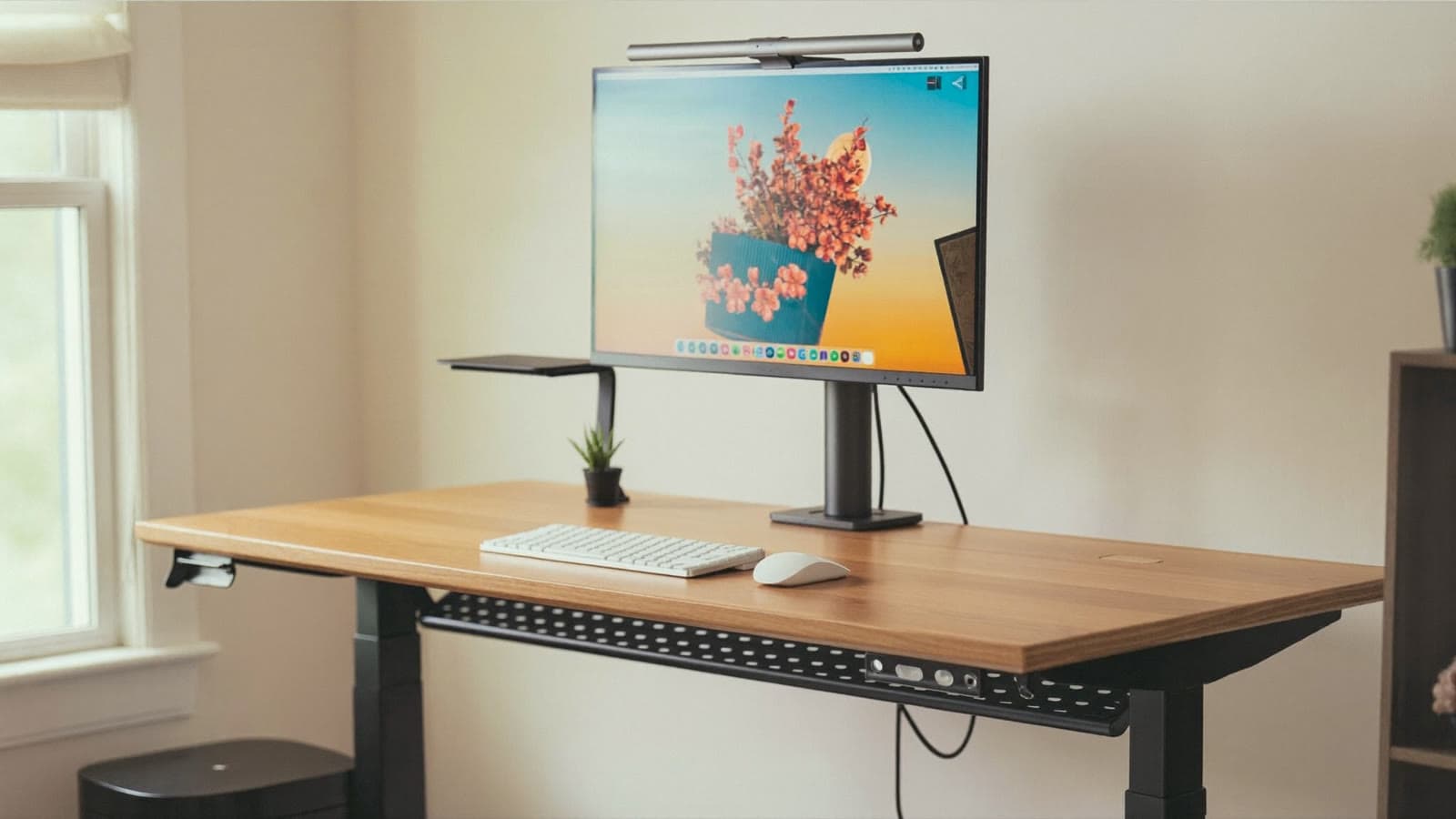
The Best Standing Desks Under $500 in 2026
The $250–$500 range is where standing desks stop being a gamble. Five desks that hold real setups steady at height — compared on published capacity, which here changes with the size you order, and on what the warranty actually covers once you read past the banner.
Updated September 14, 2026
Desks
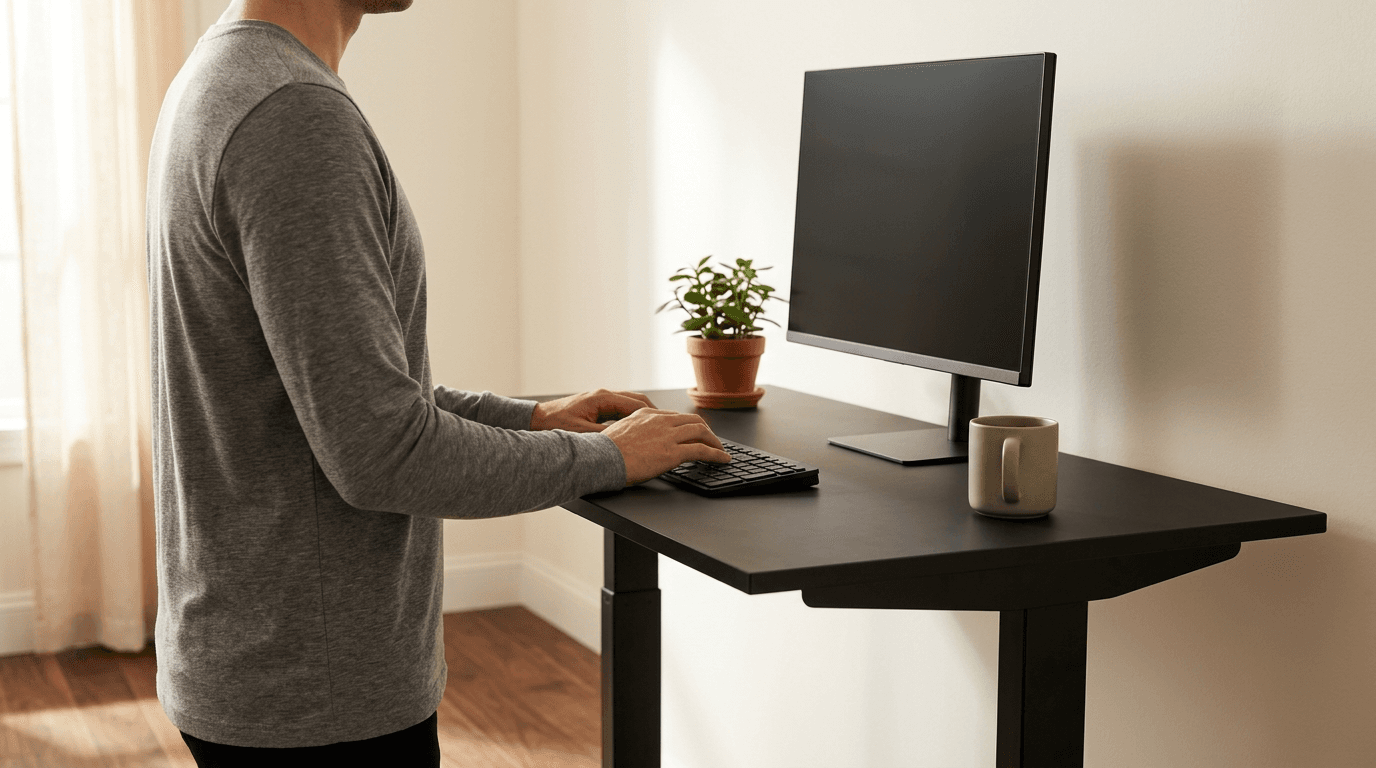
Standing Desk Height: How to Set Yours, and What the Charts Get Wrong
Every standing desk chart asks how tall you are. That is the wrong question — the number that governs desk height is your elbow, not your stature, and people of identical height need desks two inches apart. Here is the two-measurement method, and the frame specs that decide whether your correct height is reachable at all.
Updated September 22, 2026
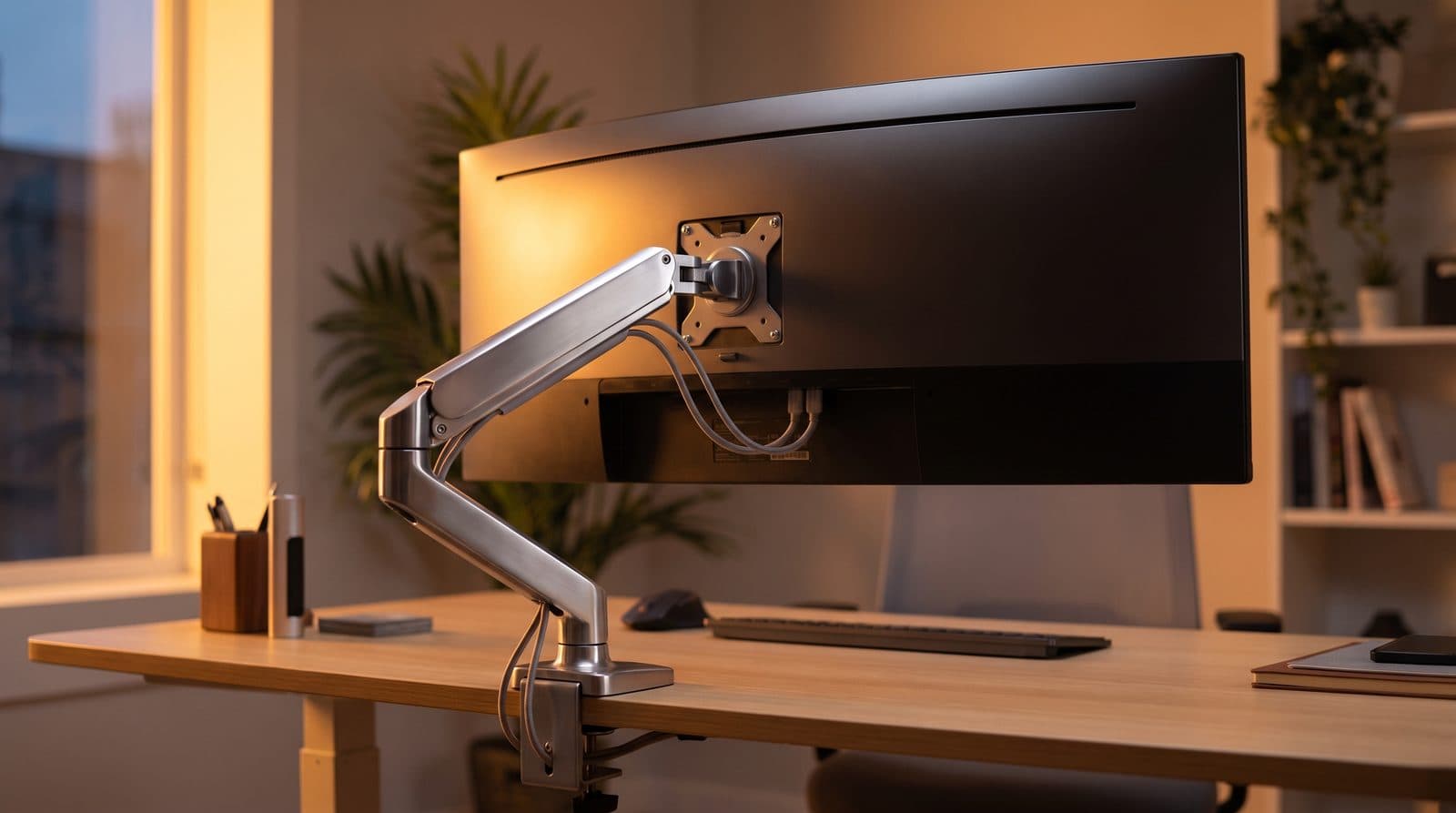
Monitor Arms
The Best Monitor Arms for Ultrawide Monitors in 2026
Ultrawides are heavy, and most arms quietly aren't rated for them. Five arms that hold 34- to 49-inch screens without sagging — matched to monitor weight.
Updated September 11, 2026
Get the next guide in your inbox
One short email when we publish or meaningfully update a buying guide. No spam, no daily deals firehose.