 Rigworthy
The Best Wrist Rests for Keyboard and Mouse in 2026
By Rigworthy Editorial Team · Updated September 5, 2026
Rigworthy is reader-supported: we may earn a commission if you buy through our links, at no cost to you. How we make money
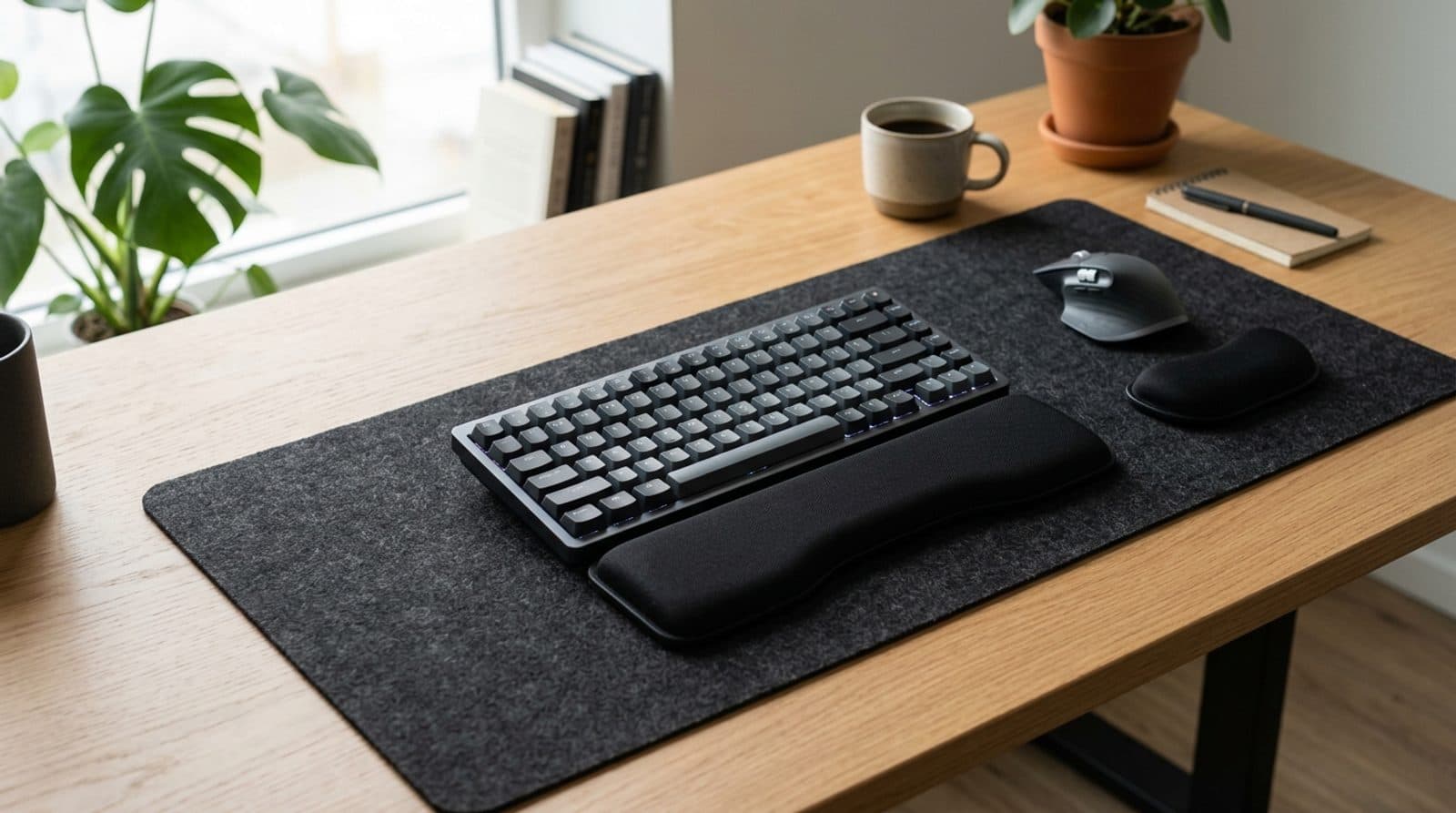
A great keyboard and a good mouse still leave your wrists doing something they were never designed for: hovering, bending, and bearing weight for eight hours straight. A wrist rest is the small, cheap fix — the pad that takes the pressure off the heel of your hand and keeps your wrist closer to the flat, neutral angle it wants. It's one of the highest-comfort-per-dollar upgrades on a desk, and also one of the most misunderstood.
The catch is that a wrist rest only helps if it fits how you work. The wrong material runs hot and clammy; the wrong height bends your wrist the exact way you were trying to avoid; and a keyboard rest does nothing for the mouse hand that's actually aching. So we sorted the good ones by the things that decide whether a rest earns its place: material matched to your hands, height matched to your keyboard, a cover that survives daily skin contact, and honest support for both hands — not just the one that types.
Our top picks at a glance
- 1
- 2
- 3
- 4
- 5
- 6
How we chose
- Material matched to how you work — cooling gel for warm hands, memory foam for plush comfort, solid wood for a mechanical board
- Height matched to your keyboard's front edge — the one measurement that decides your wrist angle, and the one spec sheets rarely make comparable
- A cover that survives skin oils and cleans up — the thing your bare wrists touch all day
- A base that stays put and doesn't slide across the desk mid-session
- Honest support for the mouse hand, not just the keyboard — wrist strain is rarely one-sided
Our picks come from spec research, long-term owner feedback, and category expertise — not sponsorships. Read the full methodology.
Compared side by side
| Product | Award | Material | Best paired with | Feel | Typical price |
|---|---|---|---|---|---|
| HyperX Wrist Rest | Best Overall | Cooling gel foam | Full / TKL keyboard | Medium-soft | ~$20 |
| Gimars Memory Foam Set | Best Value | Memory foam | Keyboard + mouse | Soft | ~$14 |
| Kensington Duo Gel Keyboard Wrist Rest | Best for the Office | Gel | Slim / standard keyboard | Firm | ~$20 |
| Razer Ergonomic Wrist Rest Pro | Best for Gaming | Cooling gel foam | Full-size keyboard | Plush, angled | ~$40 |
| Keychron Walnut Wood Palm Rest | Best Wood Palm Rest | Solid walnut wood | Slim boards — measure first | Firm / solid | ~$35 |
| 3M Gel Wrist Rest for Mouse (WR305LE) | Best for the Mouse Hand | Gel + leatherette | Mouse hand | Firm-soft | ~$14 |
1. Best Overall
HyperX Wrist Rest
Typically around $20
- Warm hands
- Most keyboards
- All-day typing
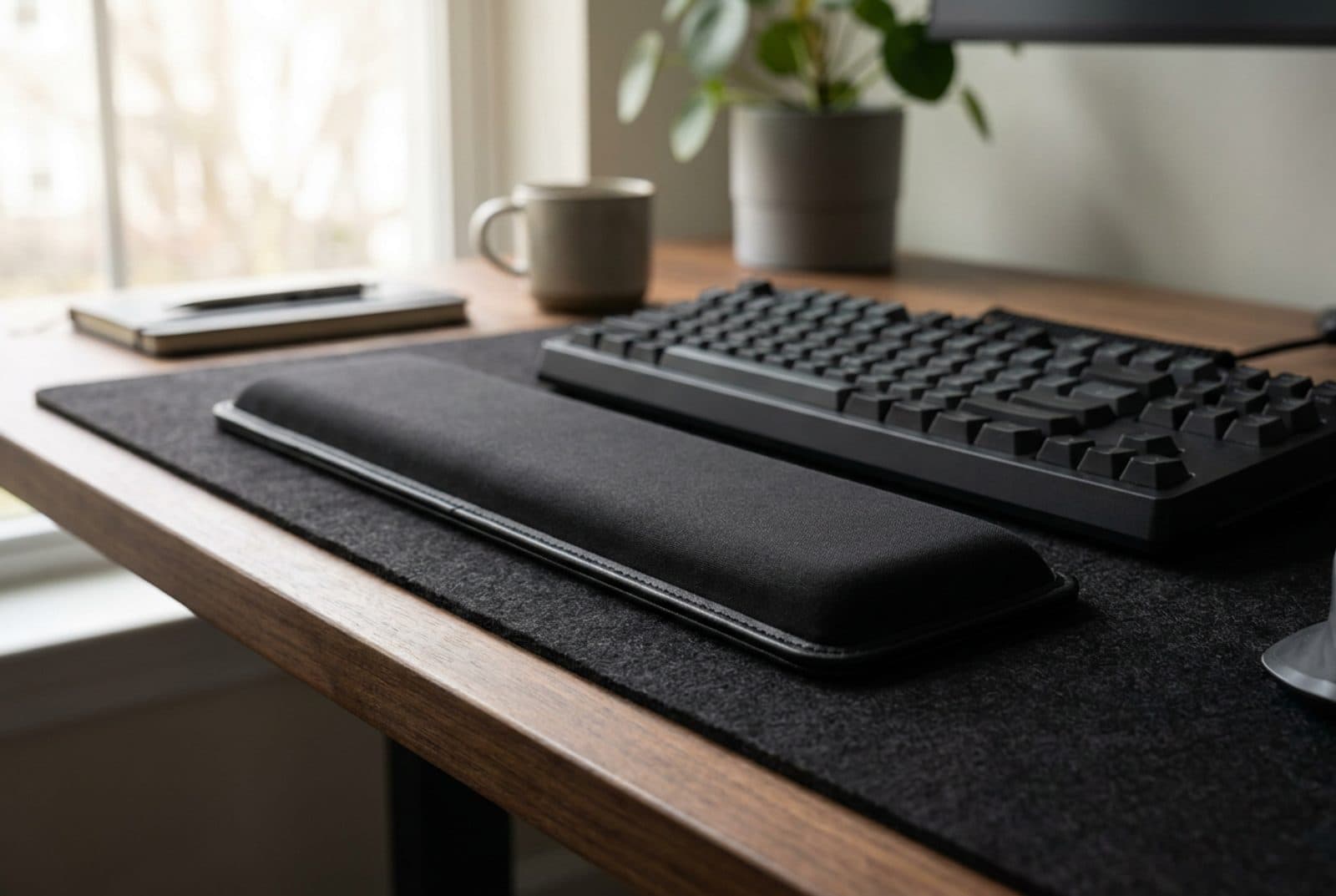
The HyperX Wrist Rest is the pick that gets the most things right for the most people, and the reason is the fill: cool gel-infused memory foam. Plain memory foam is plush but famous for trapping heat, and after an hour your wrists are sitting in a warm patch; the gel layer here keeps the surface noticeably cooler for far longer, which is exactly what you want if your hands run warm or you game and work in long stretches. It's soft enough to feel like a treat and firm enough that your wrist doesn't bottom out on the desk.
The rest of the design is quietly sensible. Anti-fray stitching wraps the edge so the cover doesn't unravel where your palm rubs it, an anti-slip base keeps it planted, and it comes in full-size, tenkeyless, and compact widths (plus a small mouse version) so you can match it to the keyboard you actually own. It isn't the cheapest or the fanciest, but for a low-twenty-dollar upgrade that solves the warm-wrist problem most foam rests ignore, it's the safe default we'd point almost anyone to first.
What we like
- Cooling gel layer stays cool far longer than plain foam
- Anti-fray stitched edge resists wear where your palm sits
- Multiple widths (full / TKL / compact / mouse) to match your board
Worth knowing
- Not the plushest or the most premium-feeling option
- Spot-clean only, not machine washable
- Height
- 22.1 mm (full-size, unloaded)
- Fill
- Cool gel-infused memory foam
- Sizes
- Full / TKL / compact / mouse
- Base
- Anti-slip
- Edge
- Anti-fray stitching
- Care
- Spot clean
2. Best Value
Gimars Memory Foam Set
Typically around $14
- Covering both hands
- Tight budgets
- A quick first try
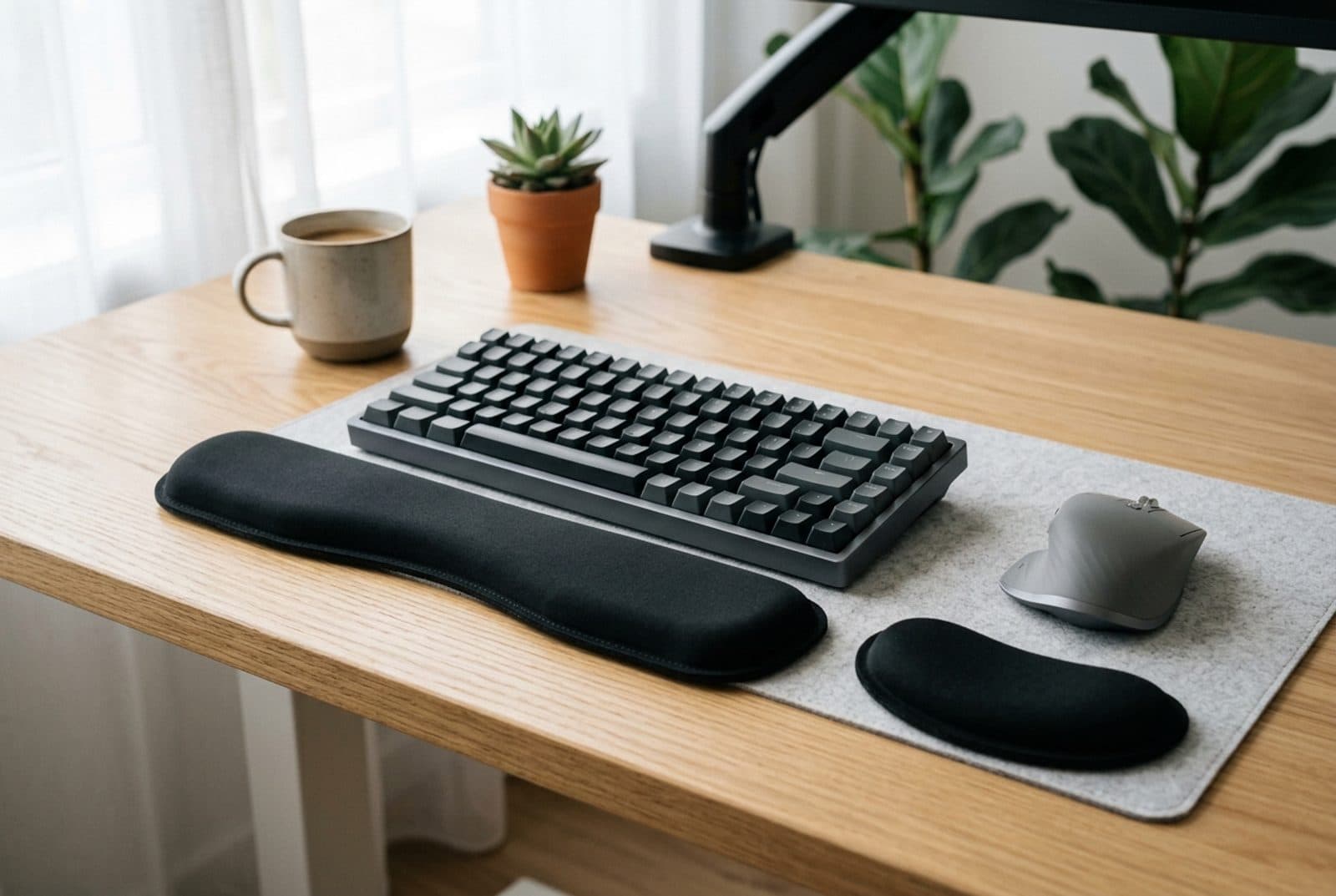
If you're not sure a wrist rest will change your life, the Gimars set is the low-risk way to find out. For around fourteen dollars you get both pieces — a full-length keyboard rest and a small mouse wrist pad — so you're supporting the hand that types and the hand that clicks in one purchase, which most single-piece rests leave you to solve separately. The fill is straightforward memory foam that molds to your wrist and springs back, wrapped in a stretchy cover over a non-slip rubber base.
The compromises are the honest ones you'd expect at this price. It's plain foam, not gel, so it'll warm up faster than the HyperX on a hot day, and the covers and stitching won't have the same long-haul durability as the pricier picks. But as a complete keyboard-plus-mouse set for the cost of a couple of coffees, it's the easiest recommendation for anyone who wants to try wrist support before spending real money — and plenty of people never feel the need to upgrade from it.
What we like
- Includes both a keyboard rest and a mouse pad
- Genuinely cheap way to support both hands at once
- Soft memory foam with a non-slip base
Worth knowing
- Plain foam warms up faster than gel picks
- Covers and stitching are less durable than premium rests
- Height
- ~30 mm (1.2 in, unloaded)
- Includes
- Keyboard rest + mouse pad
- Fill
- Memory foam
- Base
- Non-slip rubber
- Cover
- Stretch fabric
- Care
- Spot clean
3. Best for the Office
Kensington Duo Gel Keyboard Wrist Rest
Typically around $20
- Shared or hot-desk setups
- Easy cleaning
- A firmer feel
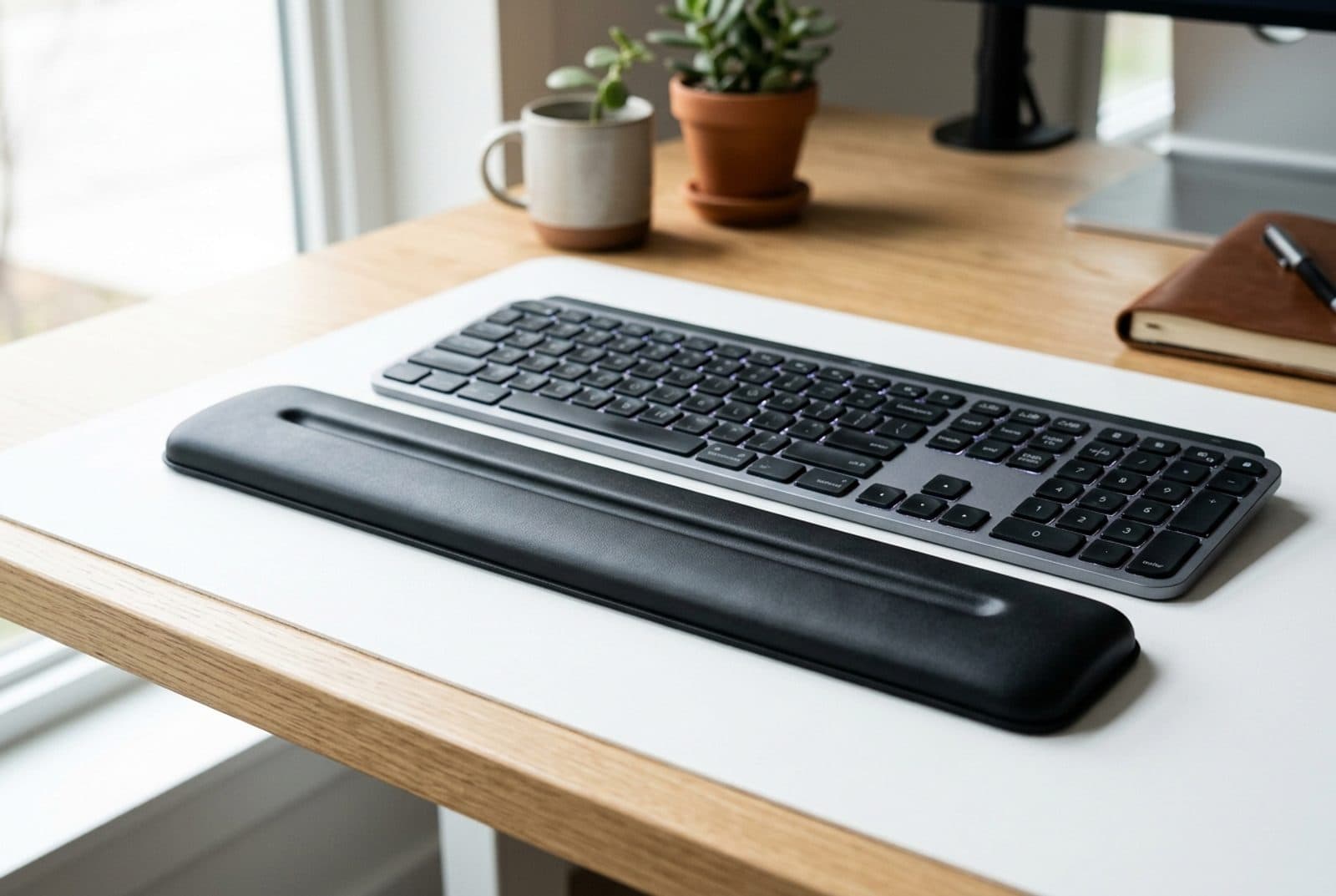
Where the gaming rests lean plush, the Kensington Duo Gel leans practical, which is why it's the one we'd put on an office or hot-desk. The gel-filled pillow contours to your wrist with a firmer, more consistent feel than memory foam — some people simply prefer support that doesn't slowly sink — and a ventilation channel down the length keeps the contact patch from getting clammy. It's a mature, unfussy piece of ergonomic hardware rather than a lifestyle accessory.
Its real edge is cleanability. The smooth cover wipes down in a second, and Kensington rates it to survive repeated cleaning with alcohol and disinfecting solvents without breaking down — a genuinely useful trait for a surface your bare wrists press against all day, and a real one in a shared office. It's low-profile, so it pairs best with slim and standard keyboards rather than tall mechanical boards, but for a clean, wipeable, firmer-feeling rest at a fair price, it's the sensible workplace choice.
What we like
- Firm, consistent gel support that doesn't slowly sink like foam
- Smooth cover wipes clean and tolerates disinfecting solvents
- Ventilation channel keeps the contact area cooler and drier
Worth knowing
- Low-profile — too short for tall mechanical keyboards
- Firmer feel isn't for people who want plush cushioning
- Height
- ~10 mm (0.41 in)
- Fill
- Gel
- Cover
- Smooth, easy-clean
- Cleaning
- Solvent/disinfectant resistant
- Feature
- Ventilation channel
- Profile
- Low
4. Best for Gaming
Razer Ergonomic Wrist Rest Pro
Typically around $40
- Long gaming sessions
- Full-size keyboards
- A plush, angled feel
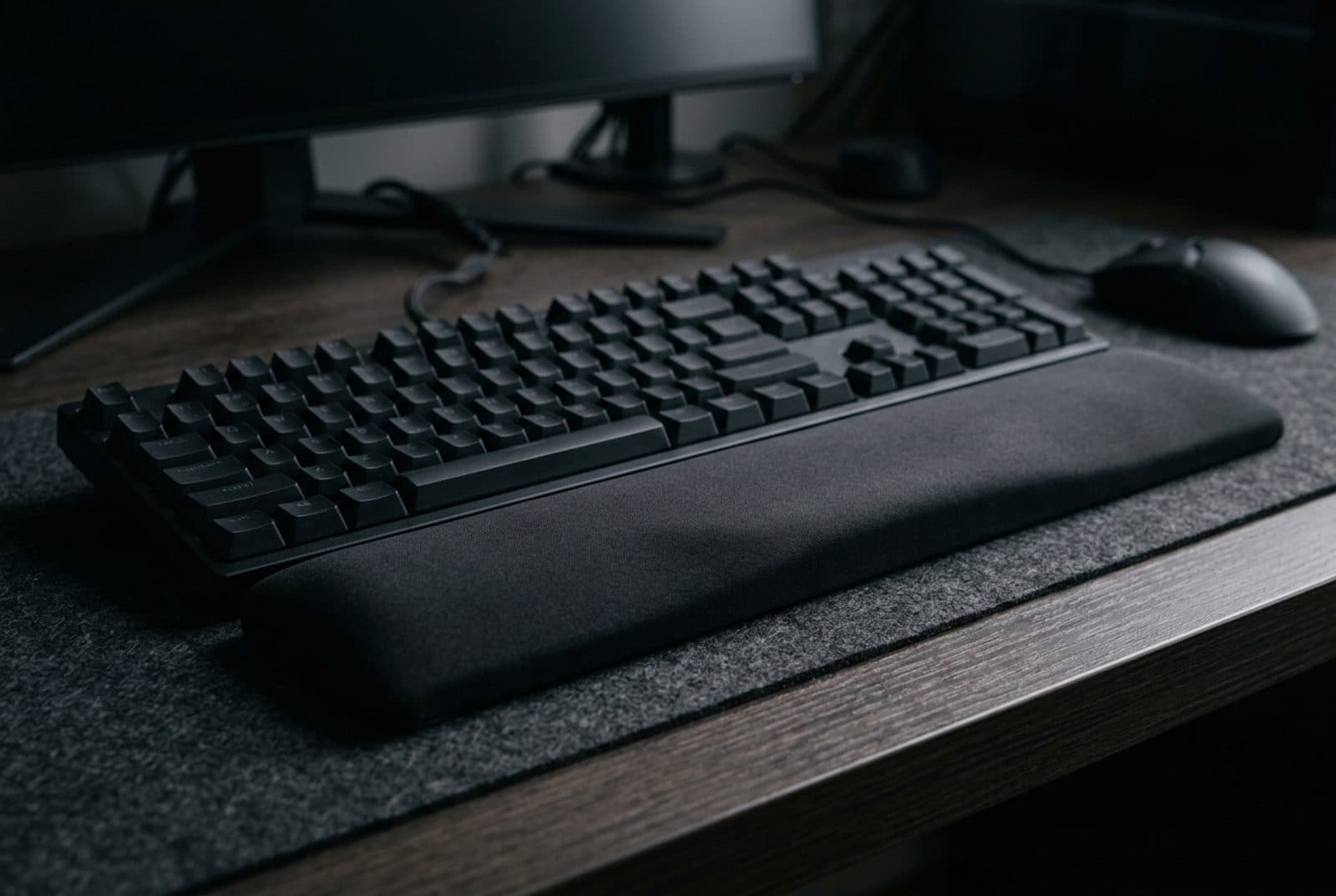
The Razer Ergonomic Wrist Rest Pro is the one that feels most like a piece of gear rather than an accessory, and it's aimed squarely at people who sit at the keyboard for hours. Two things set it apart: cooling gel-infused memory foam wrapped in a heat-transfer fabric that actively pulls warmth away, so it stays comfortable deep into a marathon session, and a gently angled top surface that lifts your wrist to a more neutral position instead of laying it flat. It's plush in a way the budget foam picks can't match.
The catch is that it's full-size only and priced like a premium item — around double the HyperX — so it makes the most sense if you run a full keyboard and value the angled, cooler feel enough to pay for it. Chunky anti-slip rubber feet keep it locked to the desk even during frantic play. If your priority is the most comfortable, coolest-running rest for long stretches at a full-width board, this is the upgrade pick; if you're on a TKL or watching your budget, the HyperX gets you most of the way there for less.
What we like
- Cooling gel foam plus heat-transfer fabric stays cool longest
- Angled surface nudges the wrist toward a neutral position
- Plush, premium feel with a grippy anti-slip base
Worth knowing
- Full-size only — no TKL or compact option
- Roughly double the price of the value picks
- Height
- 26.4 mm (full-size, unloaded)
- Fill
- Cooling gel-infused memory foam
- Cover
- Heat-transfer fabric
- Shape
- Angled incline
- Base
- Anti-slip rubber feet
- Size
- Full-size only
5. Best Wood Palm Rest
Keychron Walnut Wood Palm Rest
Typically around $35
- Low-profile and slim boards
- A no-cushion firm rest
- Matching a wood/aluminum setup
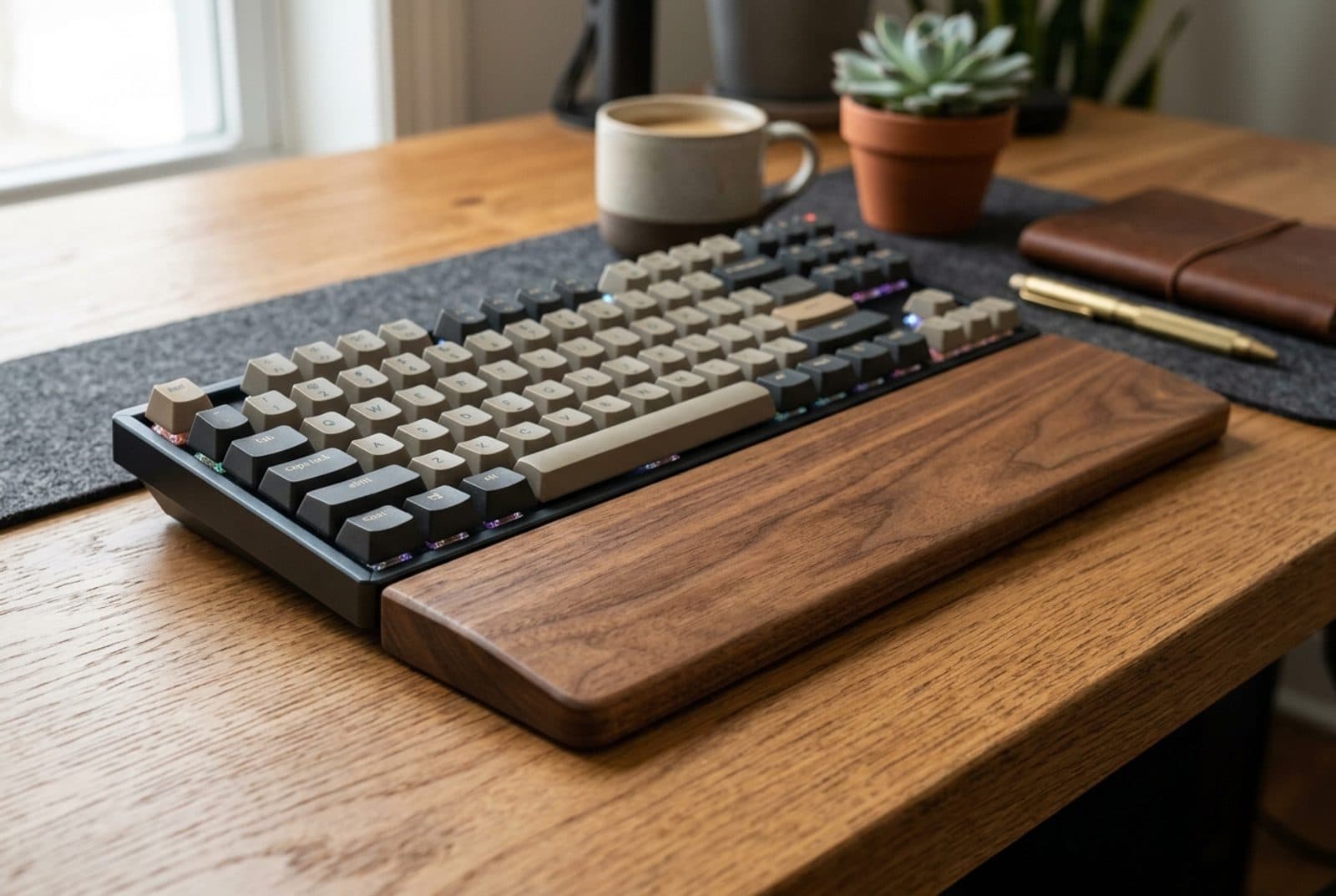
Wood is the material that delivers exactly the height printed on the box. Foam compresses under a hand, so its stated thickness is always more than you get; solid walnut doesn't move at all, and for wood-rest fans that firm, planted feel is the whole point. Keychron's American walnut rests are 15 mm thick with a subtle bevel, they're sized per keyboard series, and they visually match a walnut or aluminum setup in a way a black foam block never will.
Be clear-eyed about what 15 mm means, though, because we previously described these as milled to the height of a mechanical board and that was wrong. Keychron sells the rest in different lengths per series — 317 mm for the K2 and K6, 330 mm for the Q1, Q2 and V2 — but every version is the same 15 mm tall. The sizing is width and length, not height. Meanwhile Keychron publishes the K2's front edge at 17 mm without keycaps, which is roughly 26 mm once the keycaps are on, and the Q3 Max at about 29 mm on the same basis. So this rest sits around 11 to 14 mm below the front edge of the boards it's sold for. It's the most durable and hygienic rest here and the only one whose published height is honest — but measure your own board's front edge before you assume it's a height match, and see our keyboard height and wrist rest guide for how to do that.
What we like
- Delivers its full 15 mm under load — foam rests don't
- Solid walnut won't absorb oils, fray, or compress over time
- Looks the part next to a wood or aluminum setup
Worth knowing
- At 15 mm it sits below the front edge of most mechanical boards
- Zero cushioning, and a hard edge OSHA's guidance advises against
- Material
- American walnut
- Thickness
- 15 mm (same in every size)
- Sizing
- Length per keyboard series
- Cushion
- None (solid)
- Care
- Wipe clean
6. Best for the Mouse Hand
3M Gel Wrist Rest for Mouse (WR305LE)
Typically around $14
- Mouse-side wrist strain
- Small footprint
- Wipe-clean hygiene
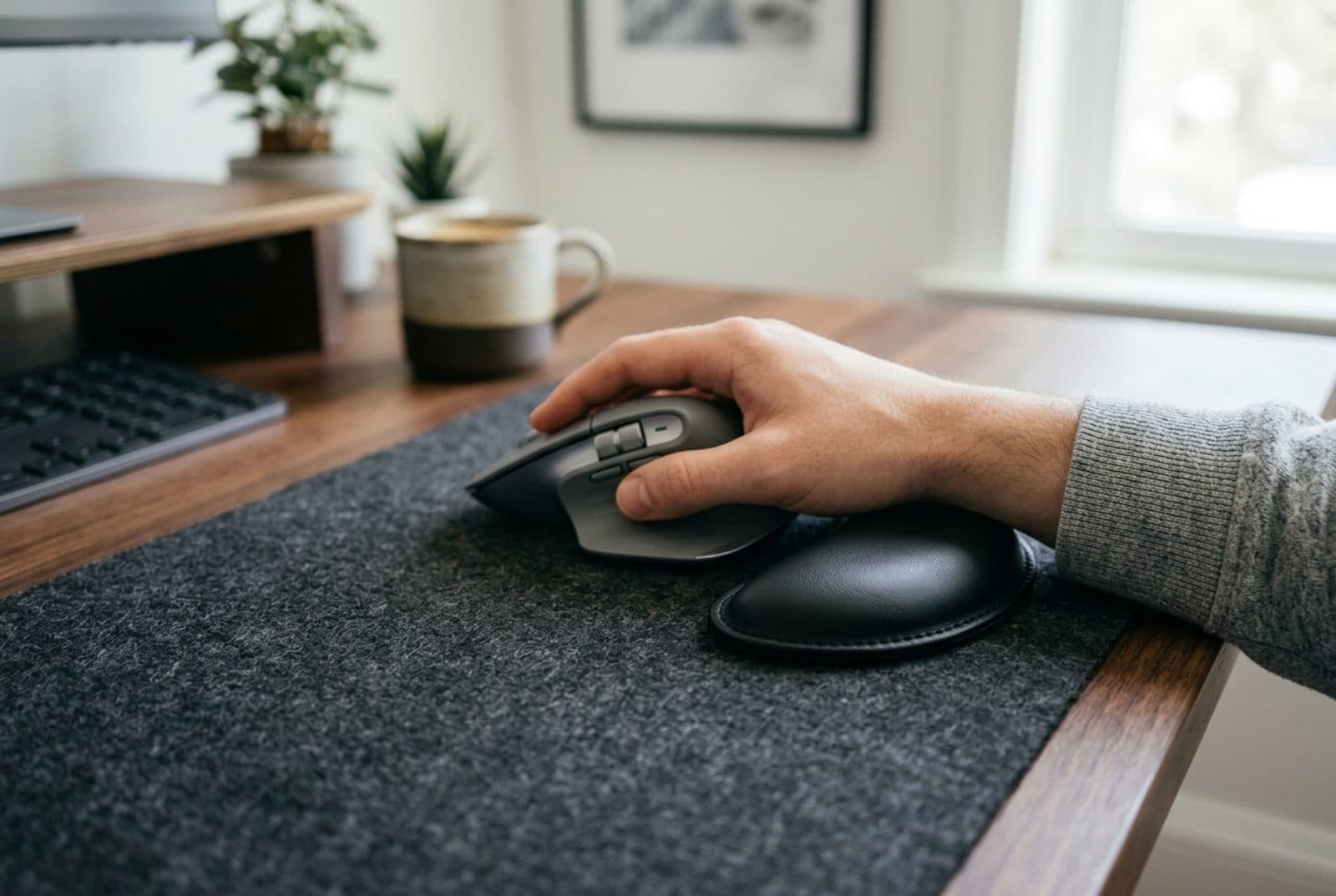
Keyboard rests get all the attention, but for a lot of people the ache lives on the mouse side — the hand that's planted and clicking all day. The 3M WR305LE is a compact, dedicated fix for exactly that. Its gel fill is tuned to be firm enough to actually support the wrist yet soft enough to stay comfortable, and 3M guarantees the gel against leaking and punctures under normal use, so it won't split or flatten out like a cheap pad. At under seven inches it takes up almost no desk, tucking in right at the base of your mouse.
The leatherette cover is the practical touch: it wipes clean instantly and carries antimicrobial protection built into the surface, which is genuinely worth having on a spot your wrist rubs for hours. It's a single-purpose piece — this is for the mouse hand, not your keyboard — but that focus is the appeal. Pair it with any of the keyboard rests above and you've covered both hands, which is how wrist strain should actually be treated, since it's rarely one-sided.
What we like
- Purpose-built for mouse-side wrist strain most rests ignore
- Firm-but-comfortable gel that resists leaks and punctures
- Wipe-clean antimicrobial leatherette cover; tiny footprint
Worth knowing
- Mouse-only — you'll still want a separate keyboard rest
- Firm gel feel isn't as plush as memory foam
- Height
- ~19 mm (0.75 in)
- Fill
- Gel (leak/puncture-resistant)
- Cover
- Antimicrobial leatherette
- Size
- ~6.9 in compact
- Base
- Non-skid
- Care
- Wipe clean
The verdict
For most people, the HyperX Wrist Rest is the one to buy: cool gel-infused memory foam that doesn't turn into a warm patch after an hour, a durable stitched edge, and sizes to match whatever keyboard you own. If you want to cover both hands for the price of lunch, the Gimars Memory Foam Set throws in a keyboard rest and a mouse pad and lets you find out whether wrist support helps at all.
From there, match the rest to your setup. Shared offices and anyone who values a firmer, wipe-clean surface should take the Kensington Duo Gel. Long sessions at a full-size board are best served by the plush, cooler-running, angled Razer Ergonomic Wrist Rest Pro. Want a rest that never compresses and never gets grubby? The Keychron Walnut Wood Palm Rest is the one — just measure first, because at 15 mm it sits below the front edge of most tall mechanical boards rather than level with it, as we go through in our keyboard height and wrist rest guide. And whatever you pick for the keyboard, don't forget the mouse hand — a compact 3M Gel Wrist Rest covers the side of the desk most rests quietly ignore, though if the ache is mouse-side, the shape of an ergonomic mouse matters as much as any pad under your wrist. Just remember the golden rule: rest your wrists between bursts, float them while you type, and match the height to the front edge of your keyboard — measured, not assumed.
Frequently asked questions
Both — it depends entirely on how you use one. A wrist rest is meant to support your wrists while you pause between bursts of typing, not to plant them on while your fingers stretch to the keys. If you anchor your wrists on the pad and pivot your hands to type, you can bend the wrist and compress the very structures you're trying to protect. Used correctly — hands floating over the keys while typing, wrists relaxing onto the rest during breaks — a good rest keeps your wrists in a more neutral position and takes pressure off the heel of your hand. The rest is a resting spot, not a launch pad.
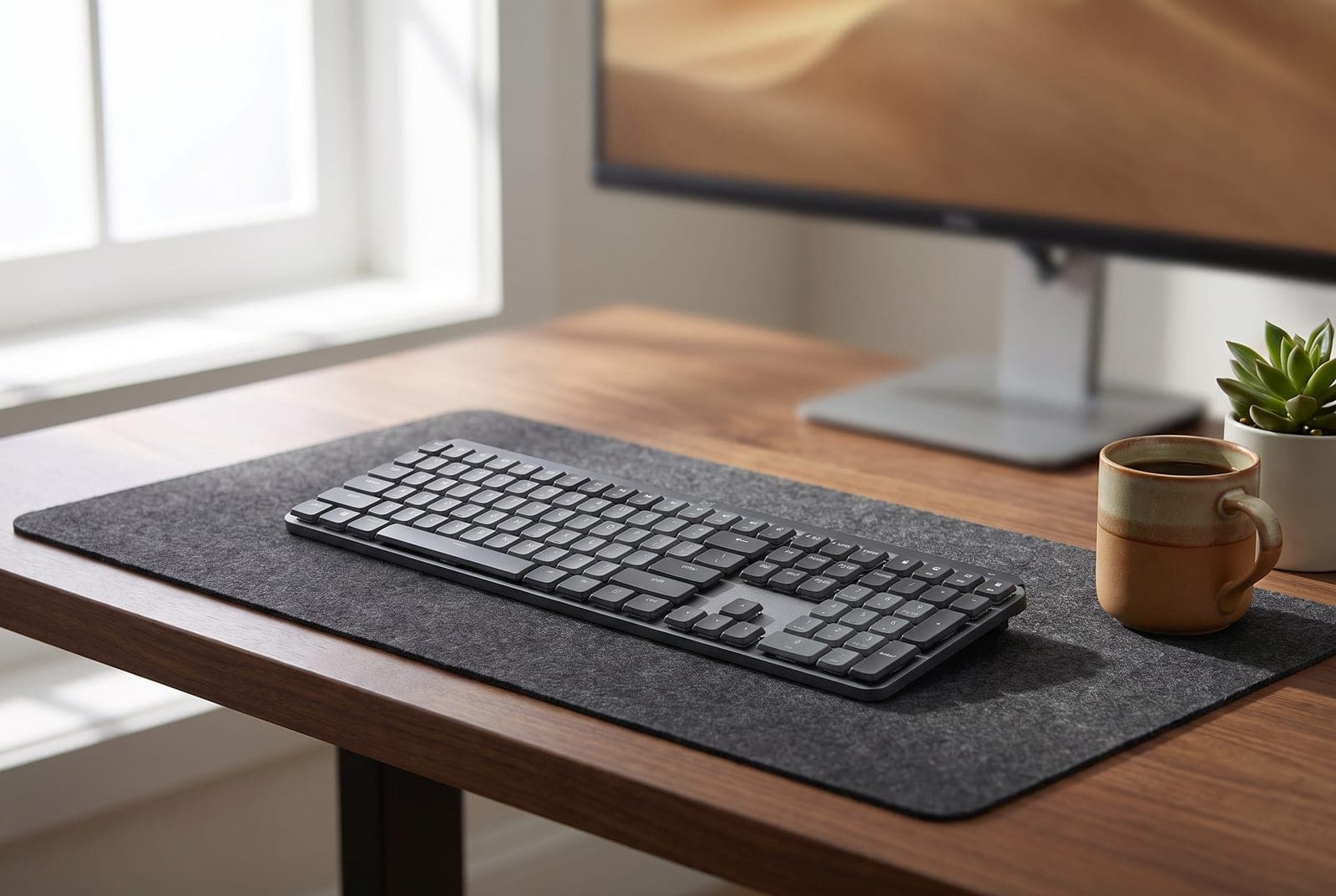
Yes, and it's the single most important fit detail people overlook — OSHA's guidance is to match the support to the width, height and slope of the front edge of your keyboard. The catch is that keyboard makers publish that height on several different conventions, so the numbers on two spec sheets often aren't comparable: a standard mechanical board is usually 26 to 30 mm at the front edge with its keycaps on, which is taller than most rests here, while a low-profile board may be half that. Measure your own board with a ruler rather than trusting a spec, then match within a few millimetres. Our keyboard height and wrist rest guide works through the measurement, the conventions and what to do when nothing matches.
Neither wins outright; they suit different hands. Memory foam is plusher and molds closely to your wrist, but plain foam traps heat and can feel warm after a while. Gel is firmer and more consistent, and it tends to stay cooler. The best of both is gel-infused memory foam — the cooling of gel with the give of foam — which is why our overall and gaming picks both use it. If your hands run warm or you sit for long stretches, lean toward gel or gel-infused foam; if you want the softest possible cushion and heat isn't an issue, plain memory foam is fine.
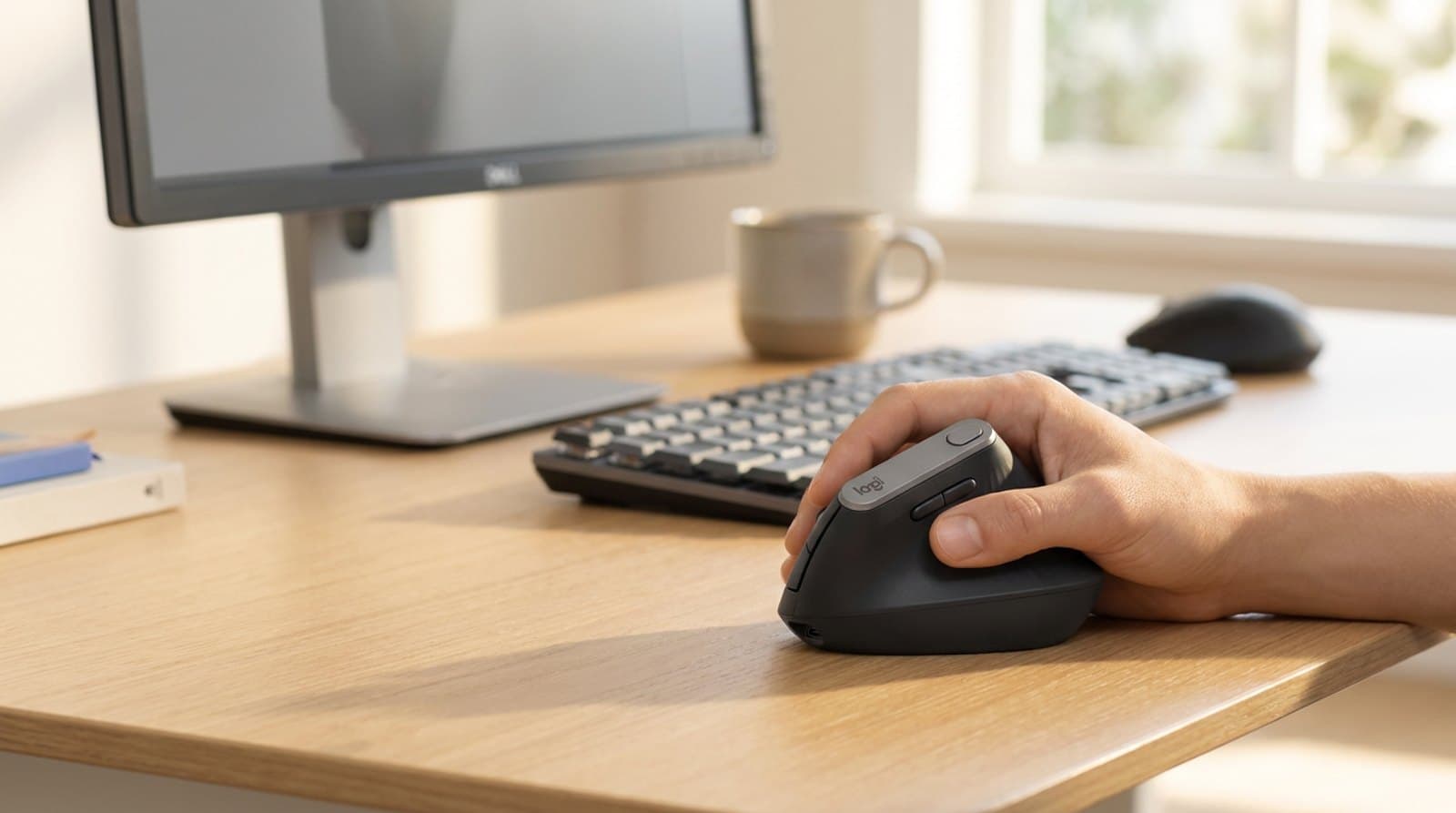
Often, yes. Wrist strain is rarely one-sided — the mouse hand stays planted and clicks all day, and a keyboard rest does nothing for it. A small dedicated mouse wrist rest (or an ergonomic mouse that keeps the wrist neutral in the first place) supports that hand directly. Budget sets like the Gimars include both pieces; otherwise a compact gel pad like the 3M sits right at the base of your mouse. If mouse-side ache is your main complaint, it's also worth looking at the shape of the mouse itself, not just adding a pad under your wrist.
It matters more than you'd think, because a wrist rest is one of the few desk surfaces your bare skin touches for hours. Fabric-covered foam absorbs skin oils and gets grubby over time and is usually only spot-cleanable. Smooth-covered gel rests (like the Kensington) and leatherette ones (like the 3M) wipe down in seconds and some are rated to survive disinfecting solvents — a real advantage in a shared or hot-desk office. Solid wood rests are the easiest of all: they don't absorb anything, so a quick wipe keeps them looking new for years.
A wrist rest is comfort and posture support, not a medical device — it can reduce the pressure and awkward angles that contribute to strain, but it won't cure an existing injury on its own. If you already have persistent numbness, tingling, or pain, treat the rest as one part of a bigger fix: neutral wrist posture, correct keyboard and mouse height, regular breaks, and, if symptoms continue, advice from a doctor or physical therapist. Think of a good wrist rest as prevention and relief that pairs with an ergonomic mouse and a properly set-up desk — not a substitute for real treatment.
Keep building your setup
Accessories
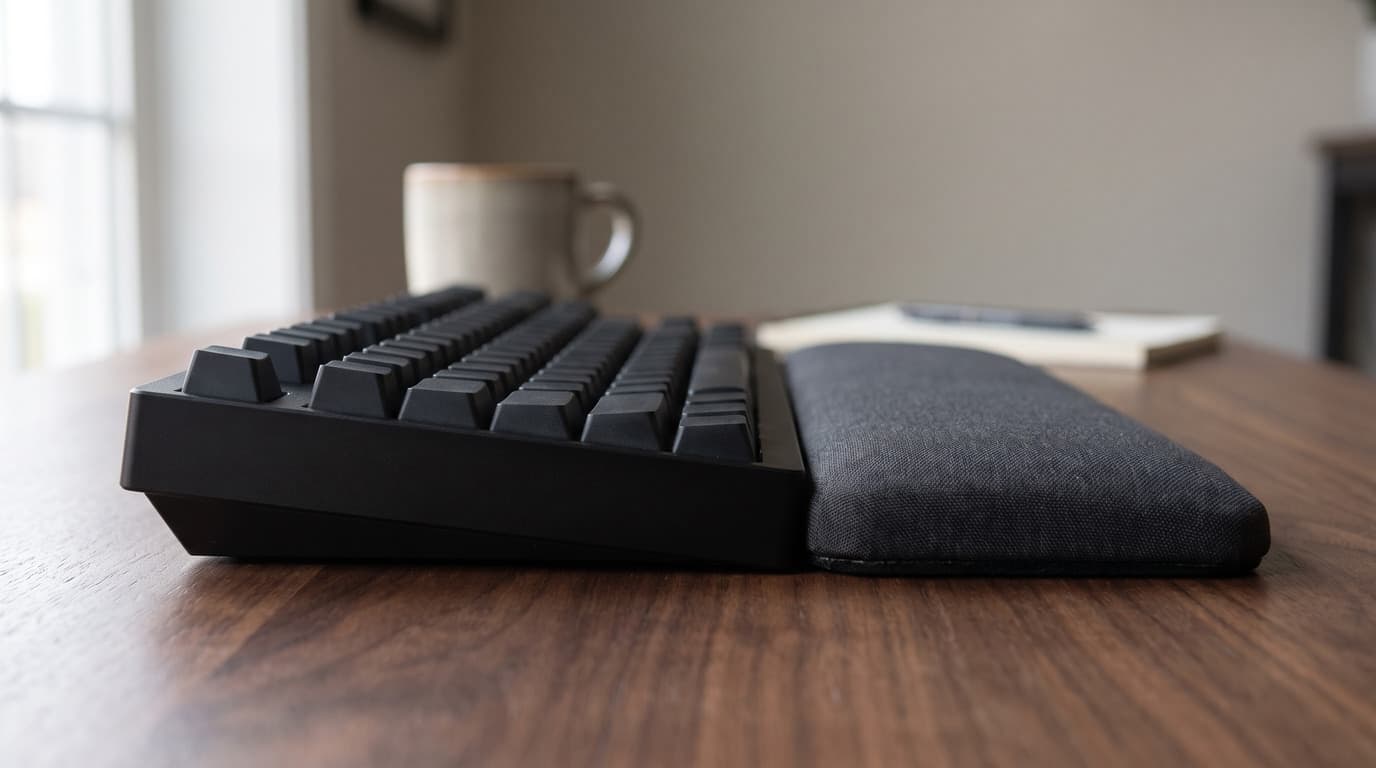
Keyboard Height and Wrist Rests: Matching the Two Numbers Nobody Publishes
The angle your wrists sit at is a height step you can measure with a ruler. The trouble is that keyboard makers publish that height on at least four different conventions, wrist rest makers publish a single unloaded thickness, and the two numbers are almost never comparable — which is how a rest sold as height-matched ends up half the height of the keyboard in front of it.
Updated September 5, 2026
Accessories
The Best Ergonomic Mice for Wrist Pain in 2026
A flat mouse forces your forearm into a lifelong twist. These six ergonomic mice — vertical, sculpted, trackball, and fully adjustable — put your hand in a neutral handshake instead, sorted by the shape that fits your hand and your pain, not just the lowest price.
Updated July 30, 2026
Accessories
The Best Mechanical Keyboards for Office Use in 2026
A mechanical keyboard you'll love typing on doesn't have to annoy everyone around you. Five office-appropriate boards — from a silent $90 Cherry to a dampened aluminum flagship — chosen for how quiet they are, not just how they feel.
Updated July 31, 2026
Get the next guide in your inbox
One short email when we publish or meaningfully update a buying guide. No spam, no daily deals firehose.