 Rigworthy
The Best Ergonomic Office Chairs Under $300 in 2026
By Rigworthy Editorial Team · Updated September 15, 2026
Rigworthy is reader-supported: we may earn a commission if you buy through our links, at no cost to you. How we make money
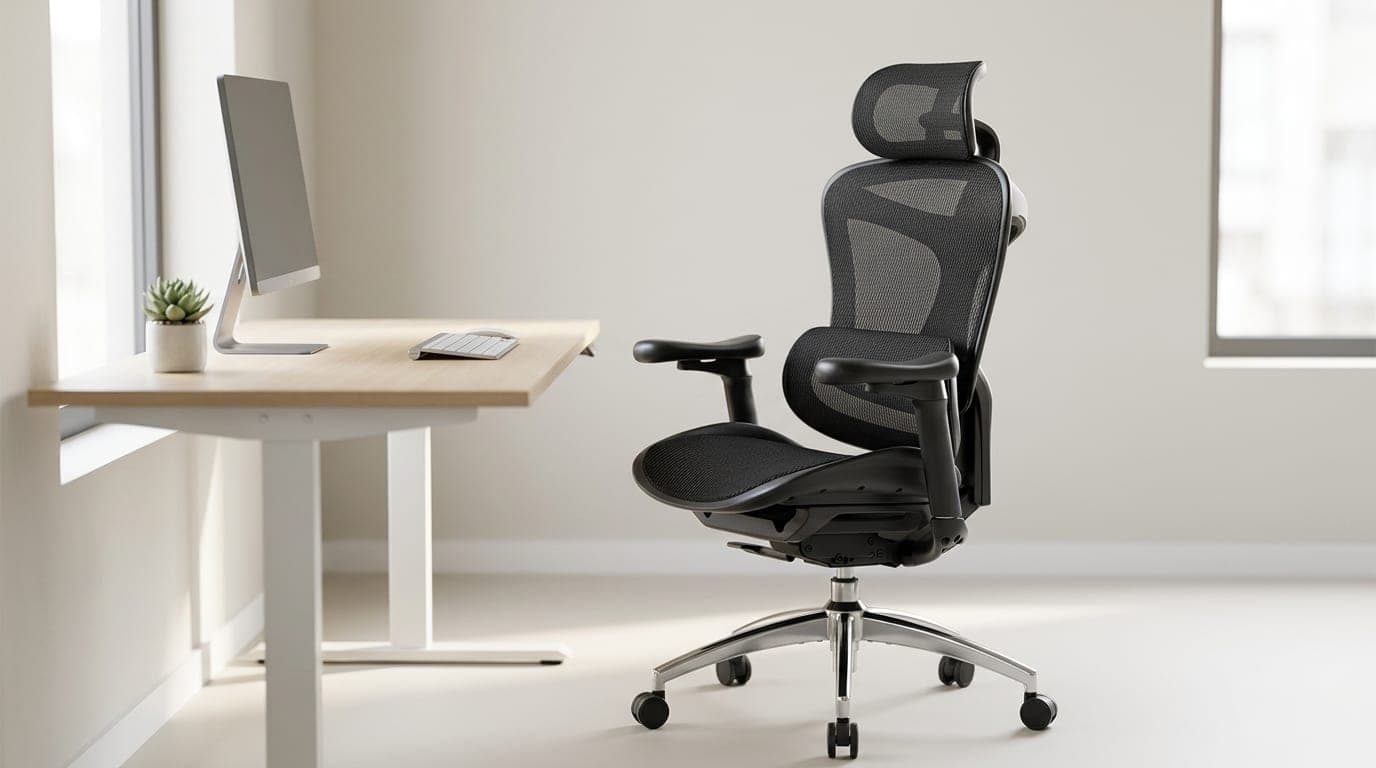
The chair is the one piece of a desk setup you're in contact with for eight hours straight, and it's the one most people cheap out on — then wonder why their lower back aches by 3pm. The good news for 2026: you no longer need to spend Herman Miller money to fix it. The sub-$300 tier has quietly gotten very good, with chairs that offer adjustable lumbar support, multi-way armrests, sliding seat depth, and honest weight ratings — the same fundamentals that make a $1,500 chair work, at a fraction of the price. The catch is that this tier is also where the corners get cut, and the cuts are easy to miss until the chair is in your room.
This guide sorts six of the best by the questions that actually decide the buy: whether the lumbar support moves in and out to meet your spine or just slides uselessly up and down; whether the armrests adjust enough to relax your shoulders; whether the weight rating and build are honest; and — most overlooked — whether the chair physically fits your body, because a big-and-tall chair and a petite one are different purchases. We've been blunt about the traps that drive returns: the fake lumbar, the arms that won't go high enough, the "ergonomic" gaming chair that isn't, and the weight rating that turns out to belong to a base option rather than to the chair. Specs reflect what manufacturers publish as of September 2026; where a number is disputed between the maker and retailers — and on weight capacity, two of these six are — we've said so rather than picking one. And one line up front: an ergonomic chair makes good posture easier — it doesn't cure a bad back. Movement does more than any chair, and sharp or lasting pain is a doctor's job.
Our top picks at a glance
- 1
- 2
- 3
- 4
- 5
- 6
How we chose
- Lumbar support you can place — height adjustment at minimum, depth as well if you can get it, rather than a fixed molded bump
- Armrest range — height at minimum, ideally 3D or 4D, so your shoulders can relax at 90°
- A weight capacity that traces to a named source — BIFMA- or SGS-tested where the maker publishes it — and that holds up between the maker's page and the retailer's
- A seat-height range and seat depth that actually fit your body — big-and-tall or petite
- Warranty length as the best public proxy for how long the foam, mesh, and cylinder will last
Our picks come from spec research, long-term owner feedback, and category expertise — not sponsorships. Read the full methodology.
Compared side by side
| Product | Award | Armrests | Lumbar | Max weight | Warranty | Typical price |
|---|---|---|---|---|---|---|
| Sihoo Doro C300 | Best Overall | 4D / 3D (disputed) | Self-adaptive | 330 lb | 3 years | ~$280 |
| Mimoglad High Back Ergonomic Chair | Best Value | Flip-up | Height-adjust | 300 lb | 5 years | ~$140 |
| Sihoo M57 | Best Mesh | 3D | Height + depth | 300–330 lb | 3 years | ~$200 |
| OdinLake L1 (Ergo Upgrade 518) | Best for Big & Tall | 3D | Auto-follow | 350 lb | 5 years | ~$299 |
| Autonomous ErgoChair Core | Best for Smaller Frames | 3D | Adjustable | 242.5 lb | 2 years | ~$299 |
| NOUHAUS Ergo3D | Best Armrests | 4D | 3D dynamic | 275–330 lb | 5 years | ~$299 |
1. Best Overall
Sihoo Doro C300
Typically around $280
- Most people
- All-day desk work
- First real ergonomic chair
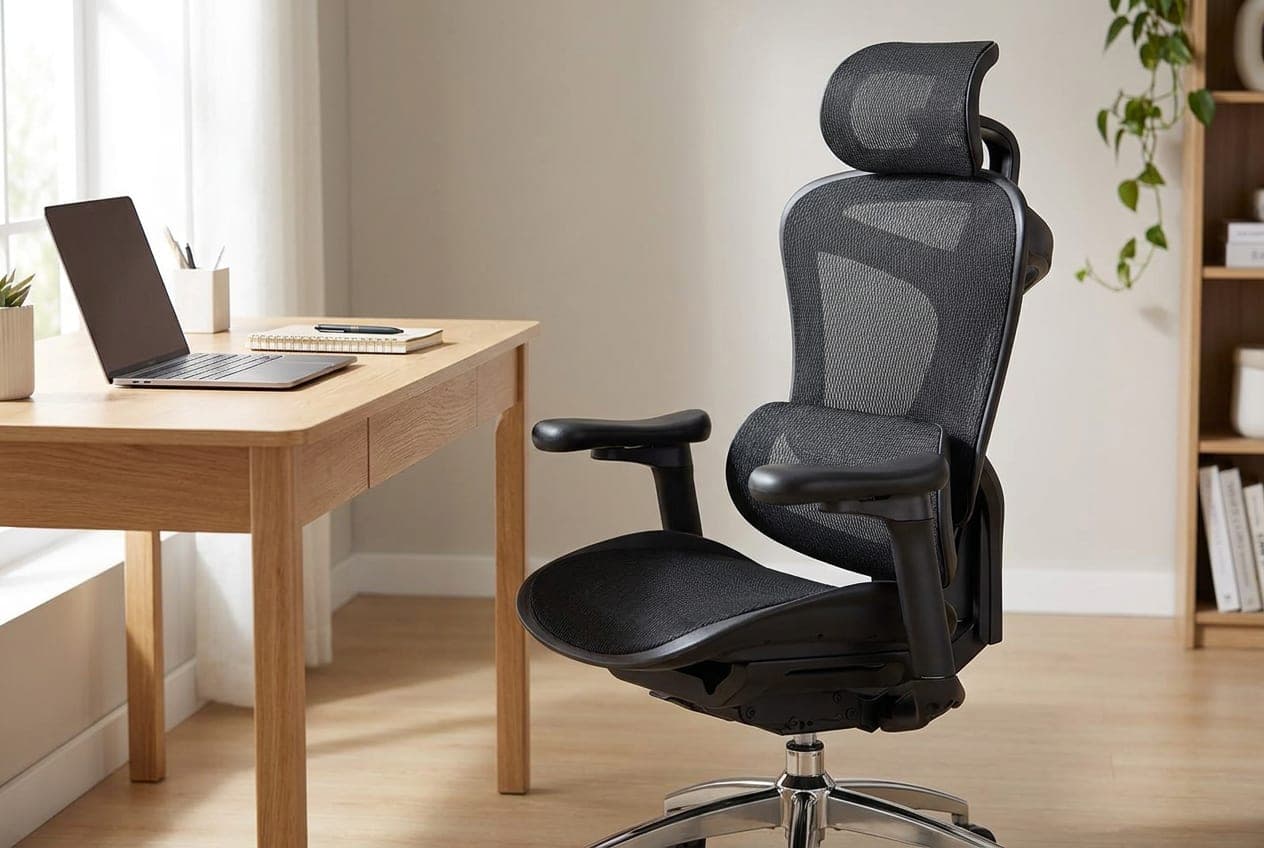
The Doro C300 is the chair that put Sihoo on most 2026 shortlists, and it's the one we'd steer the majority of people toward. It packs the features that usually cost more than $300 into a chair Sihoo currently sells for $279.99 against a $559.99 list: a high mesh back with a self-adapting backrest that flexes with you as you recline, an adjustable headrest, and — the rare one at this price — a sliding seat that adjusts through a published 17.13 to 18.11 inches of depth, so your back reaches the backrest without the seat edge digging into the backs of your knees. Weight-sensing tilt means it reclines proportionally to how hard you lean, up to roughly 130 degrees, and Sihoo's published 330 lb capacity covers most builds.
It isn't flawless, and the honest caveats are worth knowing. The armrests glide a little too freely from side to side and can drift out of position. They are also the one spec where Sihoo and its retailers disagree: Sihoo's own product page calls them "4D coordinated armrests" moving up/down, left/right, forward/backward and on a tilt linkage, while the Amazon listing most people buy through says "Ultra Soft 3D Armrests" — so check the exact listing rather than trusting either number. The backrest adapts automatically rather than giving you a manual, dial-in lumbar height, which most people love and a few spine-specific cases won't. And the seat pan is on the narrower side, so very broad or tall users should look at the big-and-tall pick below. One naming trap worth knowing before you search: Sihoo now sells a Doro C300 Pro and a Doro C300 Pro V2 alongside this chair, so "C300" alone returns three different products at three prices. For everyone else, this is the most complete sub-$300 chair here — three years of warranty included.
What we like
- Adjustable headrest plus a sliding seat depth — both rare under $300
- Self-adapting backrest flexes with you instead of a static shell
- 330 lb capacity and weight-sensing recline to ~130°
Worth knowing
- Armrests slide sideways too easily; Sihoo says 4D, the Amazon listing says 3D
- Lumbar auto-adapts — no manual height dial; narrower seat pan
- Back / seat
- High mesh back + mesh seat
- Armrests
- 4D per Sihoo; 3D on the Amazon listing
- Lumbar
- Self-adaptive backrest
- Seat depth
- 17.13–18.11 in (adjustable)
- Recline
- Weight-sensing tilt to ~130°
- Capacity / warranty
- 330 lb · 3 years
2. Best Value
Mimoglad High Back Ergonomic Chair
Typically around $140
- Tight budgets
- Second-room or guest desks
- Long warranty for the money
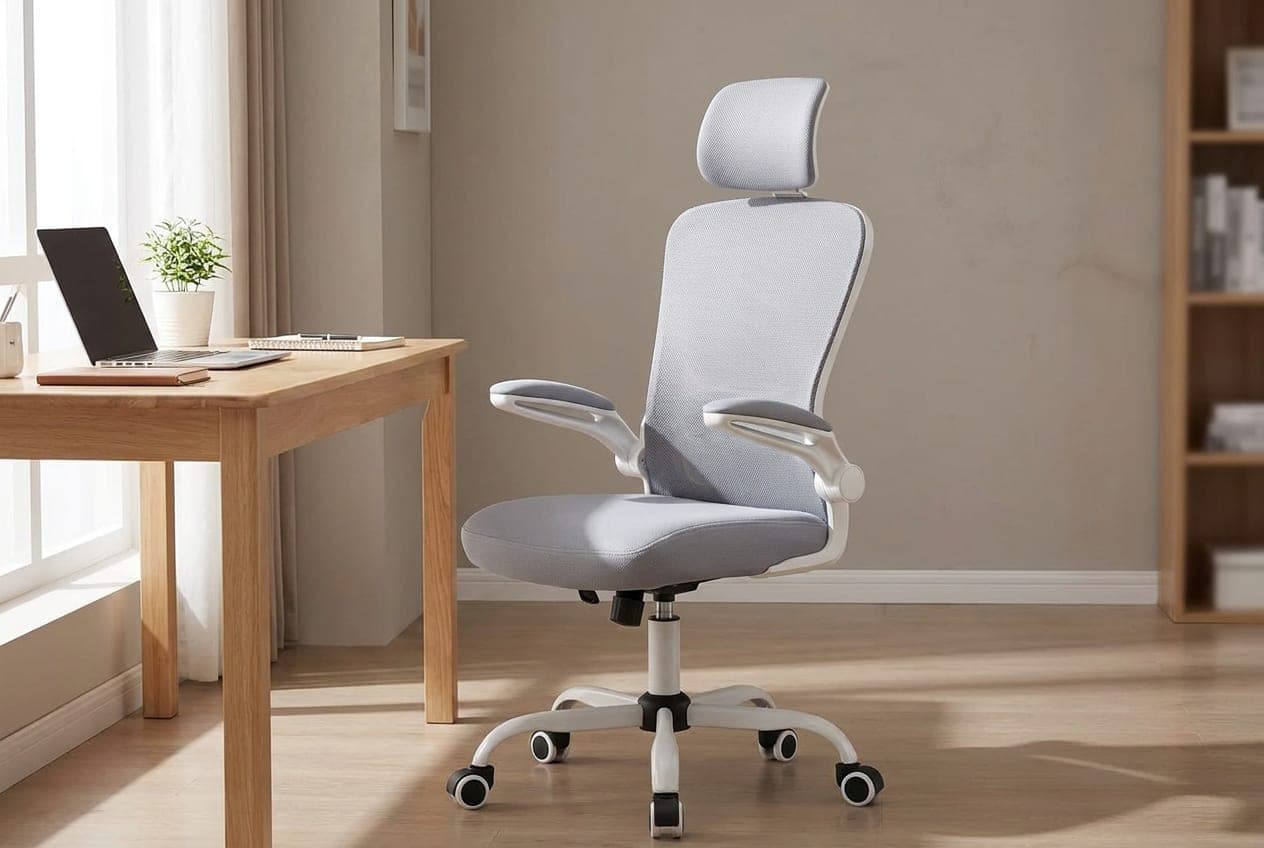
If your budget is closer to a hundred dollars than three, the Mimoglad is the value call — and it doesn't feel like a compromise on paper. For roughly $140 you get a high mesh back, a padded foam seat, an adjustable headrest, and, notably, a lumbar support that adjusts up and down to find the small of your back, which is more than a lot of pricier chairs manage — though it moves on that one axis only, so you can place it at your belt line but not set how firmly it presses. It reclines to about 135 degrees with a tilt lock, carries a BIFMA- and SGS-tested 300 lb rating on an SGS-certified gas cylinder, and — the headline — backs it with a five-year warranty that shames chairs at twice the price.
The corner it cuts is the frame material, not the hardware. Mimoglad builds this on a nylon frame over a metal base, and says so in print — not the all-plastic assembly its price suggests — but nylon is still a lighter-duty structure than the aluminium the Ergo3D and the Sihoos use, and it is the part to watch over a decade of daily sitting rather than a year. The armrests only flip up and out of the way — there's no height, width, or depth adjustment — so if precise arm positioning matters to your shoulders, you'll want one of the 3D-armed chairs here. That is the real compromise at this price, and it is a bigger one than the frame: armrest height is the adjustment you cannot fix after the fact. As a genuinely comfortable chair for a home office on a budget, or a solid second chair, it punches well above its price.
What we like
- Lumbar that adjusts for height — not depth — plus a headrest, for around $140
- Five-year warranty — unusually long for the money
- 300 lb BIFMA/SGS rating, metal base, and a 135° recline with lock
Worth knowing
- Nylon frame — lighter-duty than the aluminium-framed chairs here
- Armrests only flip up; no height, width, or depth adjustment
- Back / seat
- High mesh back + foam seat
- Armrests
- Flip-up only
- Lumbar
- Height-adjustable (no depth)
- Frame / base
- Nylon frame, metal base
- Seat height
- ≈19.5–23.4 in (varies by listing)
- Capacity / warranty
- 300 lb · 5 years
3. Best Mesh
Sihoo M57
Typically around $200
- Hot rooms
- Dialing in lumbar precisely
- Value under $250
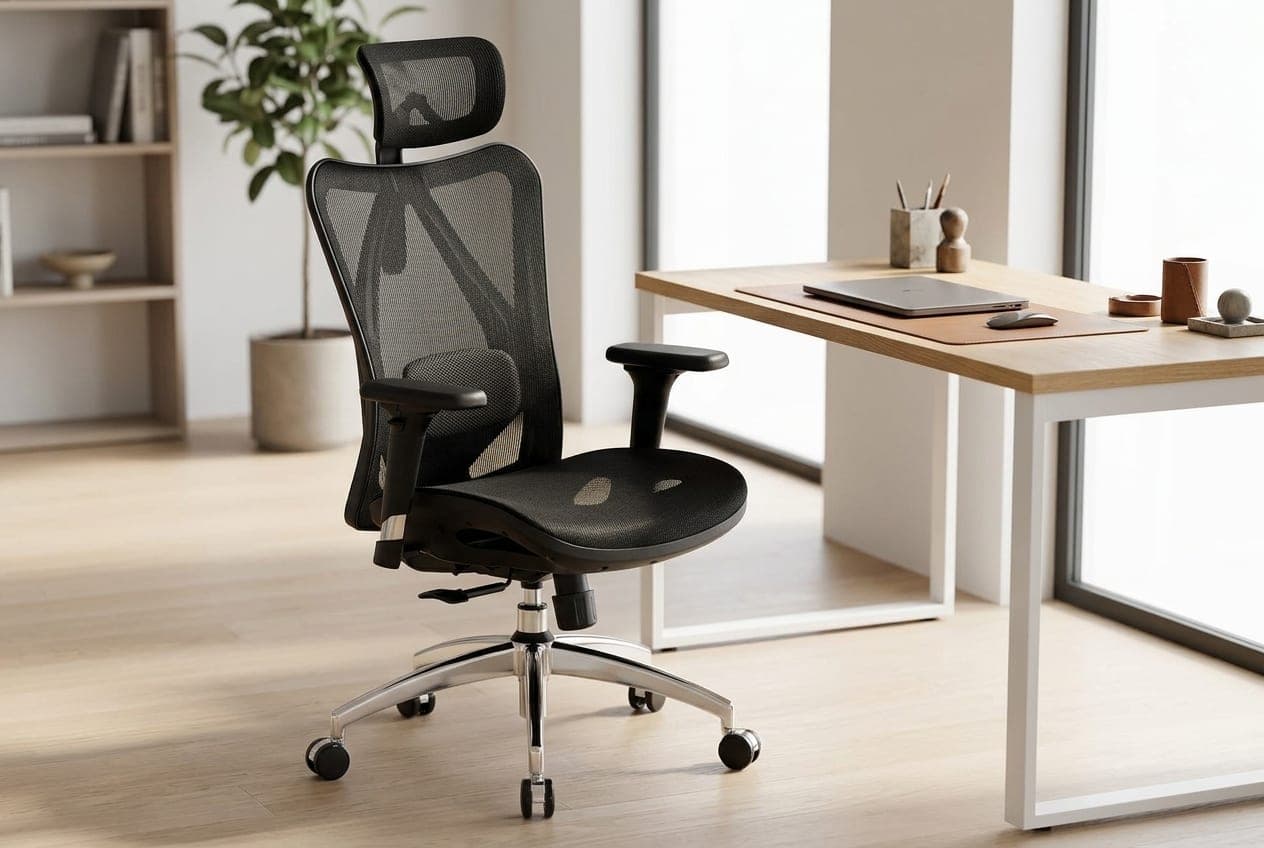
The M57 is the pick for two kinds of buyer: people who run hot and want breathable full mesh instead of a foam seat, and people who want to dial in their lumbar support precisely rather than trust an auto-adapting shell. Its standout feature is what Sihoo calls a 2D lumbar support — a pad that moves both vertically and horizontally, so you can place the support exactly where your spine curves and set how firmly it pushes. That's genuinely rare at this price, and it's paired with 3D PU armrests that swivel up to 34°, an adjustable headrest, and a three-position tilt at 110°, 116° and 130°. With 18,000-plus reviews behind it, it's one of the most road-tested chairs on this list, and it has settled around $199 with regular dips below that.
Two honest caveats. The first is comfort character: a bare full-mesh seat is cool and supportive but firm — it needs a short break-in and won't feel plush the way the Doro's or Mimoglad's cushioned seats do, so if you sit for very long stretches consider pairing it with a seat cushion. The second is the weight rating, and it is worth reading carefully, because the M57 is not one chair. Sihoo builds it with a choice of aluminium-alloy or steel base, and the published capacity tracks the configuration rather than the model: the Amazon listing is sold as 330 lb, while Best Buy's M57 SKUs are listed at 300 lb. If you are anywhere near that line, buy on the number printed on the exact listing in front of you, not on the model name. The arms also adjust in three directions but not width, and the tension knob under the seat is a bit awkward to reach.
What we like
- Two-axis lumbar — adjusts height *and* depth, rare at this price
- Full mesh runs cool; 3D arms, headrest, 110/116/130° tilt positions
- A huge, well-reviewed owner base at around $199
Worth knowing
- Bare mesh seat is firm — needs break-in, less plush for long sits
- Capacity depends on the base you buy: 330 lb on Amazon, 300 lb at Best Buy
- Arms don't adjust for width; tension knob is awkward to reach
- Back / seat
- Full mesh (back + seat)
- Armrests
- 3D PU, swivels to 34°
- Lumbar
- 2D — height + depth adjustable
- Recline
- 110° / 116° / 130° three-position tilt
- Base options
- Aluminium alloy or steel
- Capacity / warranty
- 300–330 lb by base/listing · 3 years
4. Best for Big & Tall
OdinLake L1 (Ergo Upgrade 518)
Typically around $299
- Users up to 350 lb
- Taller builds
- Warm rooms
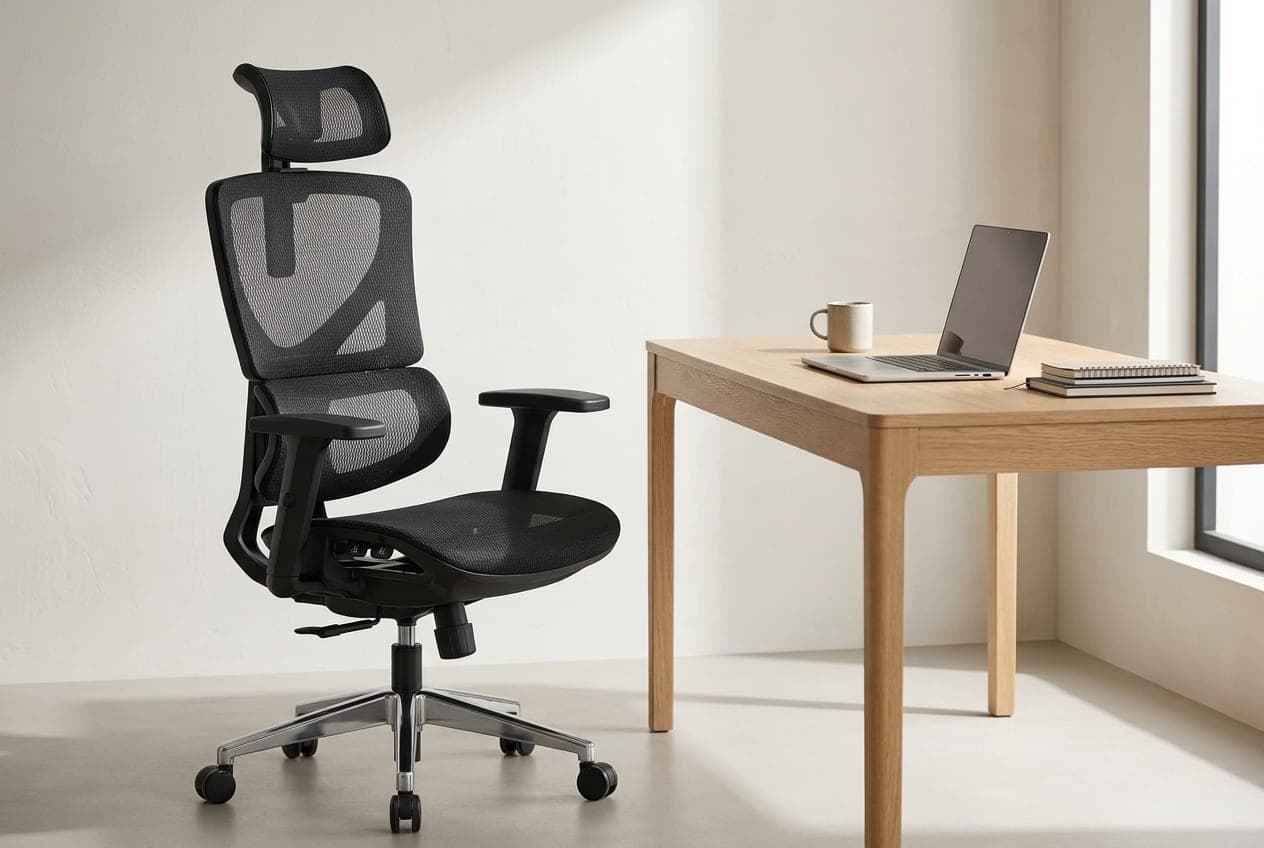
Most sub-$300 chairs quietly top out around 300 lb and run a little short in the seat height — which leaves bigger and taller users cramped or over the rated limit. The OdinLake L1 is built for exactly those people: a 350 lb BIFMA/SGS capacity (the highest here), a dual-frame full-mesh construction, a seat that travels 18.9 to 22.9 inches, and an adjustable seat depth so a longer thigh still gets support. It reclines to about 135 degrees with a four-level lock, adds a 2D headrest and a backrest whose height adjusts through four gears over 2.7 inches, and — a real rarity in this price band — carries a five-year warranty. OdinLake lists it at $349 and sells it at $299, so it fits this guide at its sale price and not at its list price. OdinLake rates it for users from 4'11" to 6'3".
The honest gaps are about the lumbar and the review record. Rather than a manual height-adjustable pad, it uses a 'dynamic follow' backrest plus a four-gear tension adjustment; that suits most people but won't let you pin the support to an exact spot the way the M57 does. And OdinLake is a smaller brand — independent, long-term review coverage is thinner than for the Sihoo chairs, so more of what we know leans on the manufacturer's own specs and mid-tier hands-on reviews. If you need genuine big-and-tall headroom and capacity without leaving the sub-$300 tier, though, nothing else here matches it.
What we like
- 350 lb capacity — the highest here — and a seat that drops to 18.9 in
- Adjustable seat depth and a five-year warranty
- Cool dual-frame full mesh; 135° recline with a 4-level lock
Worth knowing
- 'Dynamic follow' lumbar, not a manual height-adjustable pad
- $299 is the sale price against a $349 list — check before you buy
- Smaller brand — thinner independent, long-term review coverage
- Back / seat
- Full mesh, dual-frame
- Armrests
- 3D (height, width, rotation)
- Lumbar
- Dynamic auto-follow + 4-gear back
- Seat height
- 18.9–22.9 in
- Seat depth
- Adjustable (2 in of travel)
- Capacity / warranty
- 350 lb · 5 years
5. Best for Smaller Frames
Autonomous ErgoChair Core
Typically around $299
- Lighter or shorter users
- Compact rooms
- Adjustable seat depth
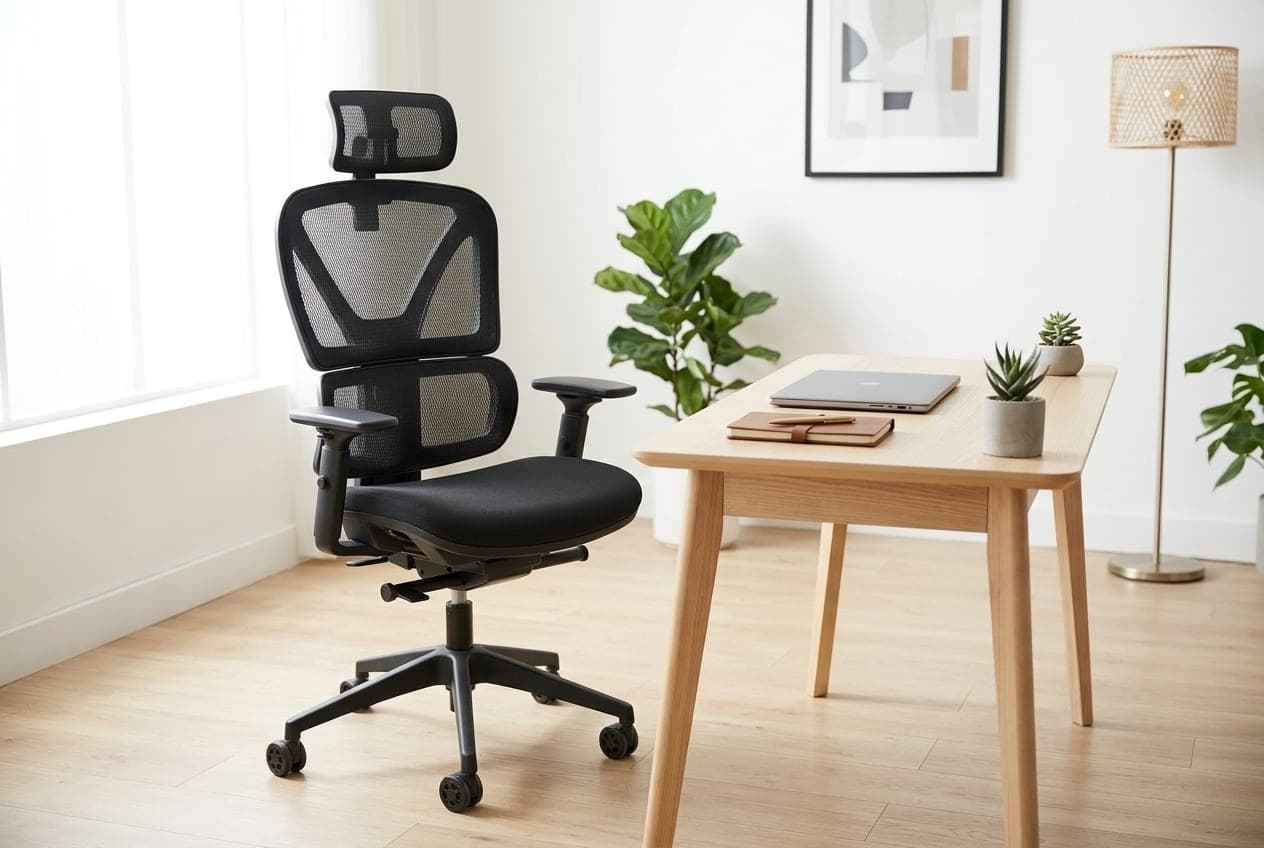
The ErgoChair Core is the counterpart to the big-and-tall pick: a lighter, more compact chair sized for people whom oversized chairs swallow. Autonomous sells it at $299, right at this guide's ceiling — mesh back, adjustable headrest, 3D armrests, a 130° recline, and an adjustable seat depth from 18.5 to 20.5 inches, which is the adjustment that actually matters for shorter thighs, keeping a couple of fingers of clearance behind the knees instead of cutting off circulation. The footprint is smaller than the mesh monsters above, so it suits a tighter room or a second desk.
Two things keep it honest, and the second is the one to read twice. Its 242.5 lb weight rating is the lowest here by design — that's part of what makes it lighter and more compact, but it rules out heavier users, who should take the OdinLake instead. More awkwardly for a chair we recommend to smaller frames, Autonomous publishes its seat-height range as 20 to 23.8 inches — so its *lowest* setting sits higher than the OdinLake L1's, which starts at 18.9 inches despite being the big-and-tall pick. The Core earns its place here on seat depth and footprint, not on how low it goes; if you are short enough that seat height is your binding constraint, check that figure before the depth one, and expect to want a footrest. The warranty is also the shortest here at two years. For a lighter build that wants real adjustability without a bulky chair, it's still the right shape.
What we like
- Adjustable seat depth (18.5–20.5 in) suits shorter thighs
- 3D arms and an adjustable headrest in a compact footprint
- Lighter, smaller chair that fits tighter rooms and smaller users
Worth knowing
- 242.5 lb capacity — the lowest here; not for heavier users
- Seat-height floor of 20 in — higher than the 18.9 in of the big-and-tall OdinLake
- Two-year warranty, the shortest term any maker publishes here
- Back / seat
- Mesh back + padded seat
- Armrests
- 3D
- Lumbar
- Adjustable (dual backrest)
- Seat height
- 20–23.8 in
- Seat depth
- 18.5–20.5 in (adjustable)
- Recline
- To 130°
- Capacity / warranty
- 242.5 lb · 2 years
6. Best Armrests
NOUHAUS Ergo3D
Typically around $299
- Fussy arm positioning
- Full mesh + true 4D arms
- Deep recline
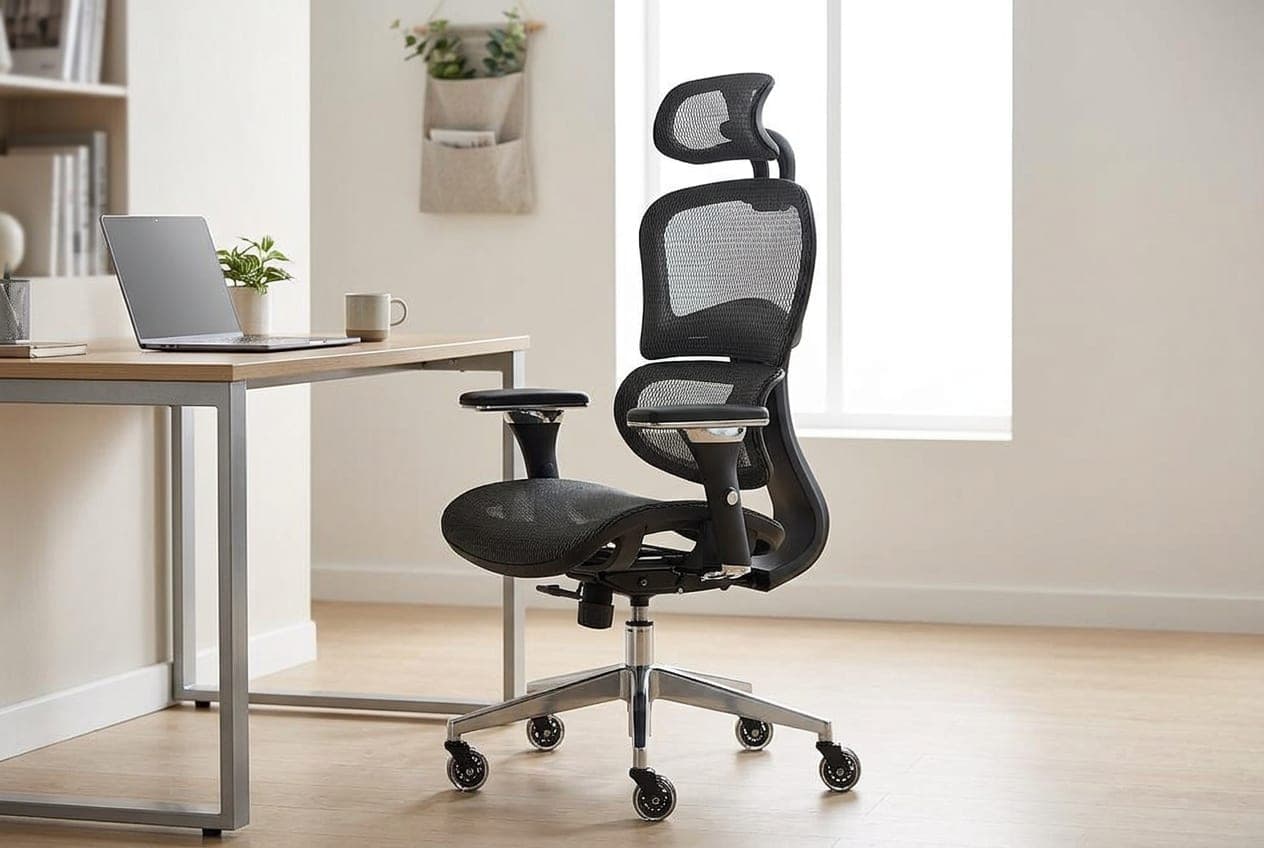
If your back pain is really an arm-position problem — shrugged shoulders from armrests that sit too low or too far out — the Ergo3D is the sub-$300 chair that solves it. Its 4D 'orbital' armrests move up/down, forward/back, in/out for width, and pivot, so you can plant your elbows exactly under your shoulders, and they are the most thoroughly documented arms in this guide: NOUHAUS specifies all four axes by name, which is more than the Sihoos manage even where Sihoo also claims 4D. Around that it's a high full-mesh chair on an aluminium wheelbase with a 3D lumbar support, a headrest, a deep recline to about 135 degrees locking at three angles, and a bonus set of caster wheels for both hard floors and carpet. At roughly $299 it's the feature flex of the group.
The famous weakness is, ironically, those armrests: the 4D mechanism is known to develop a bit of wobble over time, which owners either shrug off or find maddening — and it is worth knowing that NOUHAUS's warranty covers "armrest mechanism failure" but explicitly excludes wear to "the top portion of armrests" and "variance of tightness of mechanisms," which is closer to how this actually fails. The front seat edge is also fairly narrow and can press the outer thighs. The capacity is the spec to read carefully: NOUHAUS itself publishes 330 lb in three separate places on its product page, including its own FAQ, while Office Depot and Wayfair list the same chair at 275 lb. That is a 55 lb spread on one product, so treat the retail figure as the safe one and leave headroom. On warranty, NOUHAUS's product page states a flat five years — though its warranty policy page, updated February 2025, enumerates every covered failure mode and never states a term at all.
What we like
- 4D 'orbital' armrests, with all four axes specified by the maker
- Full mesh on an aluminium wheelbase; 3D lumbar, 135° recline, dual caster sets
- Five-year warranty per NOUHAUS's product page
Worth knowing
- 4D armrests can develop wobble — and armrest wear is a named warranty exclusion
- Capacity published as 330 lb by NOUHAUS and 275 lb by retailers
- Narrow front seat edge can press on the outer thighs
- Back / seat
- Full mesh (ElastoMesh)
- Armrests
- 4D (orbital)
- Lumbar
- 3D dynamic
- Recline
- To ~135°, locks at 3 angles
- Base
- ADC #12 aluminium, 5-way
- Capacity / warranty
- 275–330 lb depending on source · 5 years
The verdict
For most people, the Sihoo Doro C300 is the right first ergonomic chair — an adjustable headrest, a sliding seat depth, a backrest that flexes with you, and a 330 lb rating, all for around $280. On a tighter budget, the Mimoglad delivers a height-adjustable lumbar, a headrest, and a five-year warranty for about $140 — remarkable value, if a lighter-duty build. And if you run hot or want to pin your lumbar support to an exact spot, the full-mesh Sihoo M57 and its two-axis lumbar is the best pure-mesh deal here at around $199 — just check which base, and so which weight rating, the listing you're buying actually ships.
The rest of the field is about fit and priorities. Bigger and taller users should take the OdinLake L1 for its 350 lb capacity and 22.9-inch seat ceiling, at $299 on sale against a $349 list; smaller and lighter builds are better served by the compact Autonomous ErgoChair Core with its adjustable seat depth, provided you don't need the seat to drop below 20 inches — the OdinLake goes lower; and anyone whose real problem is arm position should get the NOUHAUS Ergo3D and its 4D armrests. Whichever you pick, remember the chair is only half the job: dial in the fit in the right order, then keep moving. Measure the desk first, set seat height from your elbows rather than your feet, and leave the armrests until last. If a cushion could still improve the seat or your feet dangle, a seat cushion, a lumbar cushion, or a footrest finishes what the chair starts — fitted before you adjust, not after, because each of them moves a measurement the chair was set to.
Frequently asked questions
For most people, a good sub-$300 chair buys roughly 80% of the ergonomics for about 30% of the price — the adjustments that matter (lumbar, armrests, seat depth, recline, a fit that suits your body) all exist at this tier. What you give up versus a Steelcase Leap or Herman Miller Aeron is mostly longevity and warranty: premium chairs are rated for 24/7 use and carry 12-year-to-lifetime warranties, while budget chairs run 1–5 years and their foam, mesh, and gas cylinder wear faster. The honest middle path some people miss: a used Leap V2 or Aeron often sells in the $250–400 range and can win on cost-per-year — at the cost of no transferable warranty and some condition risk.
There's no universal winner, which is why the most common expert recommendation is a hybrid: a mesh back for airflow so you don't overheat, paired with a foam seat for even, contoured pressure. Full-mesh seats (the M57, OdinLake, Ergo3D here) run the coolest and never bottom out, but they're firmer and take a short break-in — some people love that, others add a cushion. Foam or padded seats (the Mimoglad, ErgoChair Core) feel plusher out of the box but trap more heat and can flatten over years. If your room runs hot, weight mesh heavily; if you want cushioned comfort from day one, lean padded.
Not for upright desk typing — a headrest does nothing when you're leaned forward at the keyboard. It earns its place when you recline to think or take calls, and for people with neck or upper-back tension it gives the base of the skull somewhere to rest and nudges you to keep your chin tucked. Every chair in this guide includes one, so it's not a feature you have to trade away here. If you never lean back, you simply won't use it — no harm done.
For all-day work, a genuine ergonomic office chair wins. Gaming chairs are built around a racing-style bucket seat with raised side bolsters that restrict how you shift position, and their 'lumbar support' is usually a detached pillow strapped on rather than an adjustable, built-in system — reviewers who test both consistently find the bucket shape and strap-on pillows work against neutral posture over a full day. A gaming chair's strong recline can beat a cheap, feature-free office chair, but not a real $300 ergonomic one. If you want the gaming look, at least insist on adjustable (not fixed) lumbar and 3D-or-better arms.
Look for adjustments that actually fit you rather than marketing words. The tell-tale corner cut is the lumbar, and it comes in two grades. A pad moulded into the shell that doesn't move at all is the real red flag: it sits where the factory put it, which is almost never where your curve is. A pad that slides up and down but not in and out is a partial answer rather than a fake one — our own Best Value pick works this way — because you can at least place it at your belt line, you just can't set how hard it presses. The test either way is to sit back and check you can feel support in the inward curve at your belt line, not above it. Other red flags: armrests that are fixed or height-only (you can't fix bad arm height after you buy), a mesh back with a strap-on pillow marketed as 'ergonomic,' adjustments that stick or won't hold, and a base that sways. Prefer chairs that publish a BIFMA or SGS rating, name the base material, and give a realistic weight capacity. One caution on that last point, learned from checking this guide's own picks: a weight rating is often a property of the configuration rather than the model. The Sihoo M57 ships with a choice of aluminium or steel base and is sold as 330 lb on Amazon and 300 lb at Best Buy, and the NOUHAUS Ergo3D is published at 330 lb by NOUHAUS and 275 lb by its own retailers. Buy on the number printed on the listing in front of you.
Fit is everything, and it lives in the spec sheet — but check the right number, because the obvious one misleads. Big-and-tall users want a 300 lb-plus capacity, a wider seat, and a taller back and seat-height ceiling; the OdinLake L1's 350 lb rating and 22.9 in seat ceiling are why it's our pick for larger builds. Petite and shorter users want a seat that lowers enough that your feet reach the floor, and a shorter seat depth so you can sit back without the edge hitting behind your knees. Those are two different specs, and chairs marketed for smaller frames often deliver only the second: the ErgoChair Core's 18.5–20.5 in adjustable seat depth is genuinely useful for shorter thighs, but its seat-height floor of 20 in is higher than the big-and-tall OdinLake's 18.9 in. If your feet are the problem rather than your thighs, shop the seat-height floor first, whatever the chair is marketed as — and budget for a footrest. The universal check works for both: sit all the way back and you should have two to three fingers of gap between the seat edge and the back of your knees.
An ergonomic chair is a tool, not a medical device. Ergonomists are clear that the biggest culprit in desk-related back pain is sitting still for hours, not the specific chair — movement of the spine while seated is part of what keeps it healthy. A good chair makes better habits easier: it fits your body, supports a neutral posture, and lets you recline and shift so you move more. But no chair replaces getting up roughly every 30 minutes and varying your position, and persistent or sharp pain is a clinician's call, not a purchase. Set realistic expectations and the chair does its part.
Keep building your setup
Ergonomics
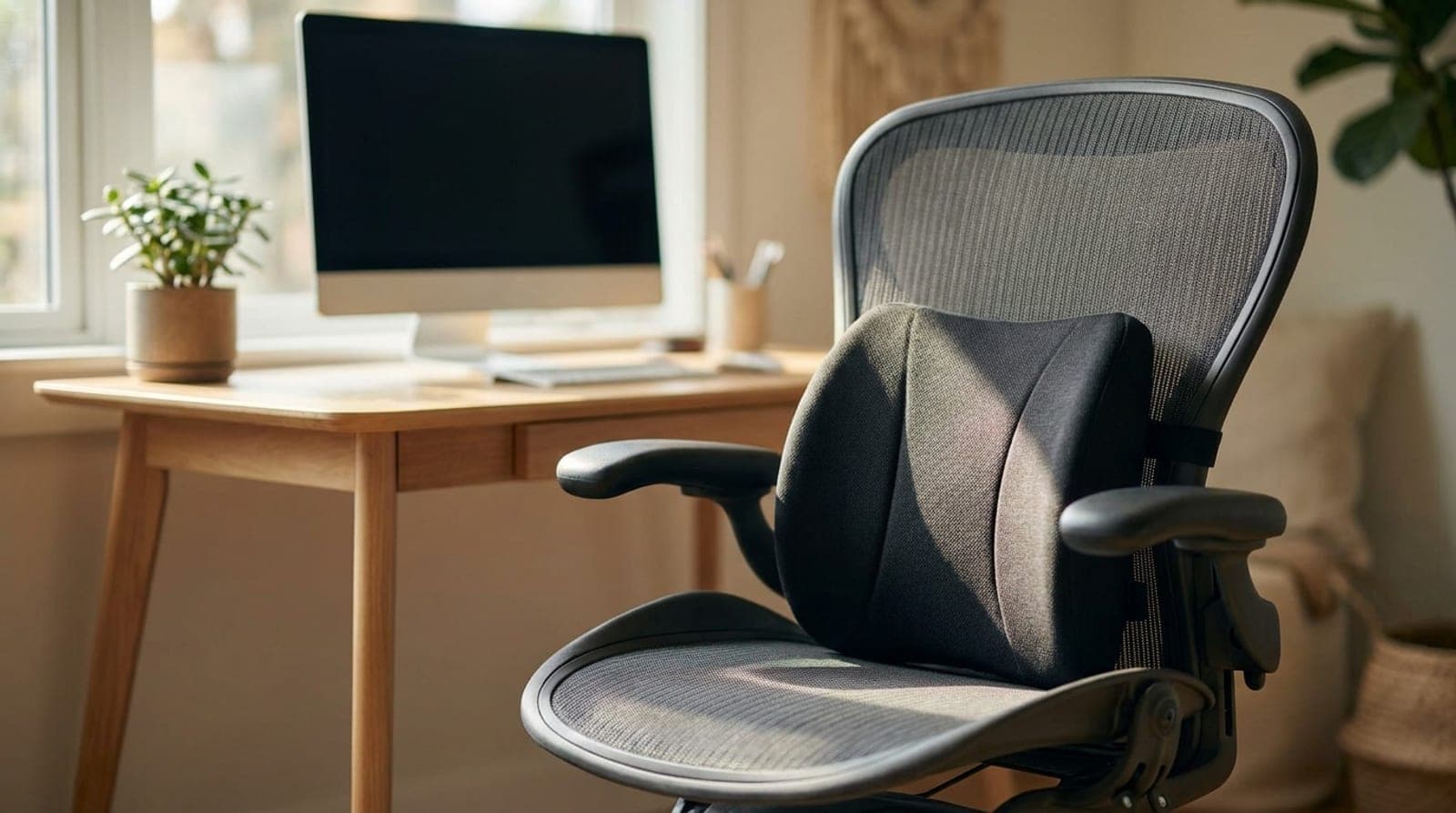
The Best Lumbar Support Cushions for Office Chairs in 2026
The cheapest way to fix a chair that leaves your lower back aching by 3pm. Six lumbar cushions compared by support shape, mounting, firmness, and how hot they run.
Updated July 28, 2026
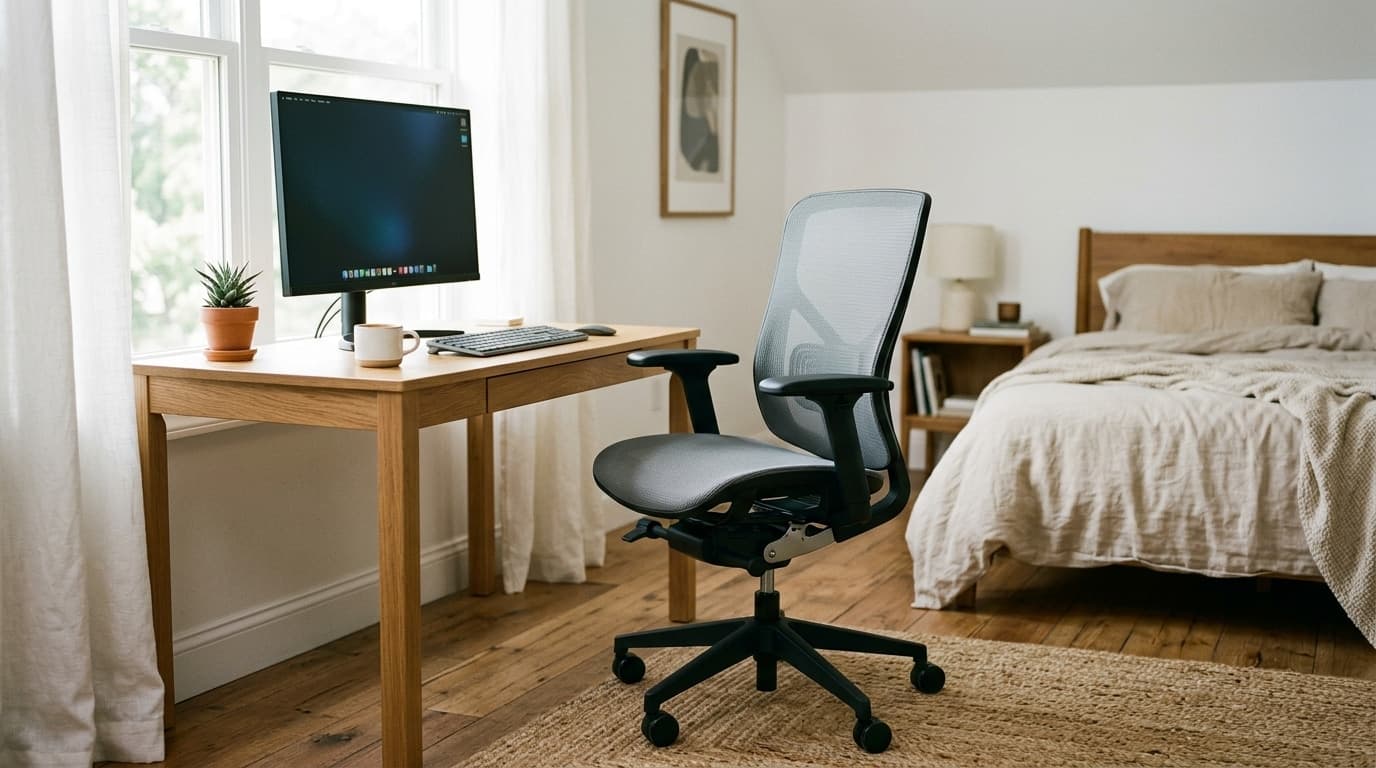
Ergonomics
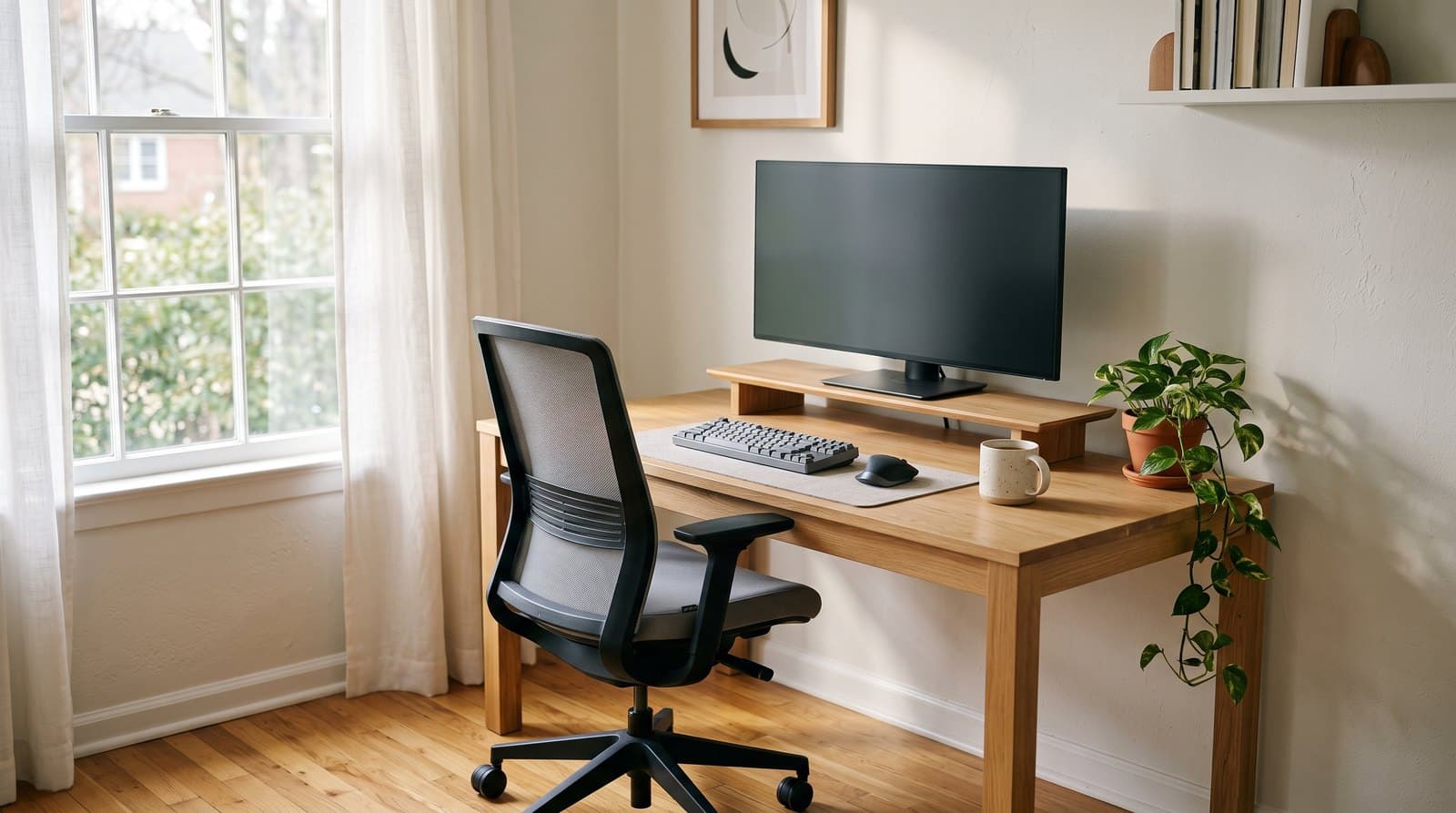
How to Adjust an Office Chair: The Order That Actually Works
A standard 29-inch desk is built to the elbow height of the tallest man in twenty. Cornell's ergonomics notes say a seat should adjust nine inches; the chairs we recommend adjust three to five. Here is the order to set a chair in, and the arithmetic that decides whether yours can even reach.
Updated September 15, 2026
Ergonomics
The Best Ergonomic Office Chairs Under $600 in 2026
The gap between a $250 chair and a $500 one isn't comfort — it's how long the thing survives and who pays when it doesn't. Six ergonomic office chairs from $330 to $600, compared on warranty terms read line by line, the adjustments that genuinely change your posture, and what each maker will still ship you a part for in year eight.
Updated August 13, 2026
Get the next guide in your inbox
One short email when we publish or meaningfully update a buying guide. No spam, no daily deals firehose.