 Rigworthy
The Best Ergonomic Office Chairs Under $600 in 2026
By Rigworthy Editorial Team · Updated August 13, 2026
Rigworthy is reader-supported: we may earn a commission if you buy through our links, at no cost to you. How we make money
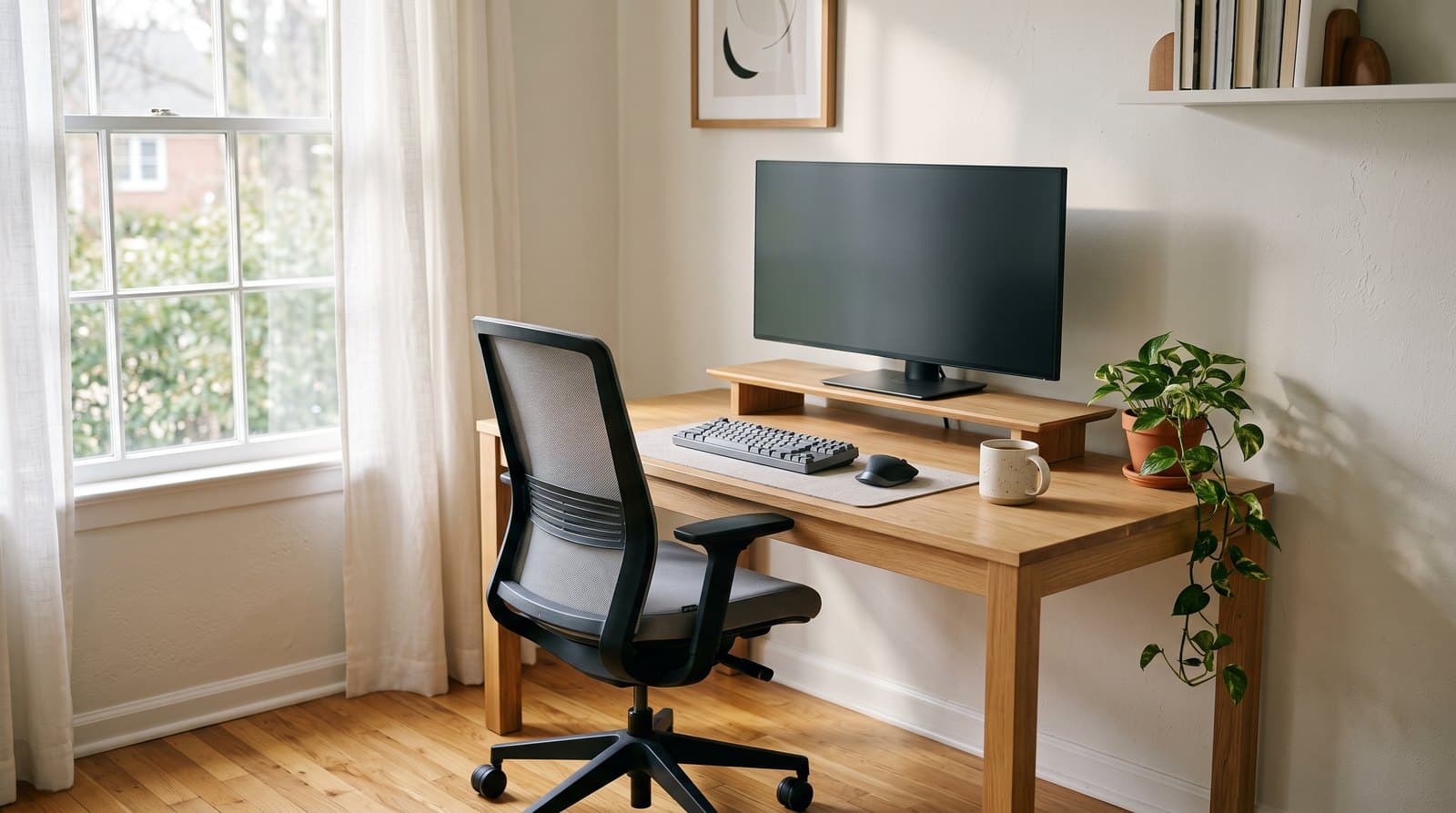
There is a specific moment that sends people to this price band. You bought a decent chair for $250, it was fine for a year, and then the gas cylinder started sinking, or the armrest pad tore, or the seat foam packed down into a shape that isn't yours — and you discovered the warranty ran out four months ago and nobody sells the part anyway.
So this guide leads on the warranty, and reads the whole thing rather than the headline number. That's the honest spec for this tier, because $300 to $600 doesn't reliably buy more comfort than $250 does. What it buys is a chair engineered for a service life somebody was willing to put in writing: twelve years on the Steelcase including labour, a full lifetime term from HON with twelve years on the mesh, seven from Branch but only three on the fabric, and a FlexiSpot warranty split by component where the gas cylinder — the part most likely to fail — gets two. Every one of those is the manufacturer's own estimate of how long their chair lasts, published in a document they can be held to.
The other half of the money goes on adjustment, and two things matter far more than the rest. Seat depth decides whether the front edge of the seat presses into the backs of your knees, and it's the adjustment most often missing below $300. Armrest axes decide whether your forearms are supported where they actually rest, which is why the range here — from the Verve's height-only arms to the Branch Pro's 5D — is a bigger real-world difference than any recline figure.
Six chairs from about $330 to $600, every number taken off a manufacturer spec sheet, dealer configuration page or first-party retail listing. We don't run a chair lab and we won't pretend otherwise.
Our top picks at a glance
- 1
- 2
- 3
- 4
- 5
- 6
How we chose
- Warranty terms read line by line and promoted to a comparison column — length, what each component tier actually covers, and whether labour is included, because at this price the warranty is the closest thing to a published durability estimate
- Seat depth adjustment treated as a requirement, not a bonus — it's the adjustment most often missing under $300 and the one that changes where your thighs meet the seat edge
- Armrest axes counted precisely, from height-only to 5D, since armrests do more for your neck and shoulders than any recline figure
- What the lumbar support physically is — a height-adjustable pad, a two-way mechanism, a flexing back with no fixed lumbar point at all — and whether it costs extra
- Weight capacity and published fit ranges taken from the manufacturer, so you can rule chairs out before you pay to find out
- Every figure sourced from a manufacturer spec sheet, dealer configuration page or first-party retail listing — we don't run a chair lab and we don't publish numbers we can't source
Our picks come from spec research, long-term owner feedback, and category expertise — not sponsorships. Read the full methodology.
Compared side by side
| Product | Award | Adjustment | Max weight | Warranty | Typical price |
|---|---|---|---|---|---|
| Steelcase Series 1 | Best Overall | 4D arms · seat depth · lumbar height | 400 lb | 12 yr (parts + labour) | $499 |
| Branch Ergonomic Chair Pro | Best Adjustability | 5D arms · seat depth · 2-way lumbar · forward tilt | 275 lb | 7 yr (3 yr fabric) | $449–599 |
| FlexiSpot C7 | Best Value | 4D arms · seat depth · active/locked lumbar · headrest | 300 lb | 10 / 3 / 2 yr by part | $300–350 |
| HON Ignition 2.0 | Best Warranty | 2D arms · seat depth · back height · lumbar | 300 lb (450 lb B&T) | Lifetime (12 yr mesh) | $400–486 |
| Autonomous ErgoChair Ultra 2 | Best Back Support | 3D arms · seat depth · flex-frame back | 320 lb | Lifetime (frame only) | $499 |
| Branch Verve | Best Design | 1D arms · seat depth · lumbar height | 275 lb | 7 yr | $549–649 |
1. Best Overall
Steelcase Series 1
Typically around $499
- Most people
- Buying once and keeping it
- Heavier sitters
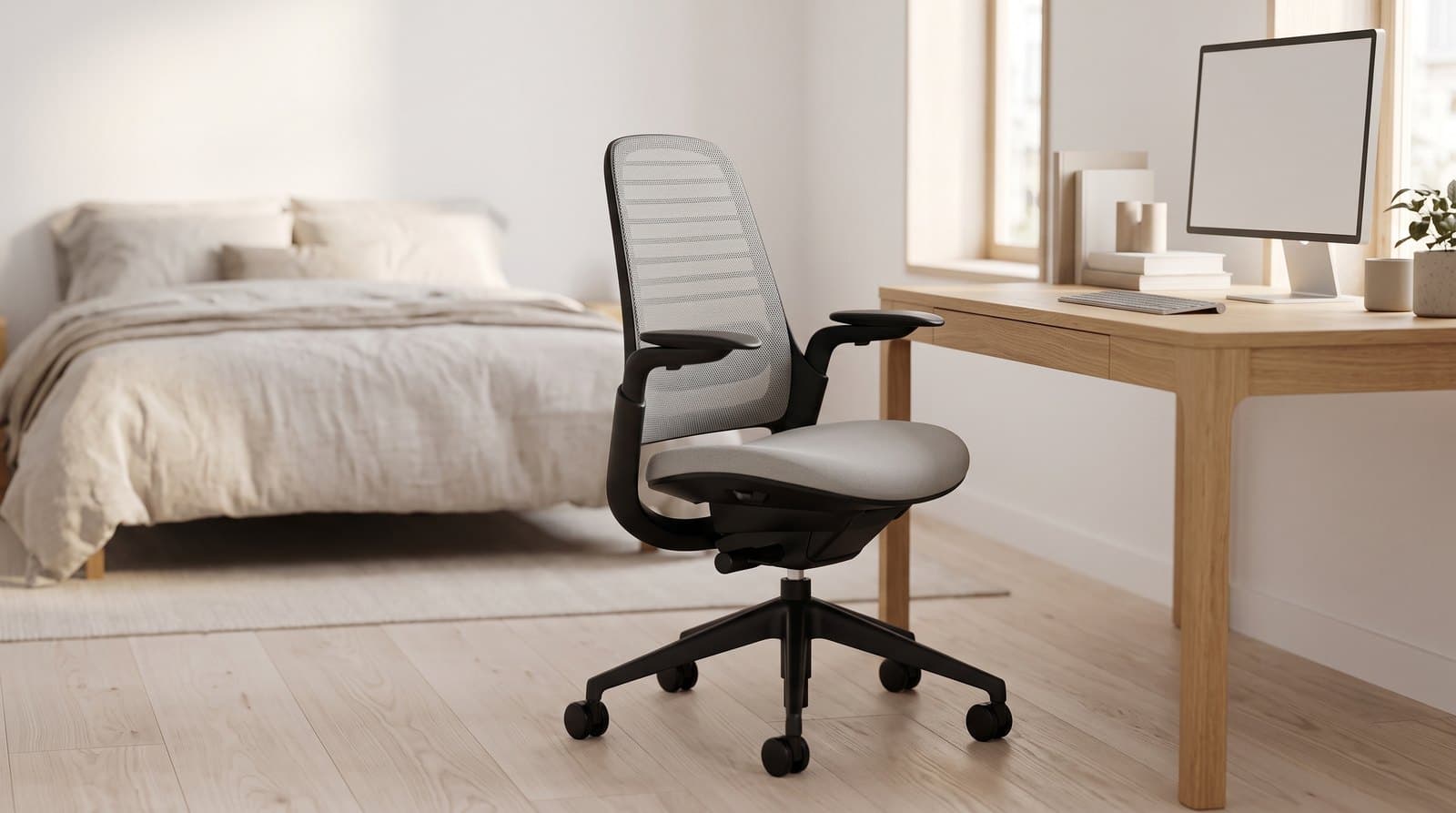
The Series 1 is a contract chair that happens to be sold to individuals, and that origin explains almost everything about it. It's certified to BIFMA level 3, rated for multi-shift use, and covered for twelve years on parts and labour, not just parts — the sort of terms written for a facilities manager buying two hundred of them, not for a consumer who'll never file a claim. The 400 lb weight rating is the highest of any standard chair here — only HON's separate Big and Tall variant goes above it — and the 16.5 to 21.5 inch seat height is broad at both ends, which quietly makes it one of the few chairs in this guide that works for a 5'2" sitter and a 6'4" one.
Mechanically it's the most set-and-forget option on this list. The recline is weight-activated, so it calibrates tension to your body instead of asking you to guess at a knob, and the LiveBack shell flexes with your spine as you move. 4D armrests, a height-adjustable lumbar and a seat-depth slide are all standard at the $499 configuration; the deeper two-way lumbar and the headrest are the upgrades you pay for. The honest caveats: the mesh back is firm rather than plush and the seat foam is thinner than the Branch chairs', so people who want to sink into a chair often don't warm to it, and buying through a dealer means a configurator with a dozen colour and caster choices that can quietly walk the price toward $570.
What we like
- Twelve-year multi-shift warranty covering parts and labour — the strongest terms here
- 400 lb capacity — the highest standard chair here — and a 16.5–21.5 in seat height that suits short and tall sitters alike
- 4D arms, seat-depth slide and adjustable lumbar all standard at $499
Worth knowing
- Firm mesh back and a thin seat pad — not the chair for someone who wants plush
- Dealer configurators add up fast; the two-way lumbar is a paid option
- Back / seat
- 3D Microknit mesh LiveBack / upholstered foam seat
- Armrests
- 4D — height, width, depth, pivot
- Lumbar
- Height-adjustable standard; two-way adjustable optional
- Seat height
- 16.5–21.5 in, with seat-depth slide
- Recline
- Weight-activated with four lock positions
- Capacity / warranty
- 400 lb · 12 years, multi-shift, parts and labour
2. Best Adjustability
Branch Ergonomic Chair Pro
Typically around $499
- Awkward desk heights
- Dialling in a precise fit
- Anyone with shoulder complaints
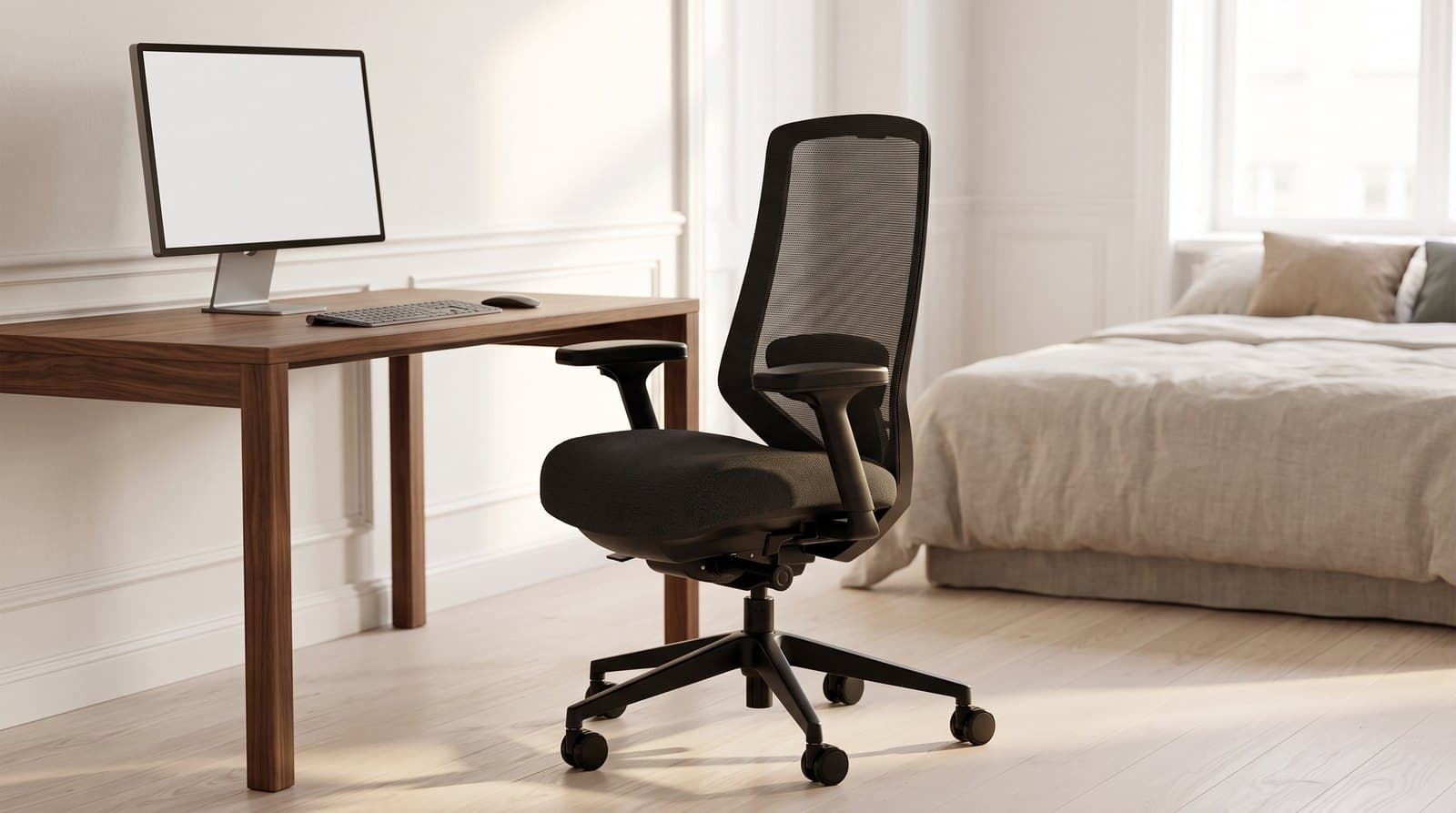
If the Steelcase is the chair you set once, the Branch Pro is the one you keep tuning. It publishes fourteen points of adjustment, and the headline is the armrests: 5D, meaning the arm moves up and sideways while the pad itself slides forward and back, widens, and pivots inward. That last axis is the one people with a too-high desk or a mouse they reach for actually notice. Seat depth spans 16.7 to 19.7 inches, there's forward tilt for drafting-style postures, the lumbar adjusts two ways, and the base is aluminium alloy rather than nylon.
The two things to check before you buy are height and weight. Standard seat height is 17 to 19.9 inches, which is low — if you're tall or your desk doesn't drop below 29 inches, the optional tall cylinder (19.3 to 22.9 inches) isn't optional, it's required. And the 275 lb rating is the joint-lowest here, so heavier sitters should take the Steelcase or the Autonomous instead. Warranty is seven years on parts and components but only three on the fabric, which is the tier worth reading: upholstery is what wears first on any chair you sit in daily. The headrest is a separate line item at about $79, and the mesh version is the one to buy — the vegan-leather and semi-aniline options cost more and breathe worse.
What we like
- 5D armrests — the most adjustable hardware in this guide
- Forward tilt, two-way lumbar and a 16.7–19.7 in seat-depth range
- Aluminium base and a seven-year parts warranty
Worth knowing
- 275 lb capacity, joint-lowest here
- Standard cylinder tops out at 19.9 in — tall sitters must pay for the tall one
- Fabric covered for three years, not seven; headrest costs extra
- Back / seat
- Performance mesh back / upholstered foam seat (bouclé and leather also offered)
- Armrests
- 5D — arm height and width, pad depth, width and pivot
- Lumbar
- Two-way adjustable
- Seat height / depth
- 17–19.9 in (19.3–22.9 in tall cylinder) · depth 16.7–19.7 in
- Recline
- 26° range with forward tilt
- Capacity / warranty
- 275 lb · 7 years parts, 3 years fabric
3. Best Value
FlexiSpot C7
Typically around $330
- Stretching a budget
- Taller sitters
- Wanting a headrest included
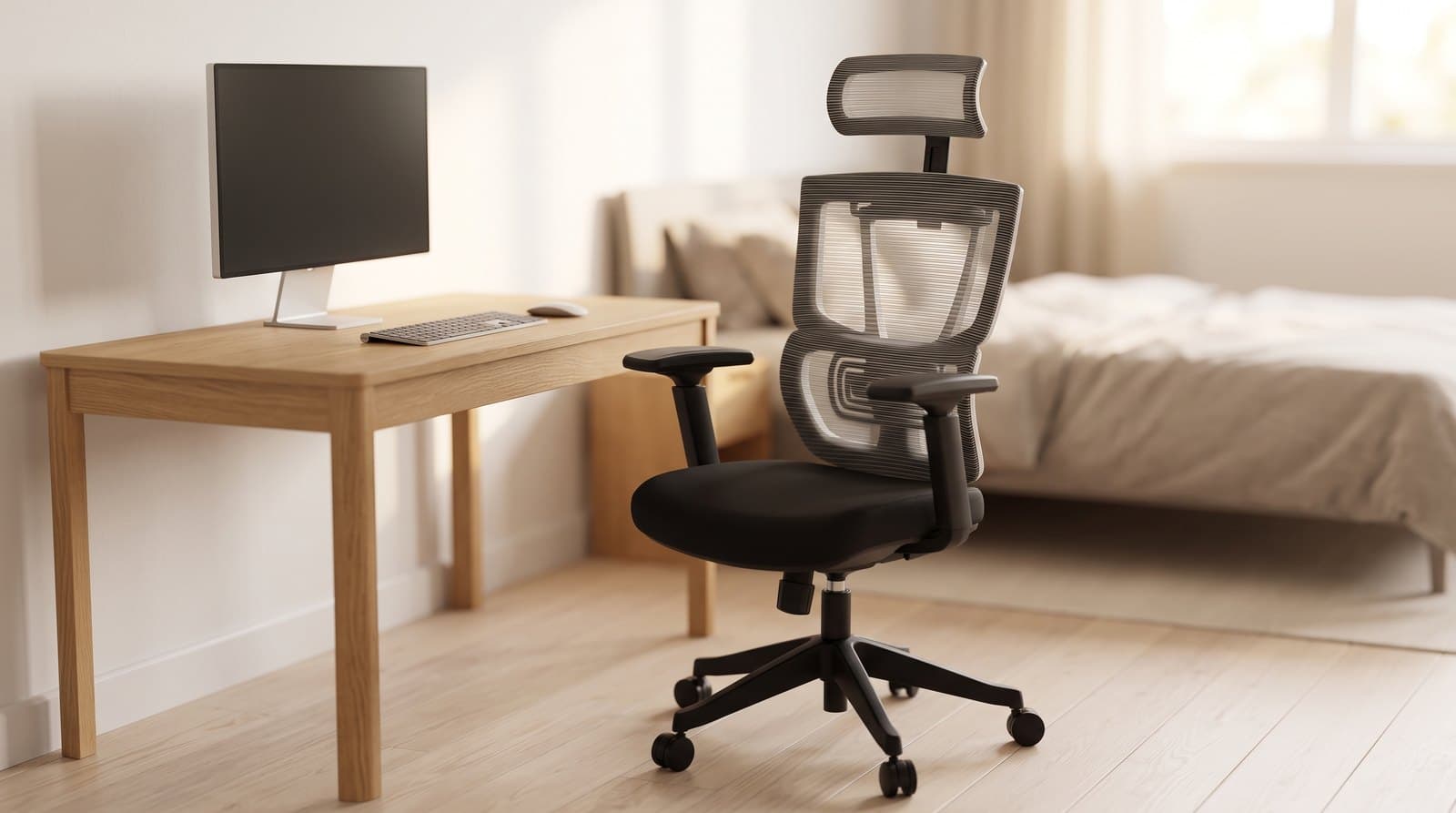
The C7 is the chair that makes the case for this whole price band to someone who was about to spend $250. For roughly $330 — and it dips toward $230 on FlexiSpot's frequent sales — you get 4D armrests, a seat that slides through three inches of depth from 17 to 20 inches, an adjustable headrest included rather than sold separately, and a lumbar support with a genuinely clever twist: it can be left active, applying constant pressure as you shift, or locked in place for fixed support. That's a choice most chairs twice the price don't offer.
It's also physically large, and reviewers consistently size it for taller sitters rather than shorter ones, so it's an easier recommendation at 6'2" than at 5'2". The compromise is the warranty, and it's the reason this is the value pick rather than the overall winner: FlexiSpot splits coverage by component — ten years on the armrests and base, three on the seat and adjusters, and two on the pneumatic cylinder. The cylinder is the part most likely to fail on a cheap chair, and it has the shortest term of anything in this guide. Judge the C7 as a very good four-to-five-year chair rather than a decade one, and at this price that's a fair trade.
What we like
- 4D armrests and a 17–20 in seat-depth slide at roughly $330
- Headrest included, and a lumbar you can leave active or lock in place
- 300 lb capacity and a roomy frame that suits taller sitters
Worth knowing
- Warranty split by component — only two years on the gas cylinder
- Large frame is a poor fit for shorter sitters
- Mesh-and-foam build feels its price next to the contract chairs here
- Back / seat
- Mesh back with adjustable headrest / foam seat
- Armrests
- 4D
- Lumbar
- Selectable — active constant pressure or locked fixed support
- Seat depth
- 17–20 in adjustable
- Capacity
- 300 lb
- Warranty
- 10 years armrests and base · 3 years seat and adjusters · 2 years cylinder
4. Best Warranty
HON Ignition 2.0
Typically around $400
- Keeping a chair a decade
- Replaceable parts
- Big-and-tall buyers
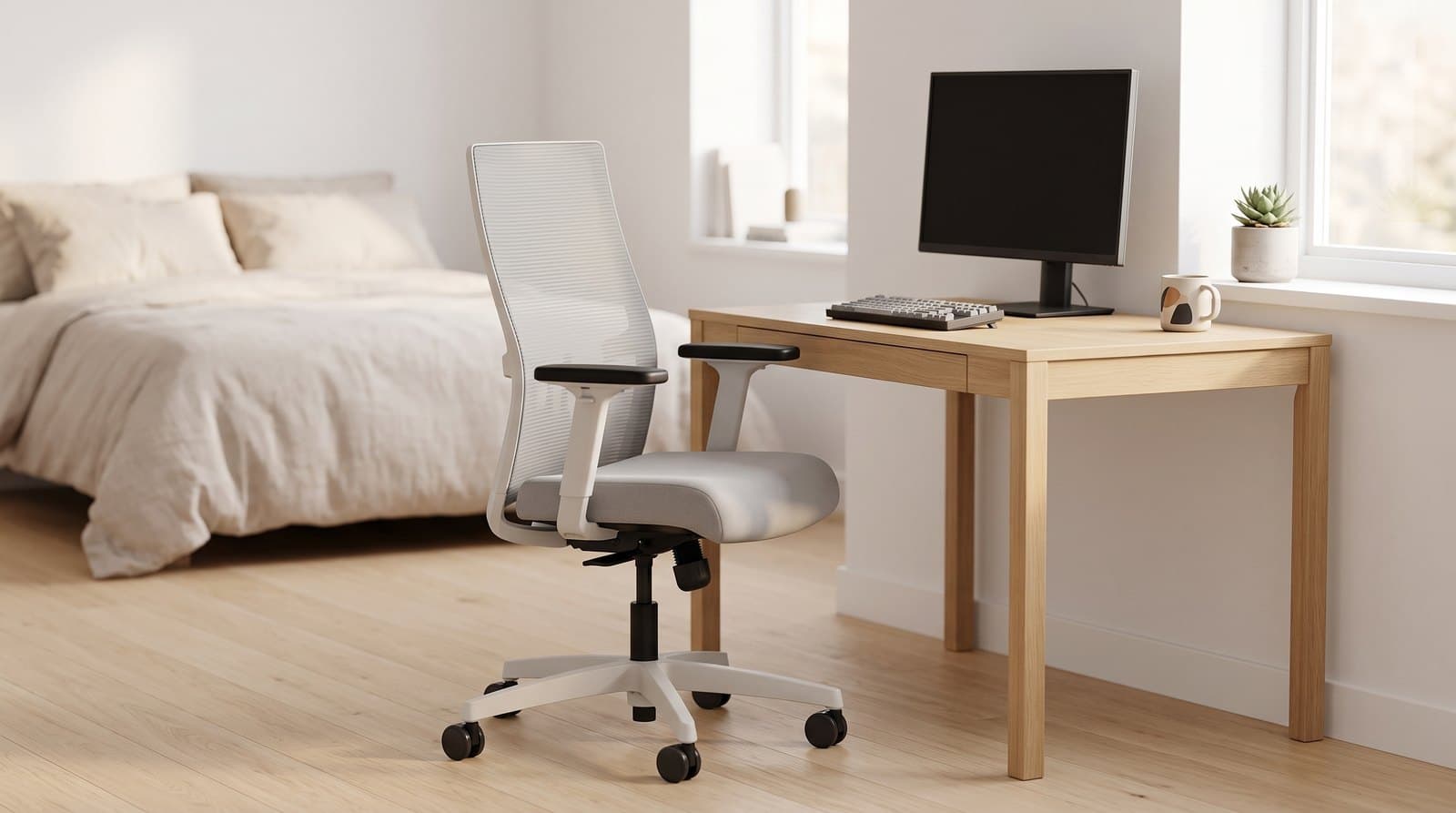
HON is a contract brand you've almost certainly sat in without noticing — the Ignition 2.0 is a fixture of American offices — and it comes with a full lifetime warranty against defects in materials and workmanship for the original purchaser. Read the tiers rather than the headline: the ilira-stretch mesh and the seating controls are covered for twelve years, textiles for five, and normal wear including seat-foam compression is excluded, as it is on every chair here. What that lifetime term really buys is parts availability. A brand that sells into corporate contracts still stocks a cylinder, a caster set and a control mechanism for a chair it shipped a decade ago, which is not true of most direct-to-consumer chairs.
The buying process is the wrinkle, and it's worth understanding before you shop. Through an office dealer the Ignition 2.0 is configured: the base chair lists high and the adjustable lumbar (about $24) and the arms (about $64 for height-and-width, $98 for fully adjustable) are line items, which is how the same chair appears at $486 in one place and $399 in another. The fixed retail SKUs sold through Amazon and Staples generally bundle height-and-width arms plus adjustable lumbar for around $400, and that's the version most people should buy. Four-way stretch mesh, six adjustment points, a 300 lb rating and a seat height of roughly 17 to 22 inches by configuration. If you need more capacity, the Big and Tall version is warranted to 450 lb — the highest figure in this guide by 50 lb.
What we like
- Full lifetime warranty on the chair, twelve years on the mesh and controls
- Contract-brand parts availability years after purchase
- Big and Tall variant rated to 450 lb
Worth knowing
- Dealer configuration means lumbar and better arms are paid add-ons
- Standard arms adjust for height and width only, not depth or pivot
- Recline mechanism is the least refined of the contract chairs here
- Back / seat
- 4-way stretch ilira mesh back / upholstered foam seat
- Armrests
- Height and width adjustable (fully adjustable available at extra cost)
- Lumbar
- Adjustable — included on retail SKUs, an add-on through dealers
- Adjustment points
- Six — seat height, seat depth, back height, back angle, arm height, lumbar
- Seat height
- Roughly 17–22 in by configuration
- Capacity / warranty
- 300 lb (450 lb Big and Tall) · full lifetime, 12 years mesh and controls, 5 years textiles
5. Best Back Support
Autonomous ErgoChair Ultra 2
Typically around $499
- Movers and fidgeters
- Hot rooms
- Sitters who hate fixed lumbar bumps
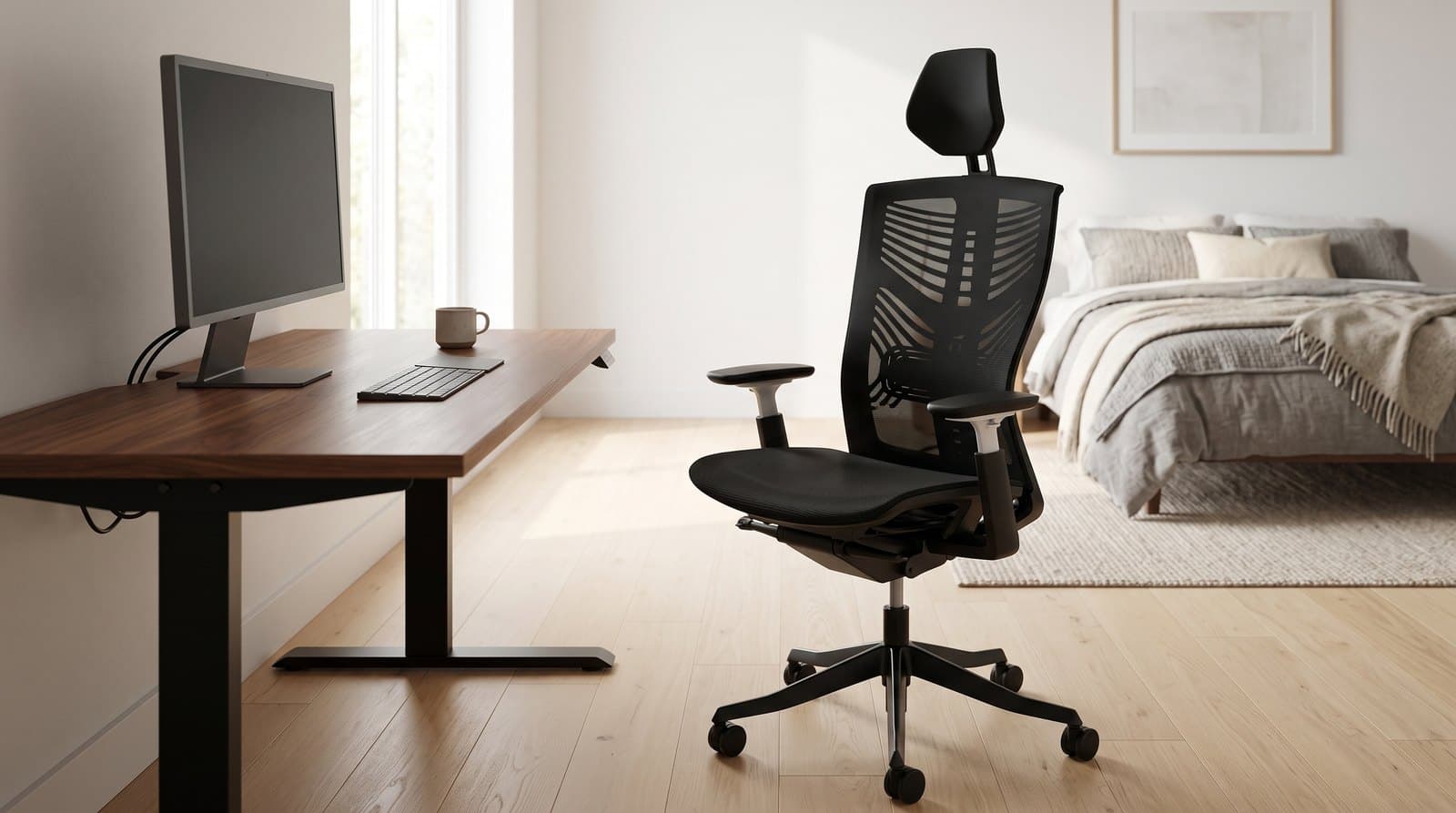
The Ultra 2 is the one chair here that solves lumbar support by abandoning the idea of a lumbar point. Instead of a pad you slide up and down, the backrest is an adaptive flex-frame: a central spine with tensioned TPE ribs that bend forward as you lean in and back as you lean out, supporting the whole length of your back rather than one spot you have to locate correctly. If you've ever adjusted a lumbar pad for a week and never found the right height, that's the pitch, and it's a real one. The open exoskeleton also vents heat rather than trapping it, which matters in a warm room more than any mesh-density claim.
The seat is unusual too — four layers of polyester, moulded foam, TPE webbing and a matrix of polymer coil springs, so it stays firm over a long day instead of bottoming out the way cheap foam does. The rest of the sheet is solid rather than spectacular: 320 lb capacity, a welded aluminium-based frame, an Italian Donati synchro-tilt with 25 degrees of recline and tension control, and 3D armrests — height, depth and angle, but no width. Autonomous publishes an 18 to 23 inch seat height, the highest top end here that doesn't cost extra — only the Branch Pro's paid tall cylinder gets close — which is why this keeps turning up as a recommendation for tall sitters, and a lifetime warranty on the frame and mechanism when you buy direct. Note what that excludes: the mesh, foam and upholstery aren't the frame, so this is a lifetime term on the parts least likely to break.
What we like
- Flex-frame back supports your whole spine — nothing to position, nothing to get wrong
- Open exoskeleton back puts the least material between you and the room air of anything here
- Spring-matrix seat resists the sag that kills cheap foam; 320 lb capacity
Worth knowing
- "Lifetime" covers the frame and mechanism only, not mesh or foam
- 3D armrests — no width adjustment
- No conventional lumbar dial, which some backs specifically want
- Back / seat
- Adaptive exoskeleton flex-frame with TPE ribs / four-layer spring-matrix seat
- Armrests
- 3D — height, depth, angle
- Lumbar
- None as such — the whole back flexes with you
- Seat height / depth
- 18–23 in · depth 18–20.5 in
- Recline
- 25° Donati synchro-tilt with tension control
- Capacity / warranty
- 320 lb · lifetime on frame and mechanism
6. Best Design
Branch Verve
Typically around $549
- Chairs that live in the living room
- Colour beyond black
- Set-and-forget sitters
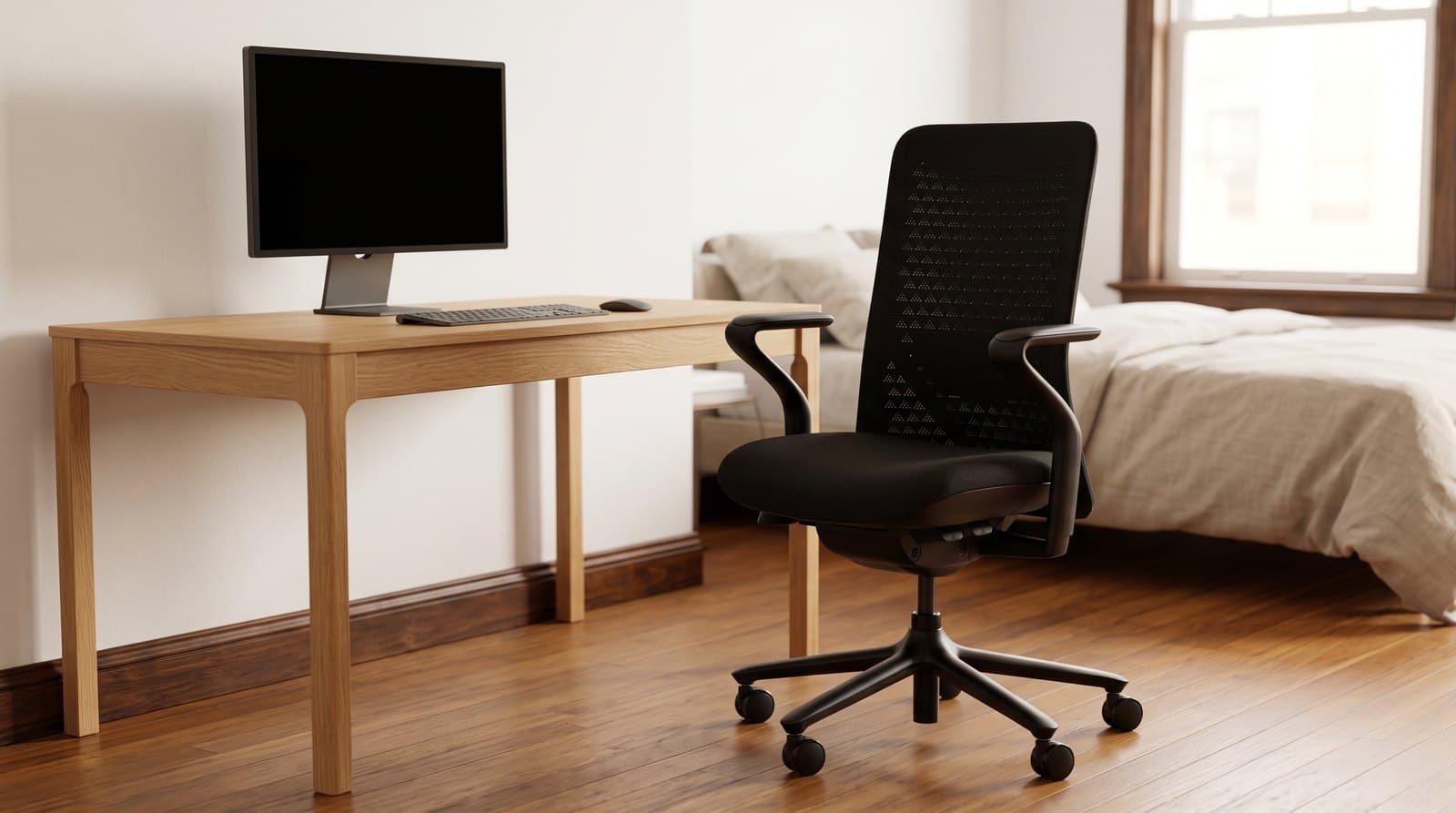
Most ergonomic chairs are designed by engineers and it shows. The Verve was designed by fuseproject — Yves Béhar's studio — and it's the only chair in this guide you'd willingly put in a room people see. The 3D knit back is a single sculpted piece with a subtle woven pattern instead of a spec-sheet mesh panel, the seat is high-density foam rather than a thin contract pad, and it comes in Galaxy black, Coral and Mist at $549, with newer colourways like Mint, Cobalt and Lunar running toward $649. It's GREENGUARD Gold certified for low emissions and carries the same seven-year warranty as its sibling.
You pay for that in adjustment, and it's a real trade rather than a quibble. The Verve has six points where the Branch Pro has fourteen, and the crucial gap is the armrests: they move up and down and nothing else, so there's no depth, width or pivot to bring them under your forearms. Seat height runs 16.4 to 20.5 inches, the lumbar pad adjusts for height only, capacity is 275 lb, and Branch publishes a fit range of 5' to 6' — the narrowest here, and worth checking against yourself before you buy. If you set a chair up once and never touch it again, none of that will bother you. If you're buying this tier specifically for adjustment, buy the Pro and save $50.
What we like
- Genuinely well-designed — fuseproject, in colours other than black
- High-density foam seat and a sculpted 3D knit back
- Seven-year warranty and GREENGUARD Gold certification
Worth knowing
- Height-only armrests — no depth, width or pivot
- Six adjustment points against fourteen on the cheaper Branch Pro
- 275 lb capacity and a published fit range of only 5' to 6'
- Back / seat
- Sculpted 3D knit back / high-density foam seat
- Armrests
- Height adjustable only
- Lumbar
- Padded, height adjustable
- Seat height
- 16.4–20.5 in, with adjustable seat depth
- Adjustment points
- Six — seat height, seat depth, tilt, tilt lock, lumbar height, arm height
- Fit / capacity / warranty
- 5'–6' · 275 lb · 7 years
The verdict
The Steelcase Series 1 is the buy for most people, and it wins on unglamorous grounds: twelve years of multi-shift coverage including labour, a 400 lb rating, a seat that drops to 16.5 inches and rises to 21.5, and 4D arms with a seat-depth slide standard at $499. It's a commercial chair sold to you at a consumer price, and in a category where the failure mode is the chair quietly dying in year three, that's the thing worth paying for. Just know it's firm — if you want to sink into a chair, you won't love it.
If the budget is tight, the FlexiSpot C7 at roughly $330 delivers 4D armrests, a three-inch seat-depth slide and an included headrest for less than the tier's midpoint. Read it as a very good four-to-five-year chair rather than a decade one, because the two-year cylinder warranty is the giveaway. At the other end, the HON Ignition 2.0 is the pick if you intend to still own this chair in 2036 — a lifetime term plus contract-brand parts availability means a failure is a part order, not a purchase.
Beyond that, buy for a specific problem. The Branch Ergonomic Chair Pro has the most adjustable hardware here and is the answer to an awkward desk height or shoulders that need the arms just so — check the tall cylinder if you're above about 6', and also if you're short and stuck with a fixed 29-inch desk, because that combination needs a seat that goes high rather than low. Why that is the case is worth ten minutes before you order. The Autonomous ErgoChair Ultra 2 is for anyone who has never found the right lumbar height, because its flexing exoskeleton back removes the question entirely — and it's the most open-backed chair here, which is the one to reach for if your room runs hot. And the Branch Verve is the one you buy when the chair lives somewhere people can see it — accepting height-only armrests and six adjustment points as the price of a chair designed by fuseproject rather than by a spec sheet.
Two things worth saying against our own interest. The first: if you're under about 6' and sit for two or three hours a day, a well-set-up chair from our under-$300 guide will do nearly everything these do, and the difference you're paying for here is measured in years rather than hours. The second: if you'll genuinely keep one chair for a decade, a remanufactured Steelcase Leap V2 or Herman Miller Aeron sits in this exact price band and gives you materials from a $1,500 chair — better than anything new at $500, at the cost of buying refurbished.
And whatever you land on, set it up in the right order before you judge it — seat height comes from your elbows and the desk, not from your feet, and a chair that never gets adjusted past the height lever is being judged on a setting it was never meant to sit at. The cheap upgrades still apply after that. A lumbar cushion fixes a back that a fixed pad can't reach, a footrest fixes a desk that's too tall to lower, and a chair mat stops a 40 lb chair tracking lines into your floor. Fit the cushions before you adjust, though: a 3-inch seat pad spends most of the Series 1's armrest range in one move. If what you actually want is a chair that looks like gaming, our gaming chairs guide covers that category honestly — including why its shape came from motorsport rather than ergonomics.
Frequently asked questions
Three things, and comfort on day one isn't reliably one of them. The first is warranty: sub-$300 chairs typically carry one to three years, while this tier runs seven, twelve or lifetime — and on the contract chairs that coverage includes labour and is written for multi-shift use. The second is the adjustments that change your posture rather than pad it, chiefly a seat-depth slide and armrests that move in more than one axis. Seat depth is the single most commonly missing adjustment under $300 and it decides whether the front edge of the seat presses into the backs of your knees. The third is parts. A brand selling into office contracts still stocks a gas cylinder and a caster set for a chair it shipped eight years ago, so a failure is a $40 part rather than a new chair. If you sit for two hours a day, none of that is worth $250 to you. If you sit for eight, all of it is.
Honestly? For a lot of people, yes — and it's worth saying even though it isn't what this page is here to sell you. A properly remanufactured Steelcase Leap V2 or Herman Miller Aeron from a specialist refurbisher lands in roughly the $450–650 band, which is exactly this tier, and gives you the frame, mechanism and materials of a chair that listed for $1,200 to $1,800 new. Those chairs were engineered for a fifteen-year service life, the good refurbishers replace the foam, upholstery, cylinder and casters, and most attach their own multi-year warranty. What you give up is a new chair's condition, current-season colours, and the ability to return it as easily as an Amazon order — and you need to buy from an actual remanufacturer rather than a listing that just means "used". If you plan to keep one chair for a decade, that route beats everything on this page on materials per dollar. If you want a warranty from the company that designed the chair, buy new.
Start with the HON Ignition 2.0 Big and Tall, which is engineered and warranted to 450 lb with a seat height of 18 to 22.25 inches — the highest capacity anywhere in this guide, and it carries the same lifetime warranty as the standard chair. The Steelcase Series 1 is the next best answer at 400 lb, and its seat drops to 16.5 inches and rises to 21.5, so it fits a wide spread of heights straight out of the box. The Autonomous ErgoChair Ultra 2 covers 320 lb and publishes an 18 to 23 inch seat height — the highest top end here without paying for an upgraded cylinder, which is the spec that matters if the problem is height rather than weight. What we'd steer you away from are the two Branch chairs: both are rated at 275 lb, and the Verve's published fit range stops at 6'. Weight ratings on office chairs are about the cylinder, the base and the control mechanism, not the upholstery, so treating them as a hard ceiling rather than a suggestion is the right instinct.
Foam for most people, mesh if your room runs hot or you sweat easily. A mesh seat pan breathes far better and can't compress into a permanent dip, but it applies pressure along the frame edges, and cheaper mesh seats develop a hard rim you'll feel by hour four. Foam is more forgiving on day one and the material most likely to be the reason you replace the chair in year five, because seat-foam compression is explicitly excluded from every warranty in this guide. Note that most of these chairs mix the two — the Steelcase, HON, Branch Pro and FlexiSpot all pair a mesh back with an upholstered foam seat, which is the sensible default. The Autonomous is the interesting exception: its seat is foam over TPE webbing and a coil-spring matrix, which is aiming for foam's comfort with mesh's resistance to sagging.
Only if you recline, and most desk work doesn't. A headrest supports your head when your torso is leaned back past roughly 110 degrees — reading, thinking, being on a call. Sitting upright and typing, it either sits behind your head doing nothing or, if it's badly positioned, pushes your neck forward into exactly the posture you're trying to avoid. That's why the Steelcase Series 1 and the Branch Pro both sell it as a paid add-on rather than fitting it as standard — about $79 on the Branch — while the FlexiSpot C7 includes one and Autonomous sells the Ultra 2 in headrest and headrest-free versions. If you know you recline several times a day, get one that's height-adjustable at minimum. If you sit forward and work, skip it and put the money toward better armrests, which you use continuously.
Keep building your setup
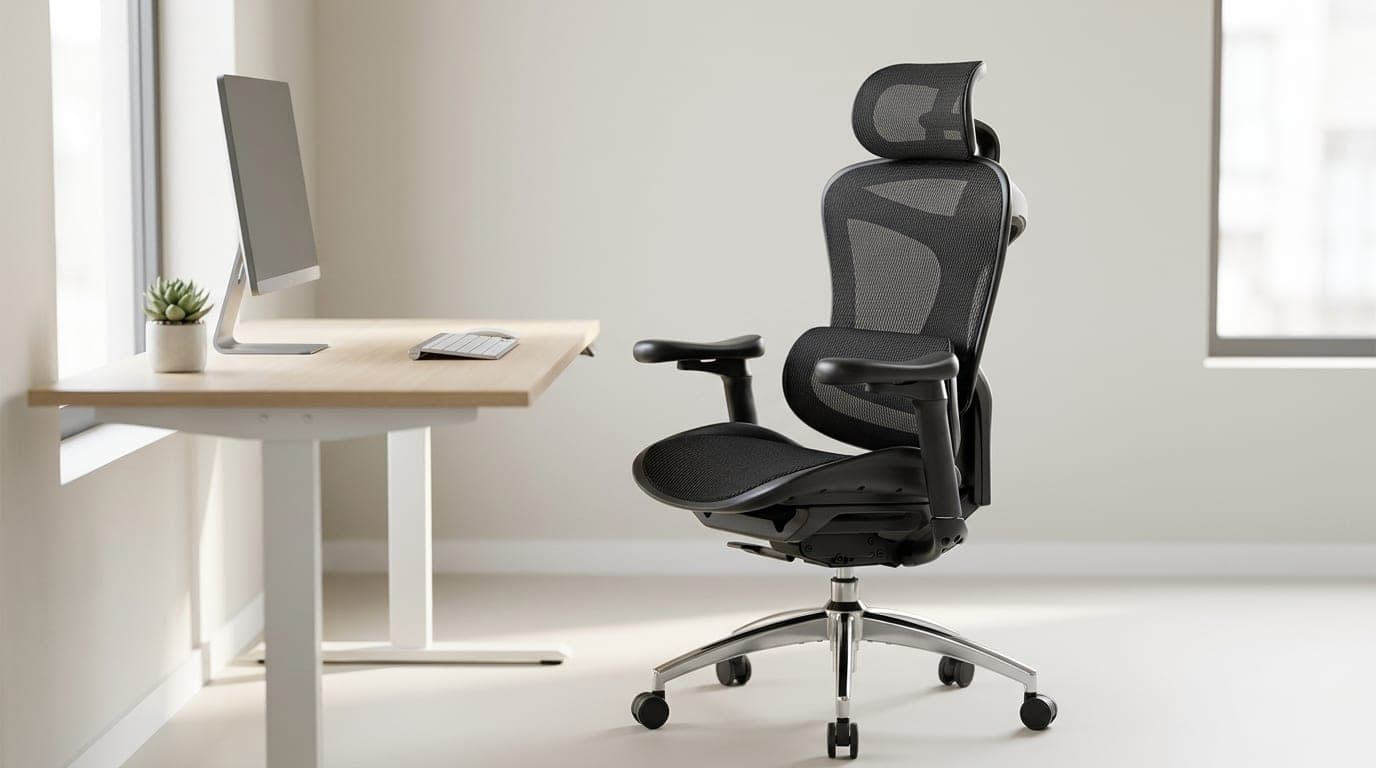
Ergonomics
The Best Ergonomic Office Chairs Under $300 in 2026
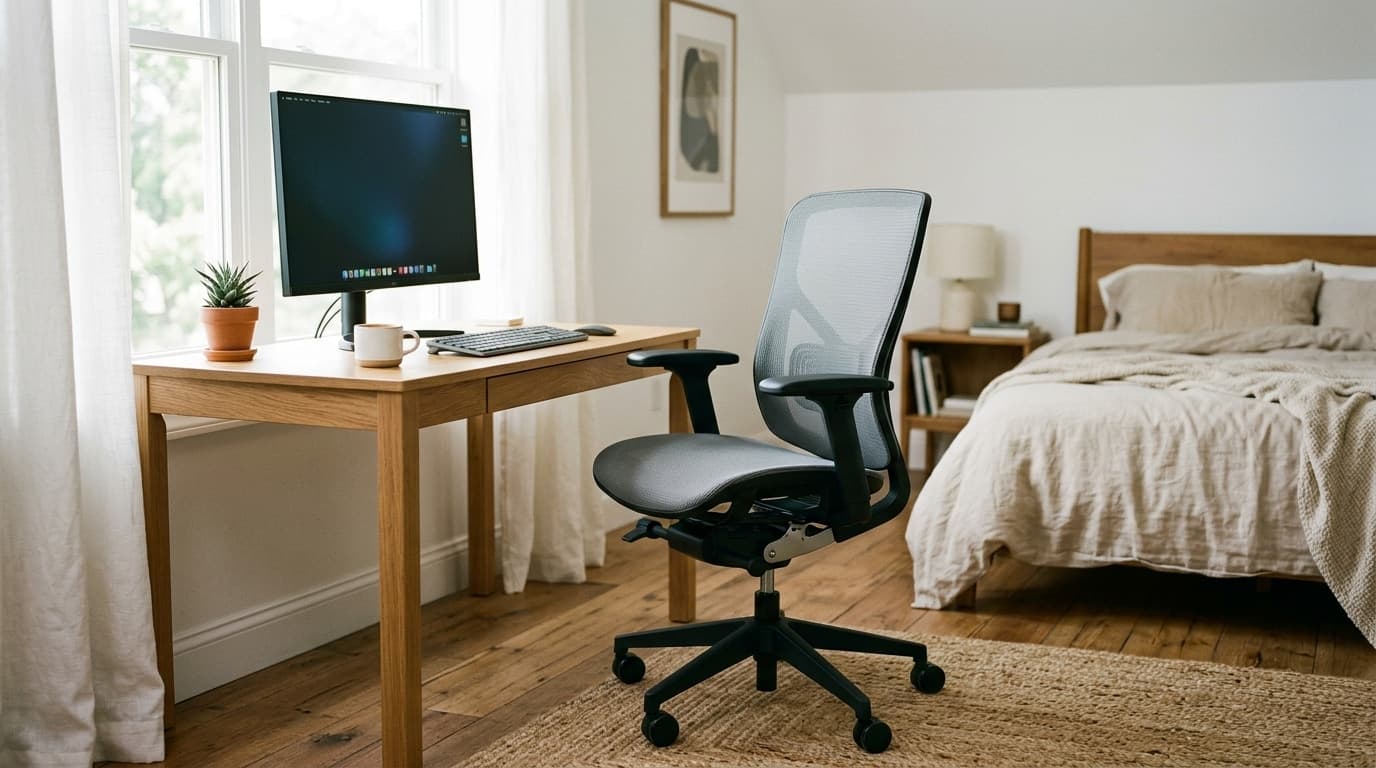
You don't need a $1,500 Herman Miller to fix your back. Six ergonomic office chairs under $300 compared on the things that actually matter — real lumbar adjustment, armrest range, weight capacity, and who each one fits.
Updated September 15, 2026
Ergonomics
The Best Gaming Chairs in 2026
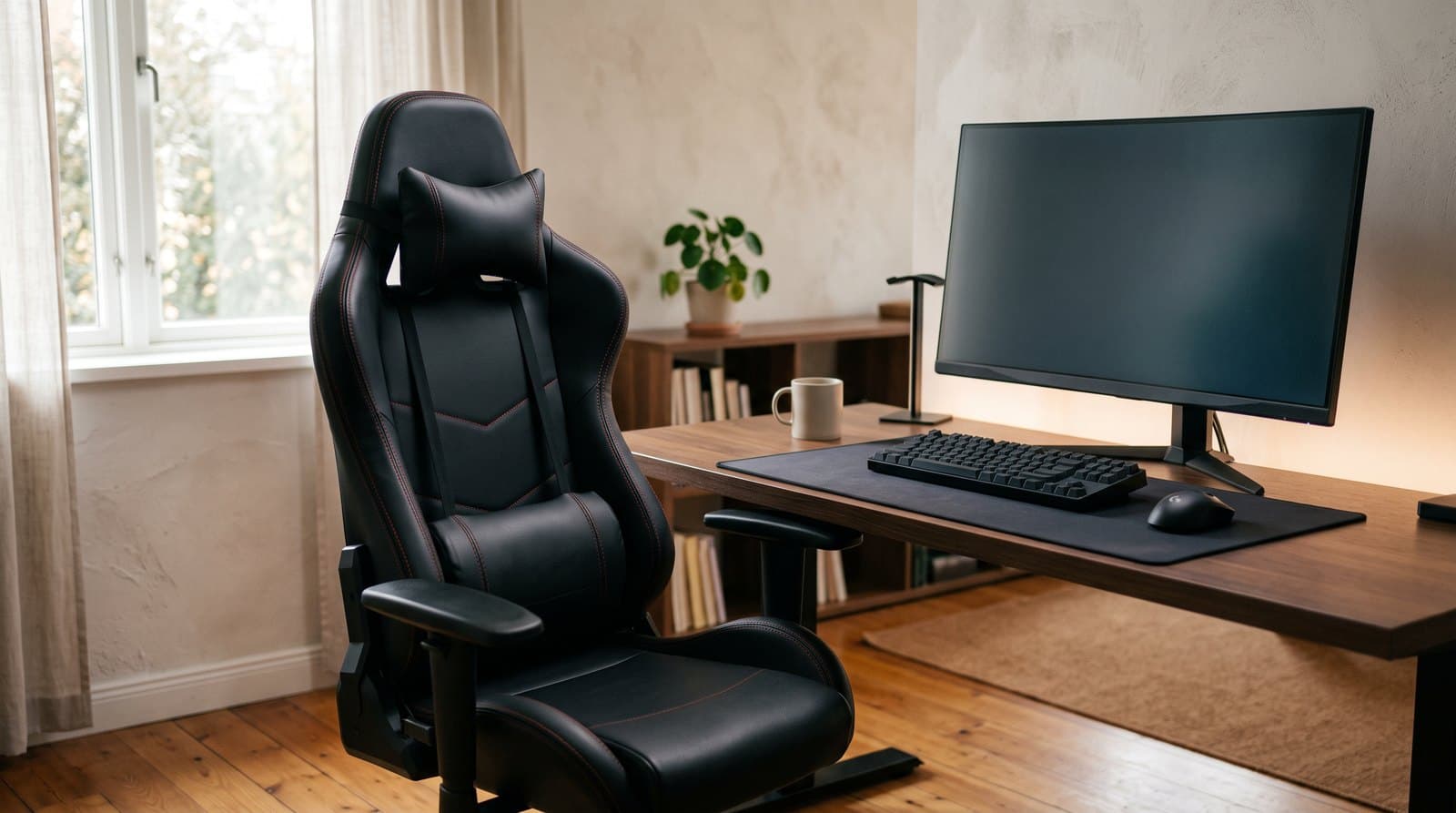
A gaming chair is a fit purchase, not a feature purchase — the bucket shape that makes it look fast is also what makes it too narrow. Six picks from $180 to $990, compared on the height and weight window each one is built for, what its lumbar support actually does, and whether the upholstery will still be intact in three years.
Updated August 12, 2026
Ergonomics
How to Adjust an Office Chair: The Order That Actually Works
A standard 29-inch desk is built to the elbow height of the tallest man in twenty. Cornell's ergonomics notes say a seat should adjust nine inches; the chairs we recommend adjust three to five. Here is the order to set a chair in, and the arithmetic that decides whether yours can even reach.
Updated September 15, 2026
Get the next guide in your inbox
One short email when we publish or meaningfully update a buying guide. No spam, no daily deals firehose.