 Rigworthy
The Best Gaming Chairs in 2026
By Rigworthy Editorial Team · Updated August 12, 2026
Rigworthy is reader-supported: we may earn a commission if you buy through our links, at no cost to you. How we make money
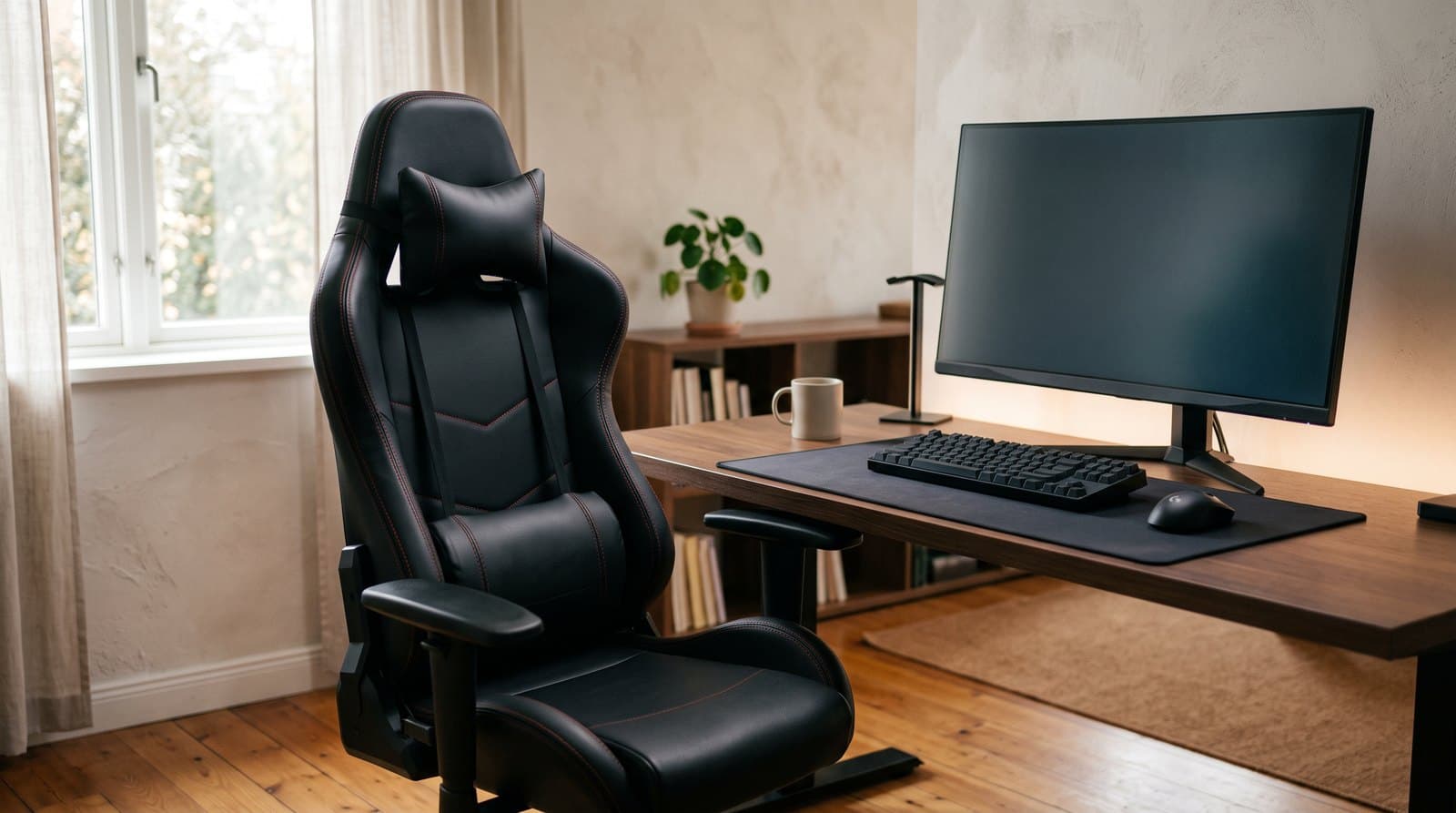
A gaming chair is the only piece of desk equipment people buy in one size and then blame themselves for. The bucket seat, the winged backrest and the high side bolsters are borrowed from motorsport, where the shape exists to hold a driver in place through a corner — and the same bolsters that make it look fast are what make it too narrow across the hips, or too tall behind the shoulders, or land the lumbar curve two inches above where your lumbar spine actually is.
So this guide leads on fit. Every pick's manufacturer-published height range and weight capacity is in the comparison table, because it's the number that decides whether you like the chair in month three and it's the number that almost no round-up prints. One brand here sells three sizes and tells you what each is for. Another sells one size and publishes no height range at all — we've flagged that plainly rather than skipped it.
Two other things decide how the purchase ages. The first is what the lumbar support physically is: a pillow strapped to the outside slides down your back and ends up behind the desk, a moulded arch stays put but can't move, and a mechanism you can dial up, down, in and out is the one feature in this category genuinely worth paying for. The second is the upholstery, because synthetic leather cracks at the seat edge and the bolsters in a way woven fabric simply doesn't — and the fabric version is usually the cheaper SKU.
Six chairs from $180 to $990, every figure taken off a manufacturer spec sheet or a first-party retail listing. We don't run a chair lab and we won't pretend otherwise.
Our top picks at a glance
- 1
- 2
- 3
- 4
- 5
- 6
How we chose
- The manufacturer's own recommended height range and weight capacity for every pick, promoted to a comparison column — it is the number that decides whether you like the chair, and almost no guide tables it
- What the lumbar support physically is: an external strapped-on pillow, a fixed moulded arch, or an internal mechanism you can move up, down, in and out
- Upholstery named precisely — woven fabric, PU/PVC leatherette, or a suspension membrane — because it decides how the chair ages more than any other material choice
- Armrest adjustment axes and their travel in millimetres where published, since armrests do more for your shoulders than any recline figure
- Warranty length treated as the manufacturer's own durability estimate, from two years to twelve
- Every figure taken from the manufacturer's spec sheet or a first-party retail listing — we do not test chairs in a lab and we do not publish numbers we can't source
Our picks come from spec research, long-term owner feedback, and category expertise — not sponsorships. Read the full methodology.
Compared side by side
| Product | Award | Upholstery | Lumbar support | Fits (height / weight) | Typical price |
|---|---|---|---|---|---|
| Secretlab TITAN Evo | Best Overall | Leatherette or woven fabric | Internal, 4-way | 5'0"–6'9" / to 395 lb | $549–669 |
| Corsair TC100 RELAXED | Best Budget | Woven fabric or leatherette | External pillow | to 6'2" / to 264 lb | $170–230 |
| Razer Iskur V2 X | Best Built-In Lumbar Under $300 | Woven fabric | Built-in, fixed | 5'3"–6'2" / to 299 lb | $299.99 |
| Razer Iskur V2 | Best Adjustable Lumbar | EPU synthetic leather | 4-way adjustable + 360° swivel | 5'3"–6'6" / to 299 lb | $649.99 |
| AndaSeat Kaiser 4 | Best for Big & Tall | Linen fabric or PVC leather | Pop-out bolster + 4-way internal | 4'11"–6'11" / to 395 lb | $549 |
| Herman Miller x Logitech G Vantum | Best Ergonomics | Suspension membrane + fabric | Thoracic pad + lower lumbar | One size / to 350 lb | $740–990 |
1. Best Overall
Secretlab TITAN Evo
Typically $549–669
- Buyers who want the fit sorted before anything else
- Anyone between 5 feet and 6 feet 9 inches, at any of three seat widths
- People who will actually use an adjustable lumbar mechanism
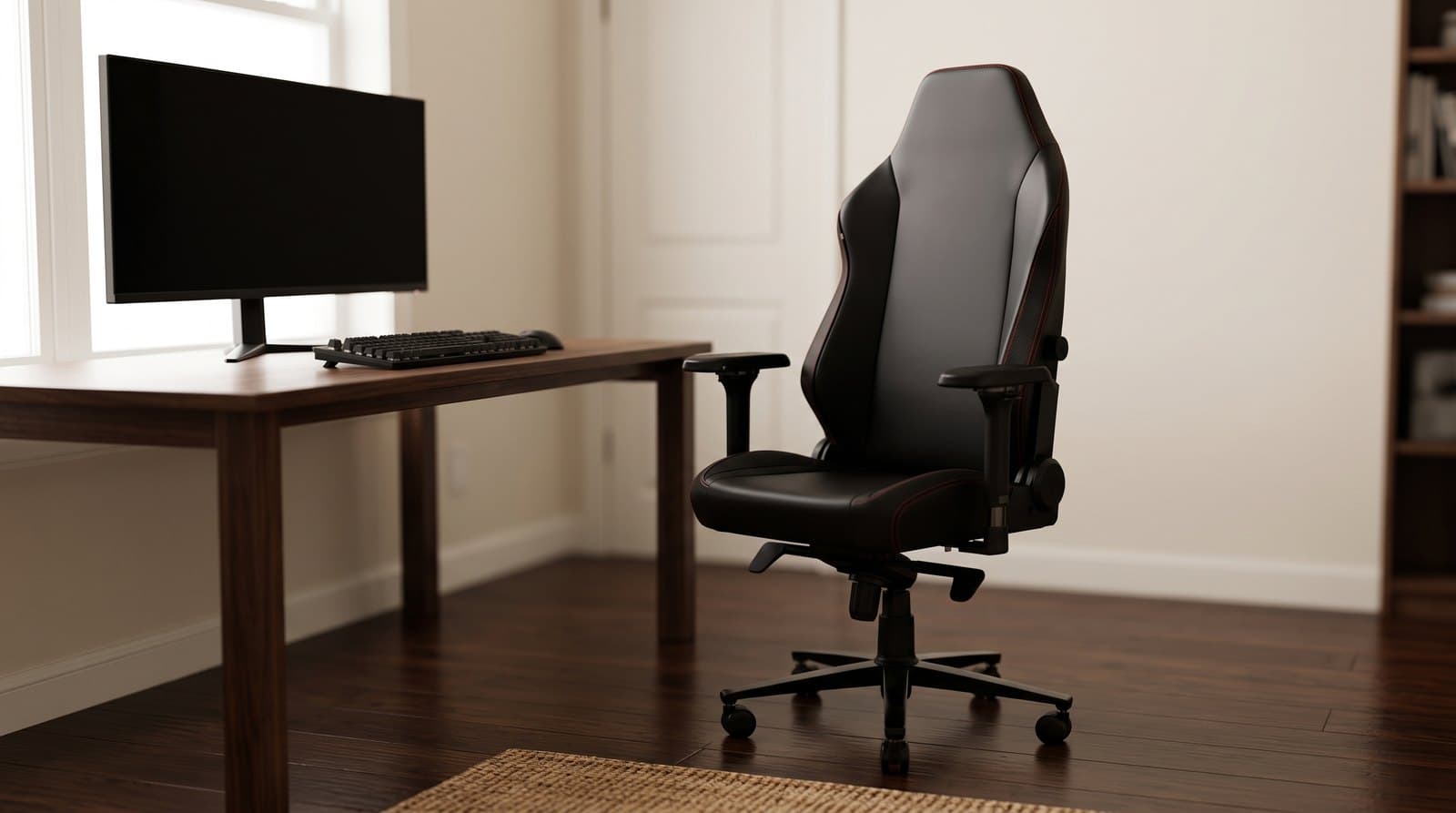
The TITAN Evo is the default recommendation in this category for one unglamorous reason: it is sold in three sizes, and it publishes what each one is for. Small suits roughly 5'0" to 5'6" and 240 pounds on a 19.3-inch seat, Regular covers 5'7" to 6'2" and 285 pounds on a 20.5-inch seat, and XL is built for 5'11" to 6'9" and 395 pounds on a 22.1-inch seat. Every other decision in this guide gets easier once you accept that a bucket seat is a garment, not an appliance — and Secretlab is the only mainstream brand that treats it that way.
The mechanism underneath is genuinely good rather than merely loud. The L-ADAPT lumbar system is built into the backrest and moves four ways on two dials — up and down, in and out — instead of being a cushion strapped over the outside, which is the difference between support that stays where you put it and support that migrates down your back by Thursday. Armrests are 4D with magnetic swappable tops, the backrest reclines from 85° to 165° with a multi-position lockout, the frame is steel on an aluminium-alloy five-star base, and the seat is cold-cure foam that stays medium-firm rather than collapsing into a hammock. Warranty is five years on all components. Two honest caveats: it is a firm chair and people expecting a sofa are regularly disappointed for the first fortnight, and the price swings hard — Secretlab discounts several times a year, so paying full list is usually a scheduling error rather than a necessity.
What we like
- Three sizes with published height and weight windows — the only pick here that solves fit properly
- Internal 4-way L-ADAPT lumbar on dials, not a pillow that slides
- Five-year warranty on all components, steel frame, aluminium base
Worth knowing
- Firm seat foam that takes a couple of weeks to get used to
- Full list price is poor value — it goes on sale often enough that timing matters
- Head pillow is magnetic and easy to knock off if you sit high in the chair
- Upholstery
- NEO Hybrid Leatherette or SoftWeave Plus fabric
- Sizes
- Small 5'0"–5'6" / Regular 5'7"–6'2" / XL 5'11"–6'9"
- Weight capacity
- 240 lb (S) / 285 lb (R) / 395 lb (XL)
- Seat width
- 19.3 in (S) / 20.5 in (R) / 22.1 in (XL)
- Lumbar
- Internal 4-way L-ADAPT, up/down and in/out on two dials
- Recline
- 85°–165° with multi-position lockout
- Armrests
- 4D with magnetic CloudSwap tops
- Frame
- Steel frame, aluminium-alloy five-star base, cold-cure foam
- Warranty
- 5 years, all components
2. Best Budget
Corsair TC100 RELAXED
Typically $170–230
- First gaming chair, or a spare seat that still has to be sat in daily
- Warm rooms where leatherette gets sticky
- Buyers under 6'2" and 264 pounds who want to spend under $200
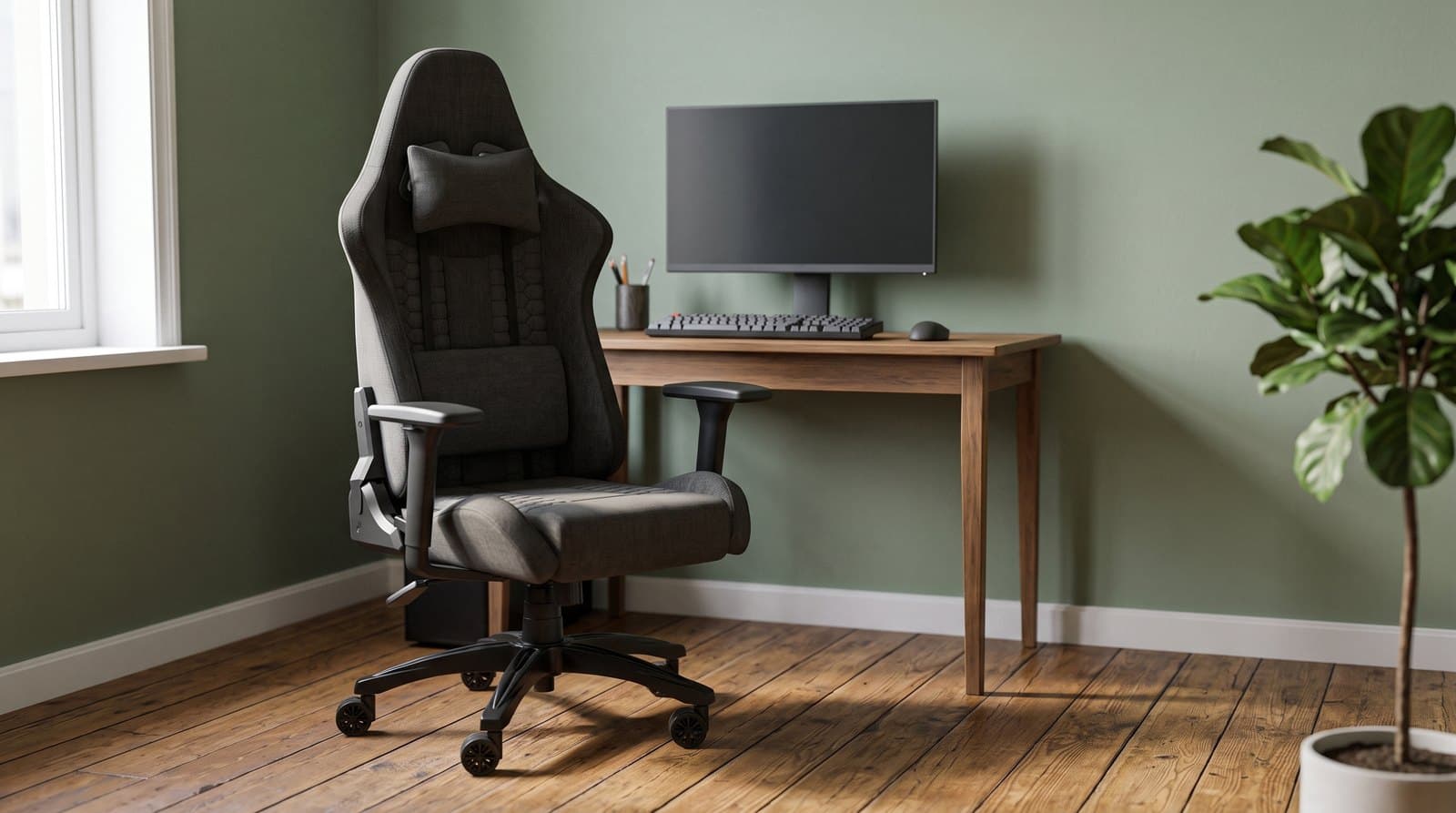
The TC100 RELAXED is the cheapest chair here we'd tell someone to actually live in, and the fabric version is the one to buy. Corsair sells it in a plush leatherette and a soft perforated woven fabric at broadly the same price, and the fabric breathes in a way no synthetic leather at this tier manages — it also skips the peeling problem that quietly ends most sub-$250 gaming chairs somewhere in year two or three. List is $269.99 for either, but both sit well under that most of the time: the leatherette drifts to around $180 and the fabric to around $220, with occasional runs at $150.
What you give up is adjustment. The lumbar support is an external pillow on a strap, not a mechanism in the backrest, and it will need pushing back into place; the neck pillow is detachable memory foam and genuinely nice. Armrests are 2D — up and down, in and out — with no forward-back or pivot, which is the single biggest ergonomic compromise on this list. The rest is solid for the money: a Class 4 gas lift with 100 mm of travel, a 375 mm seat between the bolsters (wide for the price), a steep 90°–160° recline, a 264-pound capacity and a stated maximum user height of 6'2". Warranty is two years, the shortest here, and that is worth reading as Corsair's own estimate rather than as a formality.
What we like
- Breathable woven fabric option at a genuinely budget price
- Wide 375 mm seat between the bolsters — roomier than most chairs at this money
- Good pillows included: adjustable lumbar cushion plus detachable memory-foam neck pillow
Worth knowing
- 2D armrests only — no forward-back travel or pivot
- Lumbar is a strapped-on pillow, so it slides and needs resetting
- Two-year warranty, the shortest in this guide
- Upholstery
- Perforated woven fabric or plush leatherette
- Weight capacity
- 264 lb (120 kg)
- Max user height
- 6 ft 2 in (188 cm)
- Seat width
- 375 mm between bolsters
- Lumbar
- External adjustable pillow (plus detachable memory-foam neck pillow)
- Recline
- 90°–160°
- Armrests
- 2D — height and in/out
- Gas lift
- Class 4, 100 mm height range
- Warranty
- 2 years
3. Best Built-In Lumbar Under $300
Razer Iskur V2 X
Typically $299.99
- Getting a moulded lumbar curve instead of a pillow, for around $300
- Warm rooms — this is the fabric-only pick in Razer's line
- People who set a chair up once and never touch the controls again
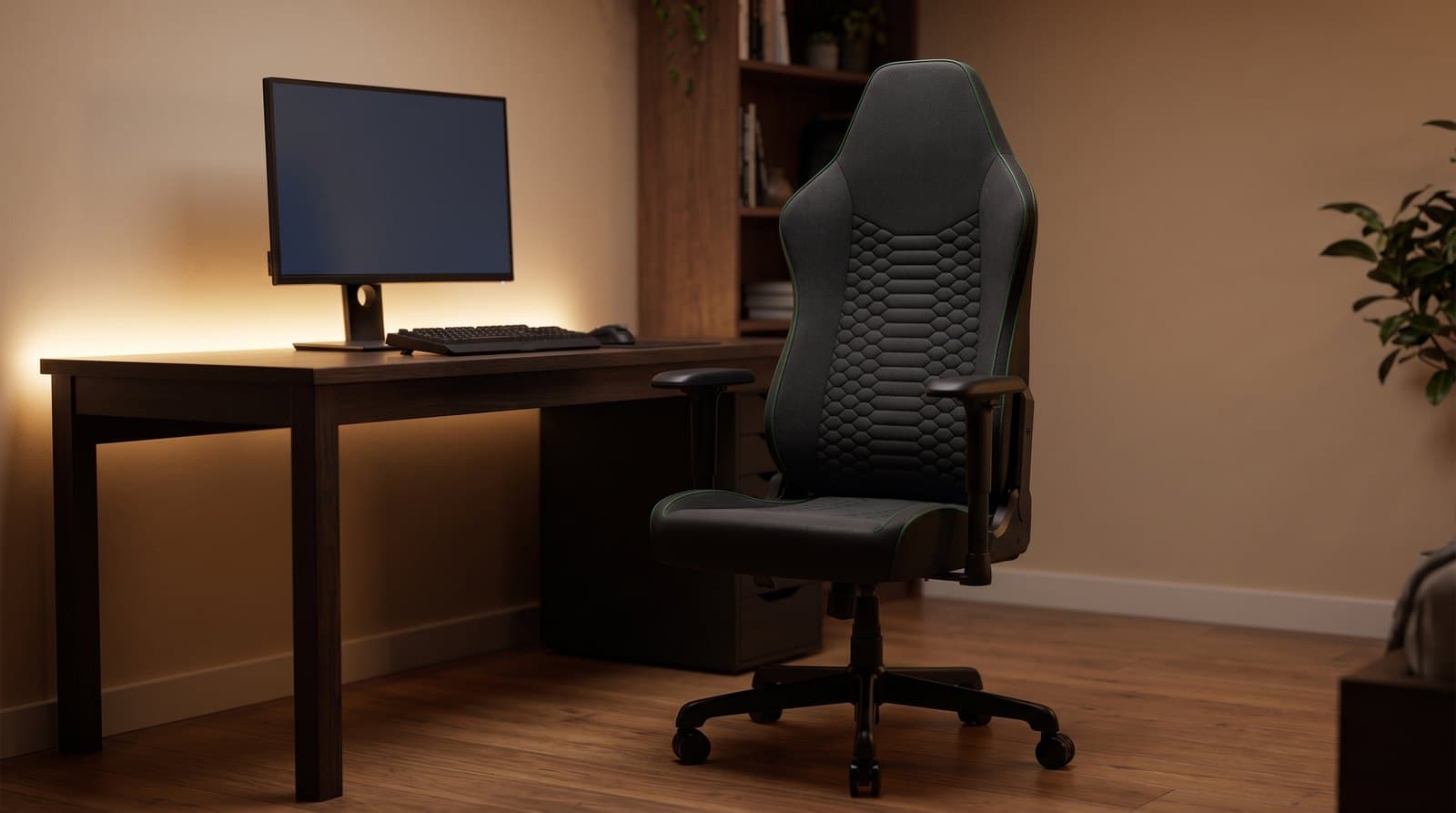
The Iskur V2 X is Razer's answer to the strapped-on-pillow problem at the budget end, and it is a real answer. The lumbar curve is moulded into the backrest itself — no straps, nothing to slide, nothing to lose behind the desk — and the seat base is widened to 545 mm with the front edges cut back so the bolsters guide you toward the middle rather than pinching your thighs. Upholstery is a multi-layered breathable fabric over high-density foam, which is the right material at this price and the right material for a warm room.
The trade is that nothing about the support is adjustable. The lumbar arch is where Razer decided it goes, and if your spine disagrees there is no dial to fix it, which is exactly why the published fit range matters more here than on the Secretlab: Razer states 160–190 cm, or roughly 5'3" to 6'2", and 299 pounds. Armrests are 2D, the same compromise as the Corsair. Recline runs to 152°. Warranty is three years, with an extra two available free through Razer's extended warranty programme if you buy direct and register. Read this chair as the sweet spot between a $180 chair with a pillow and a $650 chair with a mechanism — and if you're outside that height band, read the next entry instead.
What we like
- Lumbar curve moulded into the backrest instead of a pillow on a strap
- Wide 545 mm seat base with cut-back front edges
- Breathable fabric only — no PU leather to peel
Worth knowing
- Lumbar is fixed: no adjustment if the curve lands in the wrong place
- 2D armrests
- Narrower published fit range than the Secretlab or the AndaSeat
- Upholstery
- Multi-layered breathable fabric
- Weight capacity
- 299 lb (136 kg)
- Recommended height
- 5 ft 3 in – 6 ft 2 in (160–190 cm)
- Seat base width
- Up to 545 mm, reduced front edges
- Lumbar
- Built-in fixed lumbar arch
- Recline
- Up to 152°
- Armrests
- 2D — height and rotation in/out
- Warranty
- 3 years, extendable to 5 free via Razer's programme
4. Best Adjustable Lumbar
Razer Iskur V2
Typically $649.99
- Lower backs that need the support moved, not just present
- Anyone up to 6 feet 6 inches
- Desks where armrest height has to slide under a low desktop
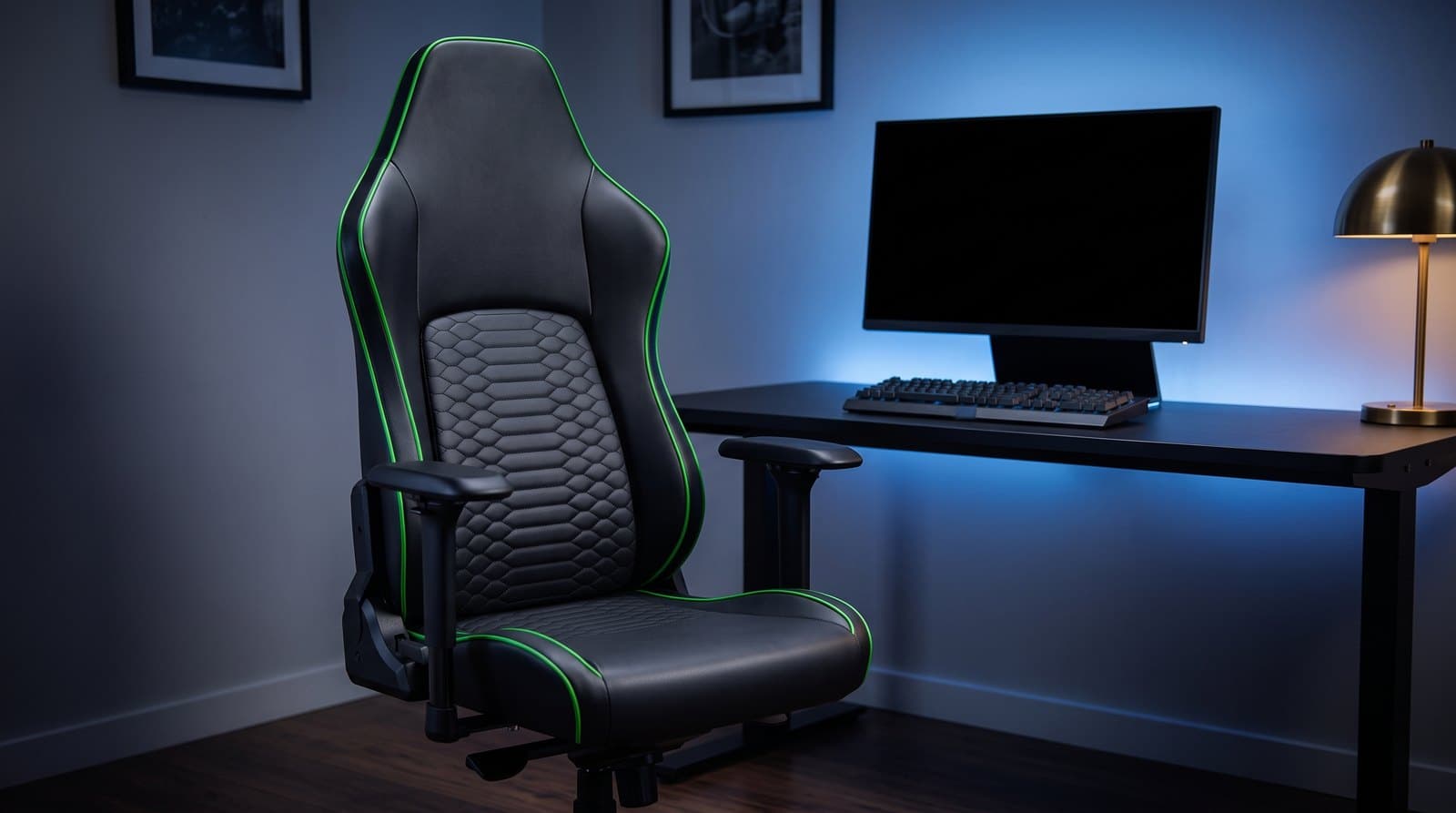
The Iskur V2 is the chair to compare against the V2 X if you want to understand where gaming-chair money goes, because the two share a shape, a 299-pound capacity and a 152° recline, and the $350 between them buys two things: adjustment and material. The HyperFlex lumbar system is the headline and it earns it — the support pad swivels through 360° and moves up, down, in and out, so instead of hoping a moulded curve lands on your lumbar spine, you put it there. If you've owned a chair that was almost right, this is the specific feature that fixes it.
The rest of the upgrade is 4D armrests with published travel — 200 to 326 mm of height, 40 mm forward and back, 24 mm side to side and 50° of rotation — which is a wider range than most chairs at any price and matters if your desk is low or you play with your elbows in. Upholstery is Razer's Gen-2 EPU leather with a CoolTouch treatment; it is a nicer synthetic than most, but it is still a synthetic leather, and synthetic leather is the material most likely to crack at the seat bolsters in a warm room. Razer publishes a fit range of 160–200 cm, roughly 5'3" to 6'6", which is the widest single-size window here. Warranty is three years, upgradeable to five free through the extended warranty programme. Honest framing: the lumbar mechanism is worth real money, and the leather is a downgrade against the V2 X's fabric on longevity.
What we like
- HyperFlex lumbar moves four ways and swivels 360° — the best lumbar adjustment here
- 4D armrests with unusually generous published travel
- Widest single-size fit range in this guide, up to 6'6"
Worth knowing
- EPU synthetic leather will age worse than fabric in a warm room
- Twice the price of the V2 X for the same shell, capacity and recline
- One size only — no small or XL variant
- Upholstery
- Razer Gen-2 EPU leather with CoolTouch
- Weight capacity
- 299 lb (136 kg)
- Recommended height
- 5 ft 3 in – 6 ft 6 in (160–200 cm)
- Lumbar
- HyperFlex — 360° swivel, up/down and in/out
- Recline
- Up to 152° (153.5° ± 2° max)
- Armrests
- 4D — 200–326 mm height, 40 mm depth, 24 mm width, 50° rotation
- Warranty
- 3 years, free upgrade to 5 via Razer's programme
5. Best for Big & Tall
AndaSeat Kaiser 4
Typically $549
- Users over 6'2", up to 6'11" and 395 pounds
- Anyone who wants a lumbar bolster that pops out and locks at any angle
- Armrest fiddlers — this is the most adjustable set here
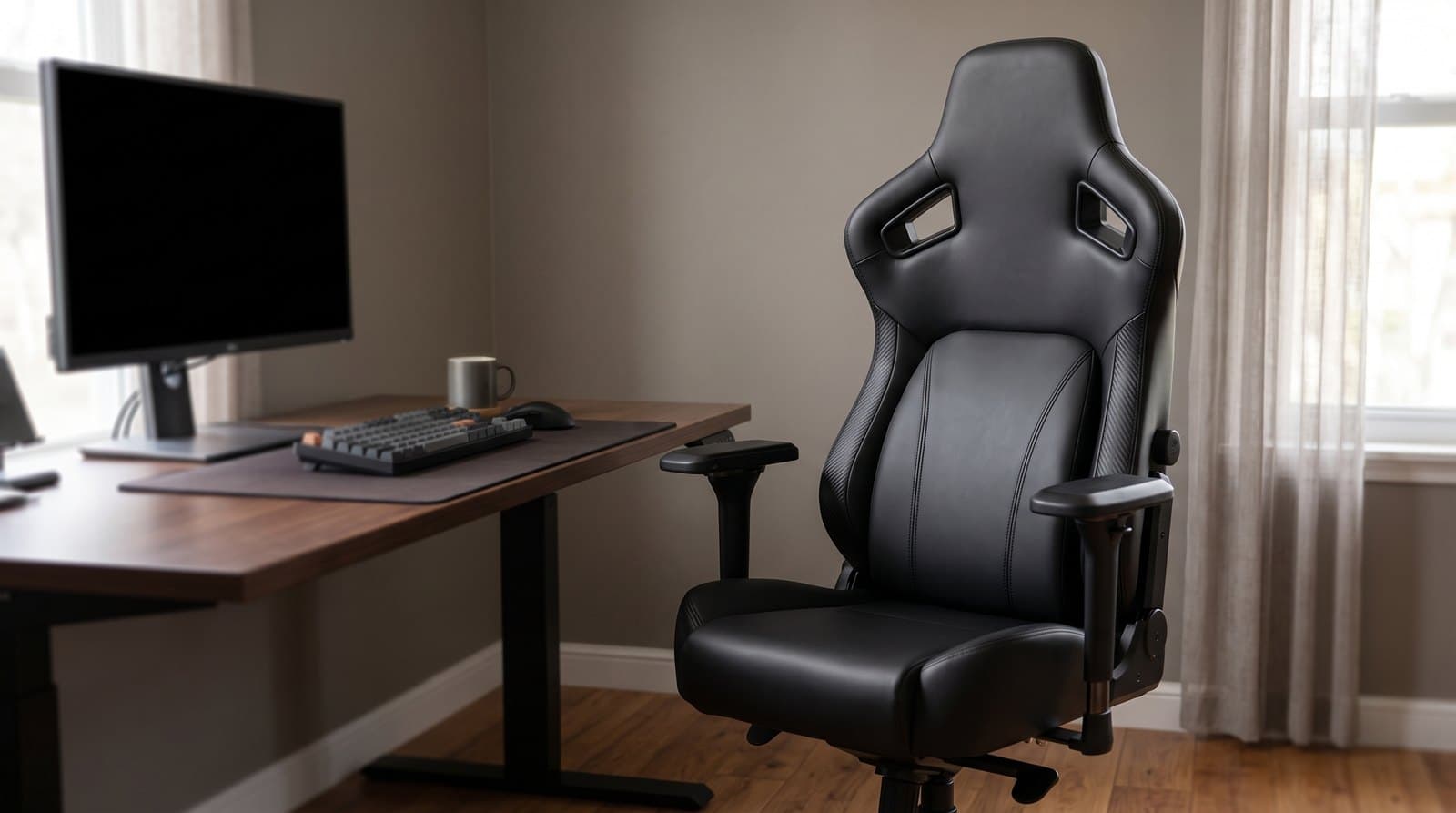
The Kaiser 4 is the pick when the problem is that you are simply larger than most gaming chairs assume. It comes in two sizes and AndaSeat publishes both windows: L covers 150–180 cm (roughly 4'11" to 6'2") up to 260 pounds, and XL covers 181–210 cm — that's 5'11" to 6'11" — from 175 to 395 pounds. The XL is one of very few chairs at any price that a genuinely tall person can sit in without the backrest wings landing across their shoulder blades instead of behind them.
The mechanisms are the other reason it's here. The lumbar is a pop-out bolster with 24° of travel that locks at any angle on an elastic gas spring, backed by a 4-way internal adjustment on dual side knobs — 76 mm up and down, 30 mm in and out — which is more lumbar range than anything else in this guide. The armrests are 6D: 70 mm of height, 40 mm front to back, 180° of pad rotation, 360° of arm rotation and 20° of upward tilt. Upholstery is either breathable linen fabric or AndaSeat's solvent-free PVC leather, and — as everywhere else on this list — the fabric is the version that will still look right in year four. Warranty is five years. The genuine trade-offs: the backrest reclines to 135° rather than the near-flat 160°-plus of the cheaper chairs, the 15° rocking mode is only rated to 260 pounds even on the XL, and at around 34 kg boxed this is a heavy piece of furniture to assemble alone.
What we like
- XL size fits up to 6'11" and 395 lb — the largest published window here
- Pop-out lumbar bolster with any-angle lock plus 4-way internal adjustment
- 6D armrests, the most adjustable set in this guide, and a five-year warranty
Worth knowing
- Reclines to 135°, less than most chairs here if you nap in it
- Rocking mode is rated to 260 lb even on the 395 lb XL
- Heavy to unbox and assemble on your own
- Upholstery
- Linen fabric or solvent-free PVC leather
- Sizes
- L 4'11"–6'2" (to 260 lb) / XL 5'11"–6'11" (175–395 lb)
- Lumbar
- 24° pop-out with any-angle lock, plus 4-way internal (76 mm up/down, 30 mm in/out)
- Recline
- 135°, plus 15° rocking mode (rocking rated to 260 lb)
- Armrests
- 6D — 70 mm height, 40 mm depth, 180° pad rotation, 360° arm rotation, 20° tilt
- Chair weight
- 33.5 kg (L) / 34.3 kg (XL)
- Warranty
- 5 years
6. Best Ergonomics
Herman Miller x Logitech G Vantum
Typically $740–990
- People who work eight hours in the chair and then play in it
- Anyone who wants an ergonomic chair that doesn't look like an office
- Buyers thinking in decades — the warranty runs twelve years
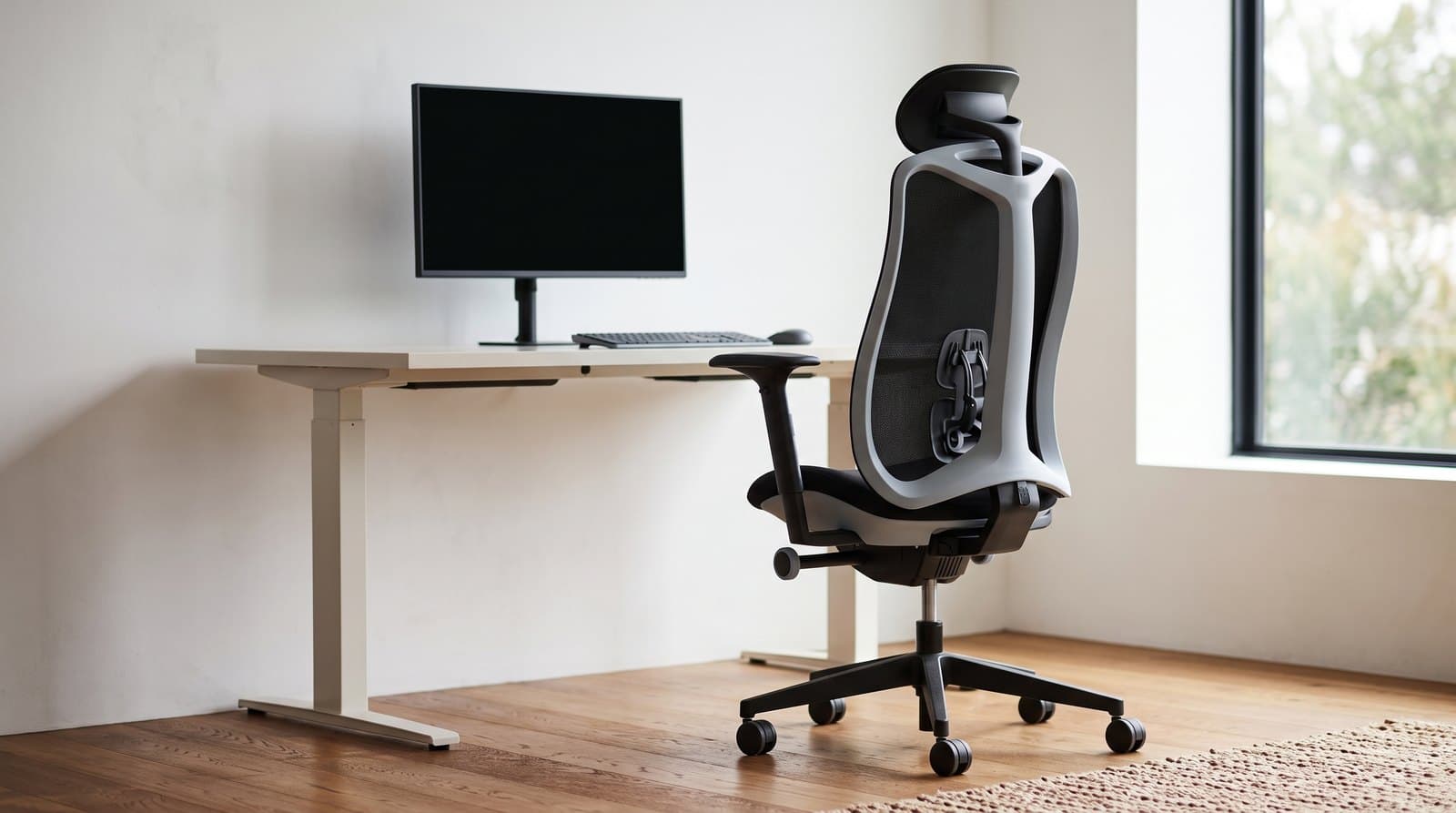
The Vantum is the chair that concedes the argument this whole category has been having with itself. It has no bucket seat, no racing bolsters and no head pillow on a strap; the backrest is an elastomer-and-polyester suspension membrane in a sculpted frame, the seat and headrest are polyurethane foam under 100% post-consumer recycled polyester, and the support system is a thoracic pad working with an adjustable headrest to hold you in an active, slightly forward-leaning position rather than reclined into a nap. It is a Herman Miller ergonomic chair with a gaming aesthetic, and it is the most comfortable thing here at hour eight by a clear margin.
The numbers back the positioning: 350 pounds of capacity, an 18 to 22 inch seat-height range, three-piece tool-free assembly in a few minutes, and a twelve-year warranty — six times the Corsair's and more than twice the Secretlab's. That warranty is the honest way to price it, because $990 list stops looking absurd at roughly $80 a year, and Herman Miller discounts the gaming line 20–25% often enough that $740–790 is a realistic street price. The real caveat is fit, and it's a significant one: the Vantum comes in one size and Herman Miller publishes no recommended height range, so unlike every other chair in this guide you cannot check the fit from the spec sheet. If you're notably short, notably tall or notably broad, this is the pick that most rewards sitting in one first — and it's also the pick where the return policy is part of the purchase.
What we like
- Breathable suspension backrest — no foam to compress, no leatherette to peel
- Twelve-year warranty, six times the shortest here
- Active forward-leaning posture rather than a reclined bucket, and it assembles in minutes
Worth knowing
- One size, and no published height range to check yourself against
- Most expensive pick here even at a 25% discount
- No deep recline — this is a working chair, not a lounger
- Upholstery
- Elastomer + polyester suspension back; recycled-polyester foam seat and headrest
- Weight capacity
- 350 lb
- Seat height
- 18–22 in
- Back support
- Thoracic support pad synchronised with an adjustable headrest, plus lower lumbar support
- Sizes
- One size — no manufacturer height range published
- Assembly
- Three pieces, tool-free, under five minutes
- Warranty
- 12 years
The verdict
The Secretlab TITAN Evo is the buy for most people, and the reason is the boring one: it's sold in three sizes with published height, weight and seat-width windows for each, so you can solve the hardest part of this purchase before you spend anything. The internal 4-way lumbar and the five-year warranty are what you'd want anyway. Wait for a sale — there's always one coming — and buy the SoftWeave fabric.
If the budget is the constraint, the Corsair TC100 RELAXED in fabric is a genuinely good chair for under $200 and the only thing you really surrender is armrest adjustment. Step up one tier and the Razer Iskur V2 X at $299.99 replaces the strapped-on lumbar pillow with a curve moulded into the backrest, which is the single upgrade most likely to change how the chair feels on a long evening.
Beyond that, buy for a specific problem. The Razer Iskur V2 is worth its $650 only if you'll use the HyperFlex lumbar and the 4D armrests — it's the same shell as the V2 X otherwise, in a synthetic leather that will age worse than the cheaper chair's fabric. The AndaSeat Kaiser 4 in XL is the answer if you're taller than 6'2" or heavier than 300 pounds, and its 6D armrests and pop-out lumbar bolster are the most adjustable hardware here.
And the Herman Miller x Logitech G Vantum is the pick that quietly argues with the rest of the category. No bucket, no bolsters, a suspension backrest and a twelve-year warranty — which works out near $80 a year, and reframes what "expensive" means. Just be aware it's one size with no published fit range, so it's the one chair here where trying before buying, or reading the return policy carefully, is part of the plan.
One last thing worth saying against our own interest: if what you want is a chair that's good for your back rather than a chair that looks like gaming, you don't need this category at all. A well-adjusted task chair from our under-$300 guide will do more for your posture than any amount of racing stitching, and the money left over covers a lumbar cushion, a chair mat and a footrest with change to spare.
Frequently asked questions
Not inherently, and it's worth being blunt about where the shape comes from. The bucket seat, the winged backrest and the high bolsters are borrowed from motorsport, where the job is to hold a driver in place through corners at speed. None of that is an ergonomic requirement at a desk, and some of it works against you: tall side bolsters narrow the usable seat, and a full-height backrest with a head pillow encourages a reclined posture that pulls your hands away from the keyboard. What genuinely helps your back is the same list as any chair — a seat that fits your hips, lumbar support at the right height, armrests that put your forearms level with the desk, and getting up every hour. The picks here that do best on that list are the ones with real lumbar mechanisms and 4D or 6D armrests, and the Vantum, which quietly abandons the racing shape altogether. If ergonomics is the actual goal rather than the aesthetic, our ergonomic office chairs under $300 guide is the more direct route, and often the cheaper one.
Fabric, in almost every case, and it's usually the cheaper option too. PU and PVC leatherette look sharper on day one and photograph better, but synthetic leather delaminates: the surface layer cracks and flakes at the stress points — the front seat edge and the side bolsters — and warm rooms, sunlight and body oils all accelerate it. Two or three years is a common lifespan, which on a chair with a five-year warranty is awkward, because cosmetic wear on upholstery is generally excluded from that warranty. Woven fabric doesn't do this. It also breathes, which matters more than people expect during a long session in a room with a gaming PC in it. The counter-argument is real but narrow: fabric absorbs spills and is harder to wipe clean, so if you eat at the desk daily, leatherette is easier to live with. Everyone else should buy the fabric SKU.
Start with your height against the manufacturer's published range, then check your weight against the capacity, then check the seat width against your hips — in that order. Height is first because it decides where the backrest's lumbar curve and shoulder wings land on your body: too tall a chair and the lumbar bulge sits behind your ribs, too short and the wings press on your shoulder blades. That's why we put the fit window in the comparison table. Of the picks here, Secretlab is the only one offering three sizes (5'0" to 6'9" across the range, with seat widths from 19.3 to 22.1 inches), AndaSeat's XL reaches furthest at 6'11" and 395 pounds, Razer publishes a single window per model, and the Vantum publishes none at all. If you're near the edge of a range, size up rather than down — a slightly large bucket seat is merely roomy, while a slightly small one is a permanent pinch.
Almost certainly not, and it's the spec we'd most encourage you to ignore. Recline figures are marketing's favourite number in this category because they're big and easy to compare — 165° on the Secretlab, 160° on the Corsair, 152° on both Razers, 135° on the AndaSeat — but nobody works at any of those angles, and a chair reclined past about 130° needs a footrest to be stable and comfortable. The AndaSeat has the shortest recline here and is one of the better chairs. What you actually use every day is seat height, armrest position, lumbar placement and a tilt lock that holds a slight backward angle without drifting. If you genuinely nap at your desk, buy the recline; otherwise treat it as a tiebreaker at most, and spend the attention on the armrests instead.
Sometimes, and this guide contains the cleanest test of it. The Razer Iskur V2 X is $299.99 and the Iskur V2 is $649.99, and they share a shell, a 299-pound capacity and a 152° recline. The extra $350 buys exactly two things: a lumbar system that moves four ways and swivels instead of a moulded curve that doesn't move at all, and 4D armrests instead of 2D. That's a genuinely good deal if your lower back has opinions or your desk is an awkward height, and close to nothing if you're the sort of person who sets a chair up once and never touches it again. It also buys a downgrade — the V2 X is fabric, the V2 is synthetic leather. Be honest about which kind of owner you are before spending the difference, because on this pair the money isn't buying comfort, it's buying adjustability.
The stock casters can, yes — most gaming chairs ship with hard nylon wheels intended for carpet, and rolling those over hardwood, laminate or luxury vinyl plank for a year leaves visible tracking, particularly with a 30 kg chair and a person on it. There are two fixes and they're both cheap. The first is a set of rollerblade-style polyurethane casters, usually around $30, which drop straight into the same standard stem and roll better besides. The second is a proper mat sized for your floor type, which also stops the chair drifting away from the desk on carpet — our office chair mats guide covers the carpet-versus-hard-floor decision, including why a mat with the wrong backing can stain vinyl plank permanently.
Keep building your setup
Ergonomics
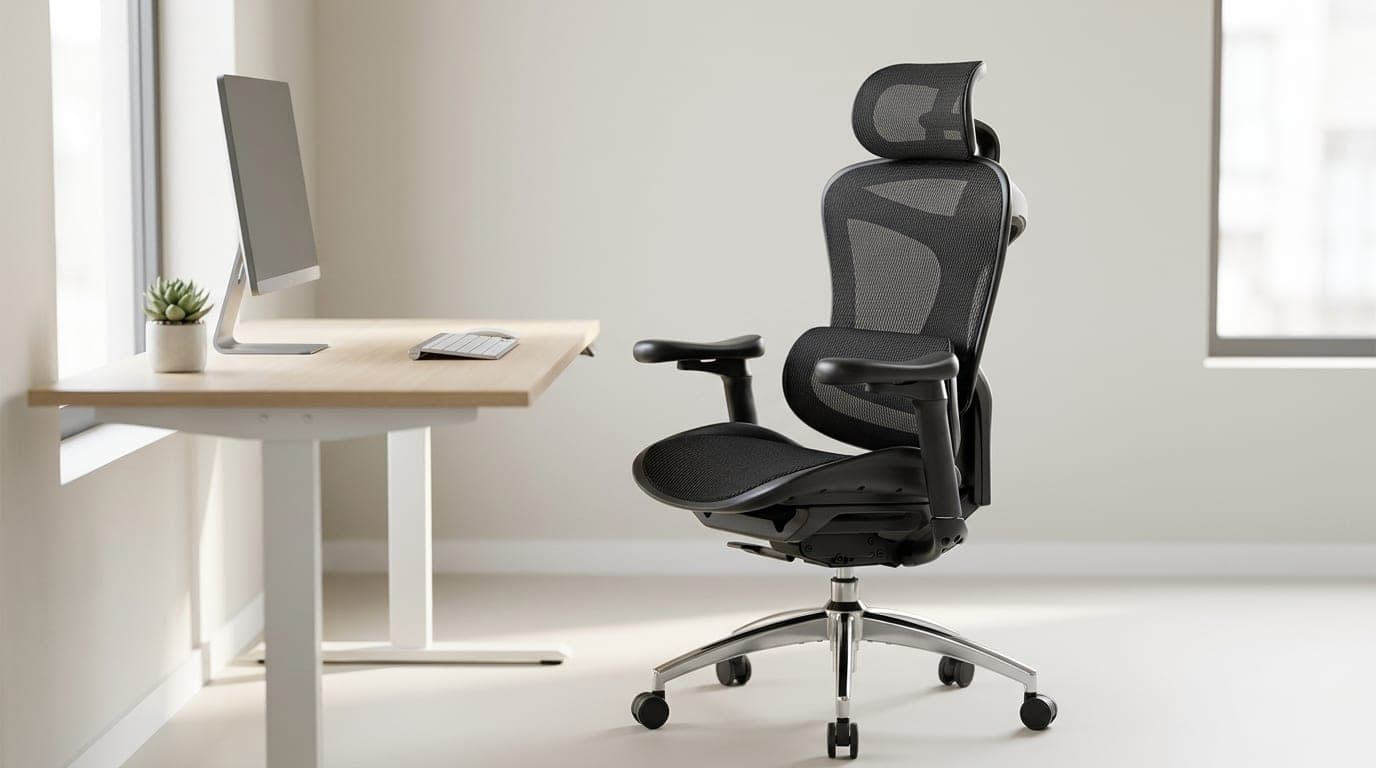
The Best Ergonomic Office Chairs Under $300 in 2026
You don't need a $1,500 Herman Miller to fix your back. Six ergonomic office chairs under $300 compared on the things that actually matter — real lumbar adjustment, armrest range, weight capacity, and who each one fits.
Updated September 15, 2026
Ergonomics
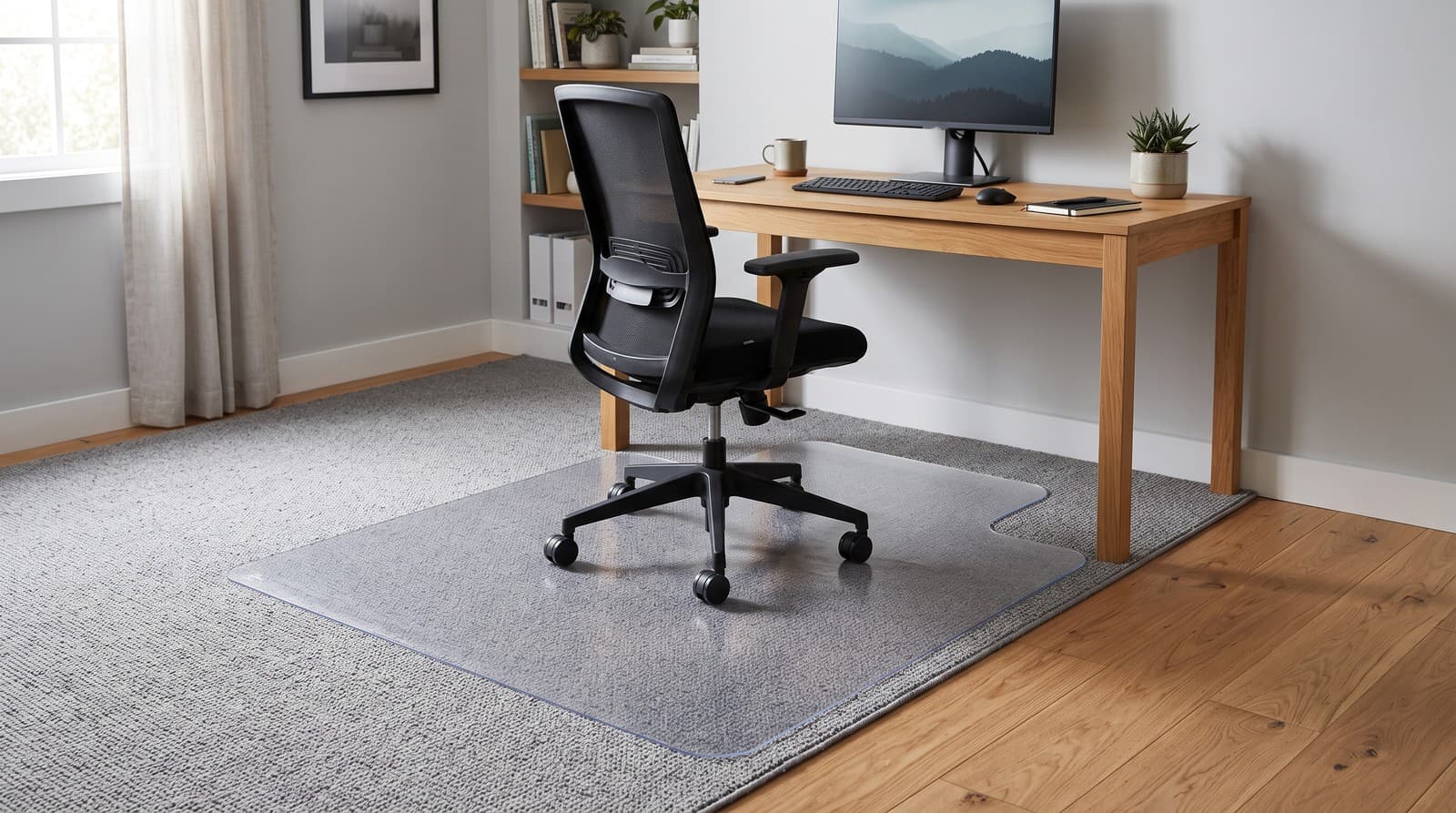
The Best Office Chair Mats for Carpet and Hardwood in 2026
Buy the wrong chair mat and it either gouges your hardwood or sinks into your carpet. Six mats — polycarbonate, vinyl, tempered glass and bamboo — sorted by the floor they're actually built for.
Updated August 6, 2026
Ergonomics
The Best Ergonomic Office Chairs Under $600 in 2026
The gap between a $250 chair and a $500 one isn't comfort — it's how long the thing survives and who pays when it doesn't. Six ergonomic office chairs from $330 to $600, compared on warranty terms read line by line, the adjustments that genuinely change your posture, and what each maker will still ship you a part for in year eight.
Updated August 13, 2026
Get the next guide in your inbox
One short email when we publish or meaningfully update a buying guide. No spam, no daily deals firehose.