 Rigworthy
The Best Gaming Headsets in 2026
By Rigworthy Editorial Team · Updated November 21, 2026
Rigworthy is reader-supported: we may earn a commission if you buy through our links, at no cost to you. How we make money
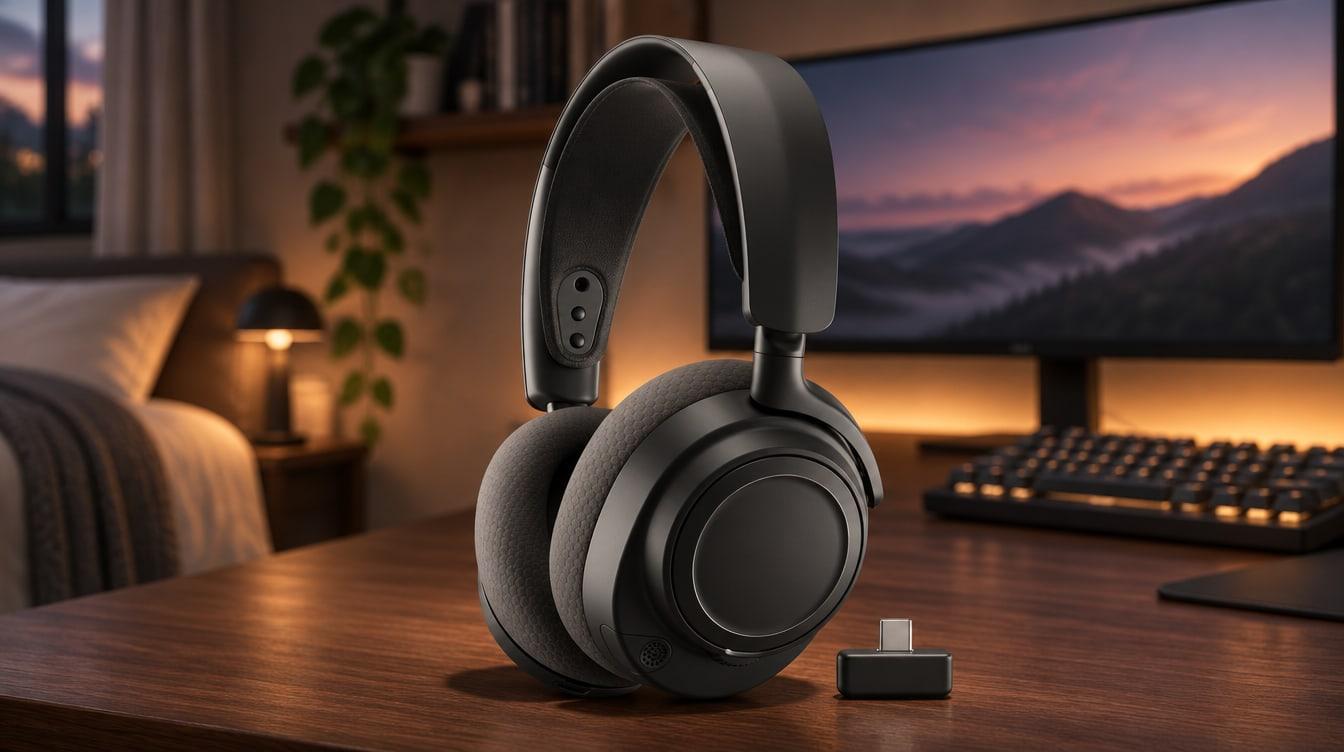
Almost every gaming headset round-up ranks on sound and comfort, which is reasonable, and then skips the two specs that decide whether the box you ordered is the right box at all.
The first is the radio. Every pick here has a 2.4 GHz link, and they are not interchangeable: Xbox's wireless protocol is licensed, so two of these six don't work on an Xbox and their own makers say so in the compatibility list. Three more are sold as console-specific versions, which means the same headset name can arrive as a different product with a different dongle and no way to convert it. The second is whether that dongle and Bluetooth can be live at the same time, because on a console that is the difference between hearing your phone and not. Sort this category on those two and the ordering changes: the $199.99 pick reaches more machines than the $329 one, the longest battery here belongs to a headset whose predecessor is still being recommended in its place, and the quietest gaming headset in the guide is beaten on measured attenuation by a $129.99 pair of ANC headphones. Six picks from $59.99 to $399.99, every spec from the maker's own page, every measurement credited to the lab that took it. Prices were checked at each manufacturer's store in late November 2026 and street prices move with sales.
Our top picks at a glance
- 1
- 2
- 3
- 4
- 5
- 6
How we chose
- What the wireless actually is and what it plugs into — every pick here has a 2.4 GHz radio, but they are not interchangeable, and the connector on the dongle decides whether it reaches a console, a handheld or just the back of your PC
- Platform reach, including the SKU trap. Three of these six are sold in console-specific versions, so the same headset name can be a different box with a different radio. Two of the six are stated by their own makers not to work on Xbox at all — that is the single most common returned-purchase in this category
- Whether 2.4 GHz and Bluetooth run at the same time or only one at a time. Four of these mix both; two make you flip a switch. We also note what running both costs you in battery, which no spec sheet puts next to the headline number
- Battery using each maker's own published figure, per connection mode where they publish it, so the numbers are comparable to each other rather than to a reviewer's playlist
- Microphone style — detachable, retractable or fixed — and whether there is a second mic for when the boom is off. We report the style as fact and mark any judgement of how it sounds as someone else's
- What we don't claim: we have no anechoic chamber, and we don't score noise cancelling or microphones ourselves. Every spec below comes from the manufacturer's own page; where we quote a measurement or a score we name SoundGuys as the lab that took it, and we say whether the number is a percentage or a ranking
Our picks come from spec research, long-term owner feedback, and category expertise — not sponsorships. Read the full methodology.
Compared side by side
| Product | Award | Wireless | Xbox | Both radios at once | Battery | Weight | Typical price |
|---|---|---|---|---|---|---|---|
| SteelSeries Arctis Nova 7X Wireless Gen 2 | Best Overall | 2.4 GHz USB-C + Bluetooth | Yes — 7X SKU only | Yes, mixable | 50+ h (38 h both) | 325 g | $199.99 |
| Logitech G321 LIGHTSPEED | Best Budget | LIGHTSPEED 2.4 GHz + Bluetooth | No — not on Logitech's list | No — switches | 20+ h | 210 g | $59.99 |
| HyperX Cloud III S Wireless | Best Battery Life | 2.4 GHz dongle + Bluetooth 5.3 | No — stated by HyperX | No — switches | 120 h / 200 h BT | ≈358 g | $179.99 list |
| Razer BlackShark V3 Pro | Best for Competitive FPS | HyperSpeed 2.4 GHz + Bluetooth 5.3 | Yes — Xbox model | Yes, dial-balanced | 70 h PC / 48 h console | 367 g | $249.99 list |
| Audeze Maxwell 2 | Best Sound | USB-C dongle + Bluetooth 5.3 | Yes — Xbox SKU ($349) | Yes, via multipoint | 80+ h | 560 g | $329 / $349 |
| SteelSeries Arctis Nova Pro Omni | Best for Multiple Machines | 2.4 GHz base station + Bluetooth 5.3 | Yes — one SKU for all | Yes — up to 4 sources | 60 h across 2 batteries | 339 g | $399.99 |
1. Best Overall
SteelSeries Arctis Nova 7X Wireless Gen 2
Typically $199.99
- One headset across a PC and every console you own
- Game audio and a phone call at the same time
- Anyone who doesn't want a base station on the desk
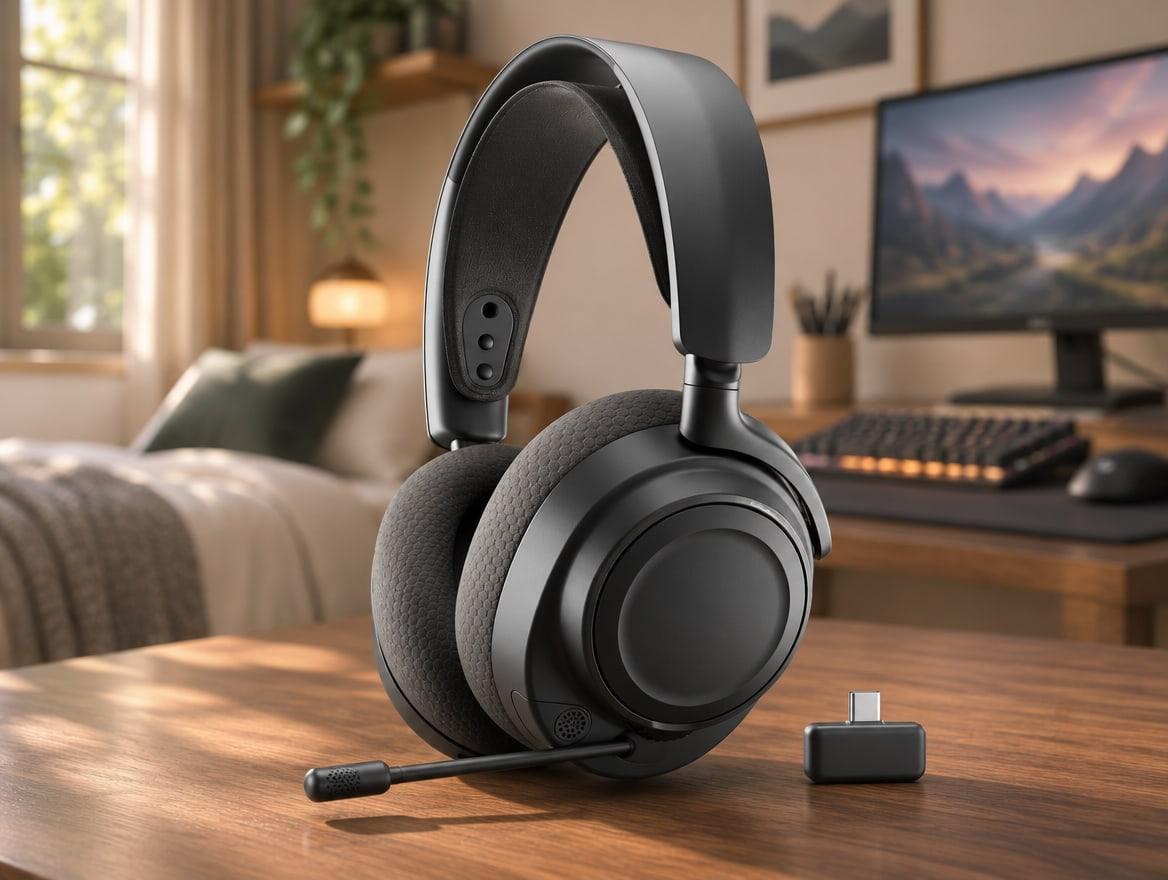
This is the pick for most people, and the reason is a detail SteelSeries buries in a product-code suffix. The Nova 7 Gen 2 is sold in three versions — a standard model, a 7P for PlayStation and a 7X for Xbox — and they are not three ways of saying the same thing. The 7X's USB-C dongle carries a wireless mode switch, and with it the headset reaches Xbox Series X|S and Xbox One *as well as* PlayStation, PC, Mac, Switch and Switch 2, handhelds, Quest and USB-C iPads. The other two SKUs cannot be made to do Xbox at any price. All three cost $199.99. Buy the 7X even if you have never owned an Xbox, because it is the only one of the three that can't become the wrong purchase later.
The rest of the sheet is the best-balanced in this guide rather than the most impressive line on any single row. 325 g, 40 mm neodymium drivers, 36 ohms, 20 Hz–20 kHz, and a retractable bi-directional ClearCast Gen 2 boom that disappears into the left cup when you're not on comms. SteelSeries headline the battery as 50+ hours; SoundGuys list the per-mode claims as 54 hours on the dongle, 42 on Bluetooth and 38 with both running at once — which is the most useful number here and the one you will not find on the box. Fifteen minutes of charging buys six hours. The USB-C dongle ships with a USB-A adapter, so it fits the back of a desktop and the front of a Switch dock without a hub, and there is a 3.5 mm jack on the left cup with a cable in the box — a flat battery drops you to wired rather than to silence, which is not true of either cheaper pick below.
What you give up at $199.99 is the quiet and the microphone. There is no active noise cancelling at all on this model, so a loud room stays a loud room — if that is the actual problem you're solving, read our noise-cancelling headphones guide before you spend here. SoundGuys rate the mic 6.5 out of 10 and note it sounds worse retracted than extended, which is worth knowing if you leave it tucked away out of habit. The Bluetooth side runs SBC only, so video can drift out of lip-sync on the phone connection, and the standard model's dongle is wide enough to block the USB port next to it.
What we like
- The 7X dongle's mode switch reaches Xbox and everything else — the only superset SKU here
- 2.4 GHz and Bluetooth mix simultaneously, with separate EQ for each
- 325 g, and the boom retracts fully into the cup
- 15 minutes of charge for six hours of play
Worth knowing
- No active noise cancelling of any kind
- SoundGuys score the mic 6.5/10, and it sounds worse retracted
- Bluetooth is SBC only — expect lip-sync drift on video
- The dongle is wide enough to block the adjacent USB port
- Wireless
- 2.4 GHz USB-C dongle with platform mode switch (7X), plus Bluetooth; USB-A adapter included
- Platforms
- Xbox Series X|S, Xbox One, PlayStation, PC, Mac, Switch / Switch 2, handhelds, Quest, Android, USB-C iPad
- Battery
- 50+ h (SteelSeries); per-mode claims 54 h dongle, 42 h Bluetooth, 38 h both
- Weight
- 325 g
- Drivers
- 40 mm neodymium, 20 Hz–20 kHz, 36 ohms
- Microphone
- Retractable bi-directional ClearCast Gen 2
- Wired
- 3.5 mm analogue, cable included
2. Best Budget
Logitech G321 LIGHTSPEED
Typically $59.99
- A first wireless headset under $60
- Long sessions where weight is the thing you notice
- PC, PS5 and Switch households
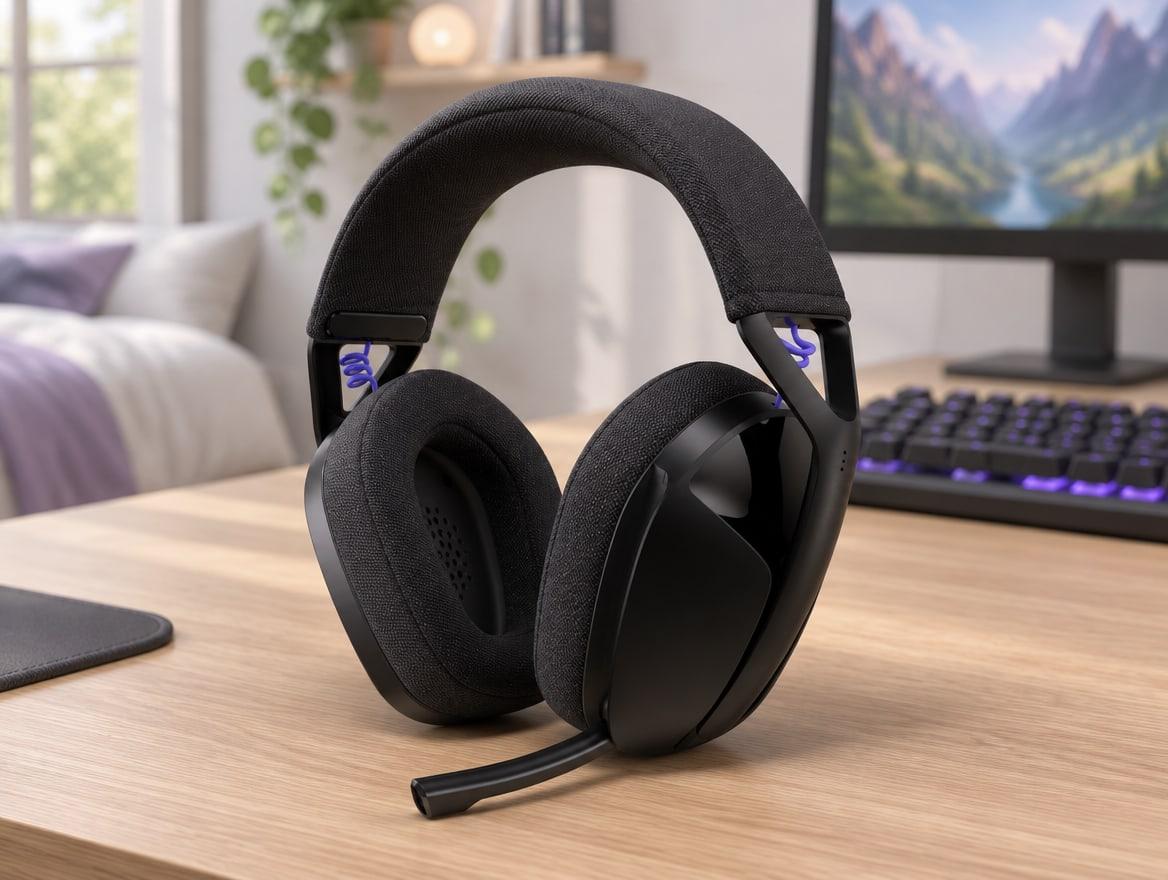
At $59.99 the G321 is the cheapest real wireless headset here by a factor of three, and it wins a row the expensive picks can't touch: 210 g, which makes it the lightest thing in this guide by more than 100 g and a little over a third the weight of the Audeze below. Logitech pairs that with 21 mm of memory foam in the earcups, LIGHTSPEED 2.4 GHz over a dongle, Bluetooth, and a flip-to-mute boom mic that Logitech specifies as 16 kHz. Reviewers consistently report 40 mm drivers; note that Logitech does not publish the driver size on its own spec sheet, so treat that figure as third-party rather than official.
The compromises are exactly where a $60 headset should put them, and they are all legible from the spec sheet rather than lurking. 20+ hours is the shortest battery in this guide by a wide margin — a quarter of the Audeze, a sixth of the HyperX — and takes two hours to refill. The two radios do not run at the same time: a button on the earcup flips between LIGHTSPEED and Bluetooth, so game audio and a phone call are an either/or rather than a mix. There is no noise cancelling and no analogue jack listed on Logitech's spec sheet, which means a dead battery is the end of the session rather than an inconvenience.
And then the one that gets this headset returned. Logitech's own compatibility list is PS5, PC, and Nintendo Switch / Switch 2 — Xbox is absent from it. That is not an oversight in the marketing copy; Xbox's wireless protocol is licensed and a generic 2.4 GHz dongle cannot speak it, so no firmware update is coming. If you game on an Xbox, this is not a cheaper version of the headsets above — it is the wrong product, and the $199.99 Nova 7X is the cheapest pick here that actually reaches your console.
What we like
- 210 g — the lightest headset in this guide by more than 100 g
- $59.99, roughly a third of the next cheapest list price
- Both LIGHTSPEED 2.4 GHz and Bluetooth for the money
- 21 mm memory-foam earcups and a flip-to-mute boom
Worth knowing
- Xbox is absent from Logitech's own compatibility list
- 20+ h is the shortest battery here by a long way
- The two radios switch rather than mix
- No ANC, and no analogue jack on Logitech's spec sheet
- Wireless
- LIGHTSPEED 2.4 GHz dongle plus Bluetooth; switch between, not simultaneous
- Platforms
- PS5, PC, Switch / Switch 2 (Logitech's list — no Xbox)
- Battery
- 20+ h, 2 h to full charge
- Weight
- 210 g (7.4 oz)
- Drivers
- 40 mm per reviewers; not published by Logitech
- Microphone
- Flip-to-mute boom, 16 kHz (Logitech's figure)
3. Best Battery Life
HyperX Cloud III S Wireless
Typically $179.99 list, often near $100
- Never thinking about charging again
- Keeping a mic when the boom is detached
- PC, Mac, PS5 and Switch setups
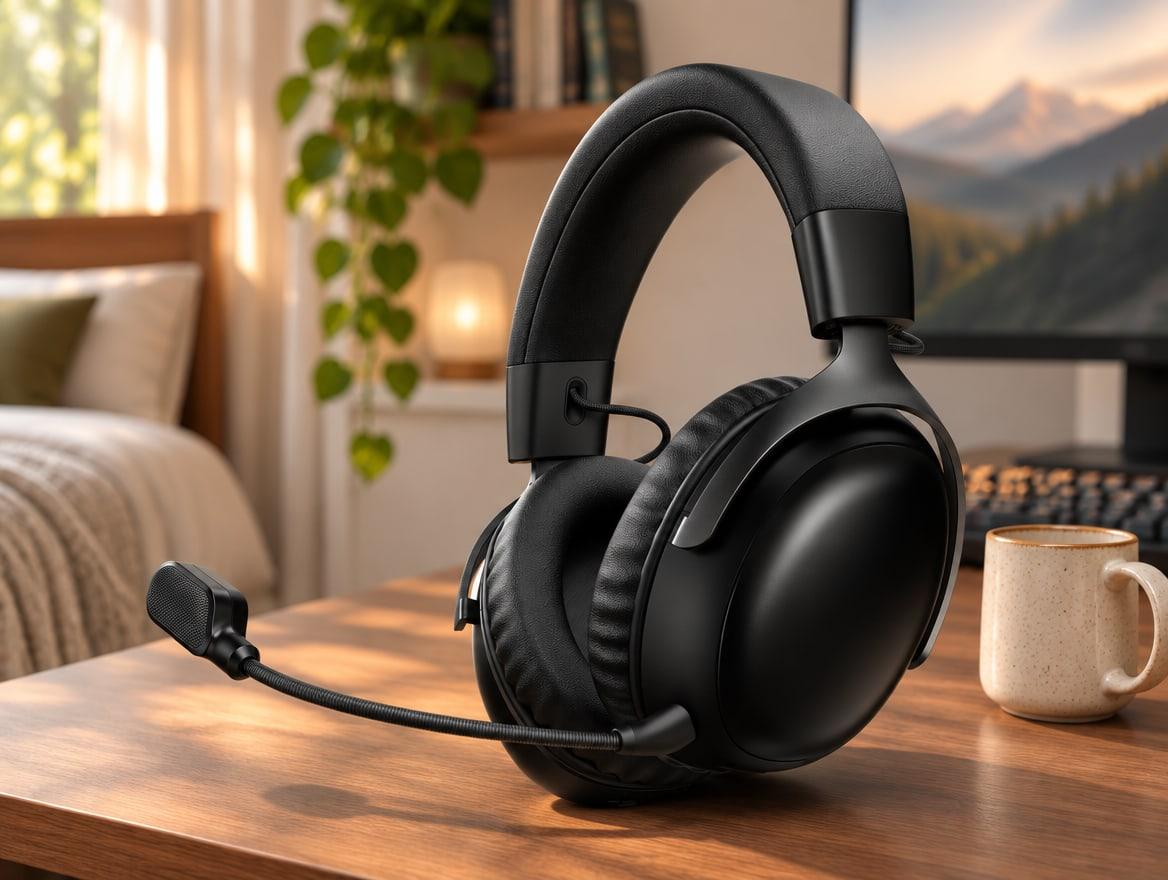
Start with the thing that nearly went wrong here. HyperX now lists the older Cloud III Wireless as discontinued on its own product page and points buyers at this model instead — and a lot of 2026 round-ups are still recommending the discontinued one, because its 120-hour battery made it a fixture on every list for two years. The Cloud III S keeps that 120 hours on 2.4 GHz, adds 200 hours on Bluetooth (both HyperX's figures at 50% volume), and is the current product. If you see the plain Cloud III Wireless recommended anywhere, including by us in an older draft, this is the one you actually buy.
The battery is not the only thing it does differently. It is the only pick here with two microphones: a detachable 10 mm electret boom (uni-directional, 100 Hz–10 kHz) and a built-in omnidirectional MEMS mic, so pulling the boom off for a solo session doesn't leave you mute when someone pings you. Add 53 mm angled drivers, 20 Hz–20 kHz, removable earcup plates if you care about how it looks on the desk, and a 358 g frame that sits mid-pack. Five hours to charge, which is the price of a cell that size.
Two limits, and the second is the one to check before you buy. The radios switch rather than mix — there's a toggle under the volume wheel, and SoundGuys confirm there is no simultaneous audio from both sources, so this is not the headset for game sound plus a phone call. And HyperX state outright that the Cloud III S Wireless does not support Xbox consoles; the supported list is PC, Mac, PS5, mobile and Switch. There's no ANC either, and no analogue jack is listed, so the boom-mic-plus-cable fallback other picks offer isn't here.
What we like
- 120 h on 2.4 GHz and 200 h on Bluetooth — the longest here by a distance
- Two mics: a detachable 10 mm boom plus a built-in MEMS
- 53 mm angled drivers and removable earcup plates
- Routinely discounted to around $100 from a $179.99 list
Worth knowing
- HyperX state it does not support Xbox consoles
- The radios switch rather than mix
- No ANC, and no analogue jack listed
- Five hours to charge, and the old Cloud III Wireless is still widely recommended in its place
- Wireless
- 2.4 GHz dongle plus Bluetooth 5.3; switch between, not simultaneous
- Platforms
- PC, Mac, PS5, mobile, Switch (HyperX state no Xbox support)
- Battery
- Up to 120 h on 2.4 GHz, up to 200 h on Bluetooth; 5 h charge
- Weight
- 0.79 lb (≈358 g)
- Drivers
- 53 mm angled dynamic, 20 Hz–20 kHz
- Microphone
- Detachable 10 mm electret boom plus built-in omnidirectional MEMS
4. Best for Competitive FPS
Razer BlackShark V3 Pro
Typically $249.99 list, $199.99 at Razer
- Competitive shooters where footsteps are the point
- Game audio plus Discord or music, balanced on the headset
- EQ that survives without software running
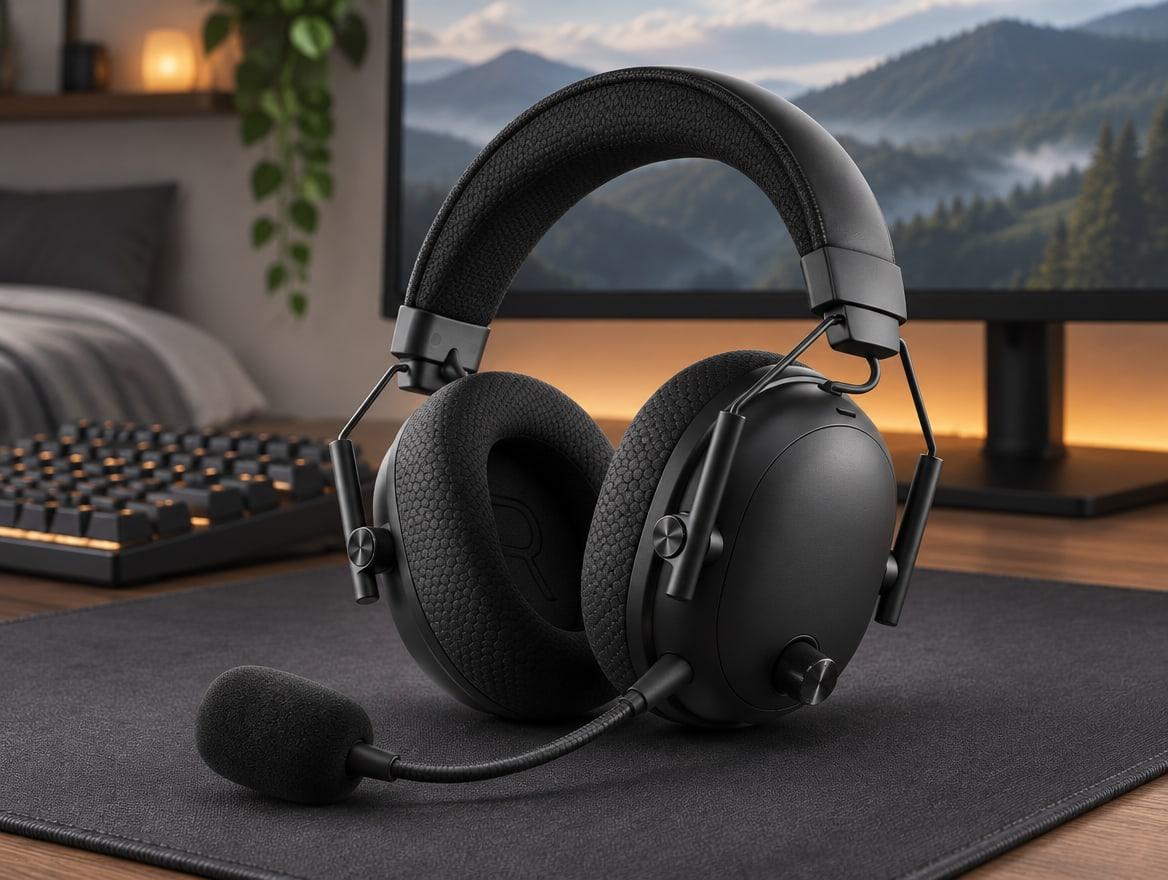
Razer built this one for a specific job and the spec sheet reads like it. HyperSpeed Wireless Gen-2 over 2.4 GHz with latency Razer quotes as low as 10 ms, 50 mm TriForce Gen-2 bio-cellulose drivers running 12 Hz–28,000 Hz at 32 ohms, a detachable 12 mm HyperClear Full Band unidirectional boom, and 70 hours on PC (48 on a console) with 15 minutes of charge buying six hours. Note that Razer publishes those two figures without saying what the noise cancelling is doing while the clock runs, and reviewers report that leaving ANC on takes a substantial bite out of both — treat 70 and 48 as the cancellation-off ceiling rather than the number you'll live with. The feature that justifies its award, though, is the one that costs nothing to use: nine EQ profiles save directly to the headset, including pre-tuned profiles for Counter-Strike 2, Apex Legends, Call of Duty and Halo Infinite. Your tuning survives a reboot, a LAN party and a machine with no Razer software on it — which is not true of most of this category.
It is also the most connected headset here short of the $399.99 base-station pick. The 2.4 GHz link and Bluetooth 5.3 run simultaneously, with a configurable dial on the cup to balance the two, so game audio on the dongle and Discord or a phone on Bluetooth is a slider rather than a decision. Add USB audio, a 3.5 mm jack and hybrid active noise cancelling with four adjustable levels, and there is no situation where this thing can't make a sound. SoundGuys score the mic 8.5 out of 10 — a ranking they describe as ahead of 88% of the gaming headsets they've measured, which is a position in their catalogue and not an absolute figure.
Three cautions. It is 367 g, the second-heaviest here, and SoundGuys found the yoke design creates fit problems that undermine the seal the ANC depends on — they also judged the voice more muffled and hollow than the previous generation despite that high ranking, and weak at rejecting background noise. Second, the ANC is real but modest: SoundGuys measured 77% average total attenuation, working mostly between 50 and 300 Hz, so it takes the edge off a PC fan rather than silencing a room. Third, like the Audeze and the SteelSeries, it is sold in PC, Xbox and PlayStation-specific models — check the box matches your machine before you click buy.
What we like
- Nine EQ profiles stored on the headset, no software required
- 2.4 GHz and Bluetooth 5.3 simultaneously, balanced by a dial on the cup
- 70 h on PC, and 15 minutes of charge for six hours
- USB audio and a 3.5 mm jack as well as both radios
Worth knowing
- 367 g, and SoundGuys report yoke fit issues that undercut the ANC seal
- SoundGuys judge the voice more muffled than the previous generation
- 77% measured attenuation — less quiet than cheap ANC headphones manage
- Sold in separate PC, Xbox and PlayStation versions
- Wireless
- HyperSpeed Wireless Gen-2 2.4 GHz (as low as 10 ms) plus Bluetooth 5.3, simultaneous
- Platforms
- Separate PC, Xbox and PlayStation models
- Battery
- Up to 70 h on PC, 48 h on console (Razer's figures; ANC state unstated); 15 min ≈ 6 h
- Weight
- 367 g
- Drivers
- 50 mm TriForce Gen-2 bio-cellulose, 12 Hz–28,000 Hz, 32 ohms
- Microphone
- Detachable 12 mm HyperClear Full Band, unidirectional
- Noise cancelling
- Hybrid ANC, 4 levels; 77% average total attenuation measured by SoundGuys
5. Best Sound
Audeze Maxwell 2
Typically $329 PlayStation / $349 Xbox
- Anyone who wants a gaming headset to also be a good headphone
- Single-platform setups where the SKU choice is obvious
- Desk listening, where the weight is on your head and not your neck
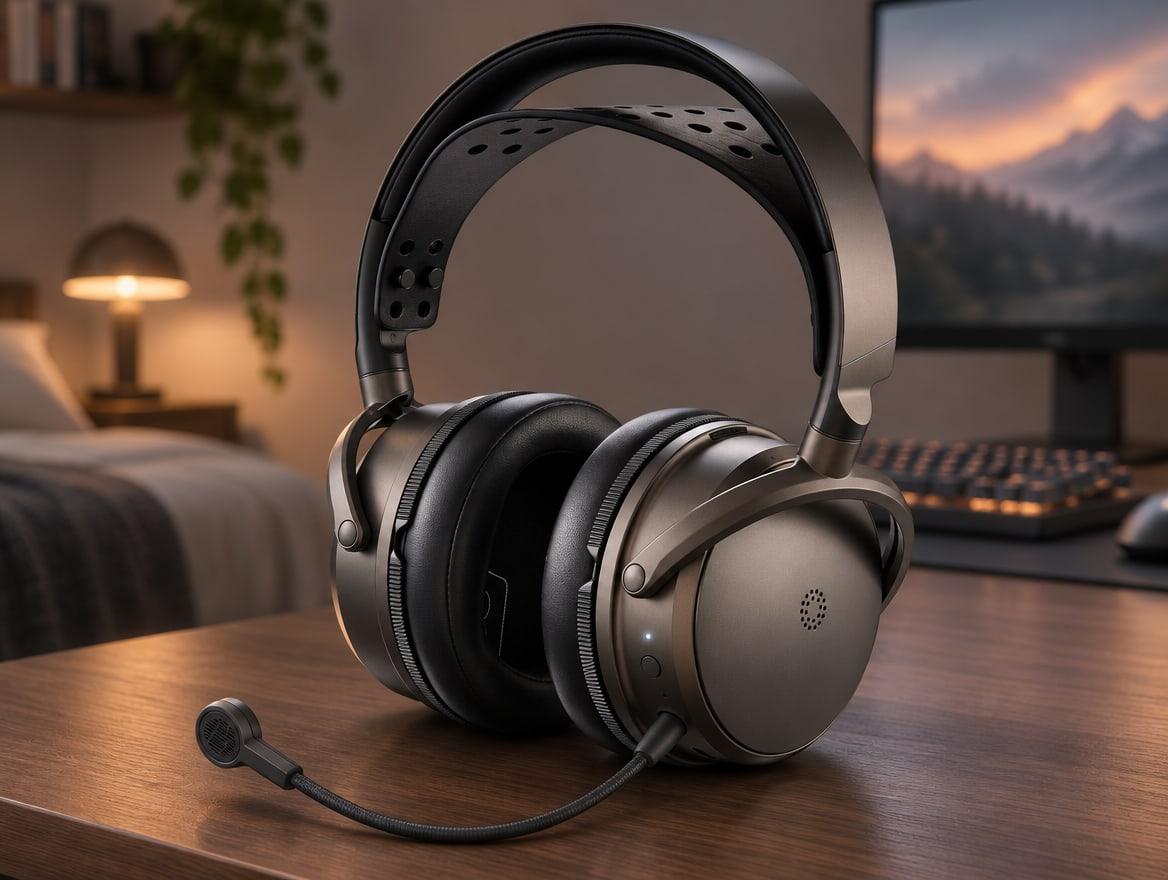
The Maxwell 2 is the only pick here that isn't really a gaming headset with good drivers — it's a planar-magnetic headphone that happens to have a boom mic. 90 mm planar magnetic drivers, 10 Hz–50 kHz, total harmonic distortion under 0.1% at 100 dB, and maximum SPL above 115 dB. Nothing else in this guide is built this way, and nothing else is specified to those numbers. It backs that with an 1,800 mAh cell rated at over 80 hours at 80 dBA, a detachable hypercardioid boom with AI noise removal, USB-C digital audio, a 3.5 mm analogue input with a 1.2 m cable — these are the one pair here that genuinely repay a desk DAC or amp — and Bluetooth 5.3 carrying LE Audio, LC3, LC3plus, LDAC, AAC and SBC, the deepest codec list on this page by some margin. The USB-C dongle and Bluetooth run together via multipoint.
Now the number that decides it for a lot of people: 560 g. That is more than two and a half times the Logitech, 193 g heavier than the next-heaviest pick here, and the single largest spec gap in this guide. Planar drivers that size have mass and the frame has to hold them, so this is physics rather than sloppy engineering — but it is your neck that pays, and it is the reason this carries a sound award rather than the overall one. If you want planar sound at a desk for long stretches rather than in a chair for an evening, sit with the weight before committing.
And the platform split is at its starkest here. You buy a different box per console: $329 for the PlayStation/PC version, which includes USB-C digital audio and Tempest 3D, or $349 for the Xbox/PC version, which brings Dolby Atmos and a complimentary Dolby Access licence. There is no switch, no adapter and no firmware path between them — get it wrong and you are shipping it back. A Maxwell 2 ANC variant exists, and it is split the same way — $429 for PlayStation, $449 for Xbox — so the trap repeats one tier up. The ANC also costs you most of the battery: Audeze rate it at 40 hours with cancellation off and 35 with it on, against 80+ for the model without. Reviewers are also consistent that the microphone is the weakest part of an otherwise exceptional headset.
What we like
- 90 mm planar magnetic drivers, 10 Hz–50 kHz, THD under 0.1% at 100 dB
- Over 80 hours per charge, and 25% back in 20 minutes
- USB-C digital, 3.5 mm analogue, and the deepest Bluetooth codec list here
- Dongle and Bluetooth together via multipoint
Worth knowing
- 560 g — over two and a half times the lightest pick here
- Console-specific SKUs at different prices, with no way to convert one
- Reviewers consistently call the microphone its weak point
- The ANC variant ($429 / $449) trades 80+ hours of battery for 35
- Wireless
- USB-C ultra-low-latency dongle plus Bluetooth 5.3 with multipoint
- Platforms
- Separate PlayStation/PC ($329) and Xbox/PC ($349) versions
- Battery
- 80+ h at 80 dBA (1,800 mAh); ANC variant 40 h off / 35 h on
- Weight
- 560 g
- Drivers
- 90 mm planar magnetic, 10 Hz–50 kHz, THD <0.1% at 100 dB
- Microphone
- Detachable hypercardioid boom with AI noise removal
- Wired
- USB-C digital audio and 3.5 mm analogue (1.2 m cable)
6. Best for Multiple Machines
SteelSeries Arctis Nova Pro Omni
Typically $399.99
- A desk with a PC and a console both plugged in
- Never waiting for a headset to charge
- Hi-res listening on PC between sessions
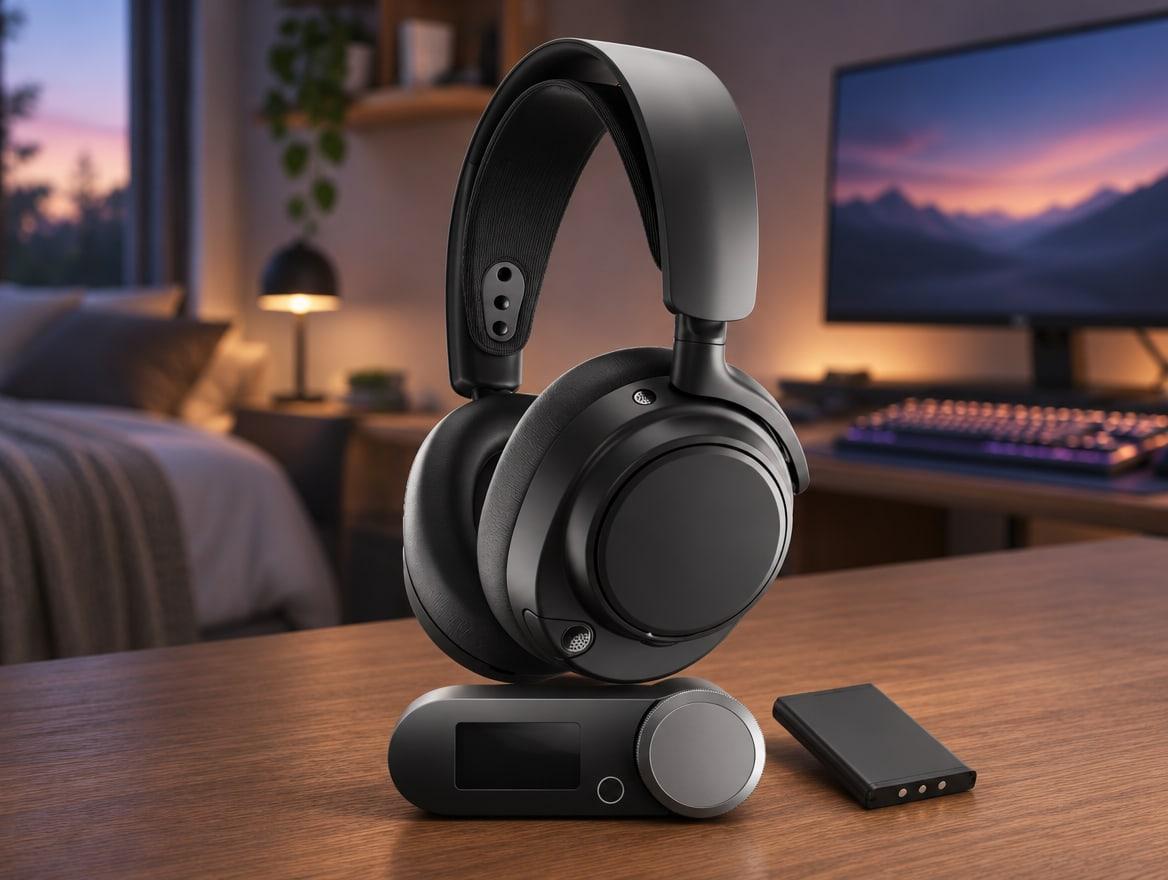
Launched on 5 May 2026 at $399.99, the Nova Pro Omni is the only pick here that treats your desk as having more than one machine on it. Its GameHub base station carries line in, line out and three USB ports, and mixes up to four sources at once — two USB hosts plus Bluetooth plus line-in — so a PC, a console, a phone and something analogue can all be live simultaneously, with the balance set on the hub rather than by unplugging things. It also solves charging in the only way that actually works: two batteries, one in the hub's cradle and one in your head, swapped in seconds. SteelSeries rate up to 60 hours across the pair; SoundGuys measured 32 hours 51 minutes from a single battery on 2.4 GHz, which is the honest per-session figure.
The rest earns the price. 339 g with 40 mm neodymium drivers at 38 ohms and a 10 Hz–40,000 Hz response, Hi-Res Wireless certification at 96 kHz/24-bit, Bluetooth 5.3, a 3.5 mm wired path, and ANC with a transparency mode. SteelSeries claim it blocks up to 40% more background noise than the competition; SoundGuys measured 81% attenuation, which makes it the quietest pick in this guide. The retractable omnidirectional ClearCast Pro runs on-board AI noise filtering that SteelSeries say cuts interference by up to 96%. Platform support is the full set: PC and Mac, PlayStation, Xbox, Switch and Switch 2, Quest, Android and iOS.
Two things to know before spending $399.99. The hi-res path is effectively PC-only — the 96 kHz/24-bit link is real and managed through GameHub on a PC, but PS5 and Xbox cap out lower, so on a console you are listening at the console's rate no matter what the badge says. And the base station is a box, a power lead and at least one more cable on a desk you may have spent real effort tidying; budget for it the way you would any other desk power and cable addition. Reviewers are also lukewarm on the microphone, describing it as slightly muffled and robotic with AI noise reduction that sounds unnatural — at this price, that is the one row where it doesn't lead.
What we like
- Mixes up to four sources at once — two USB hosts, Bluetooth and line-in
- Two hot-swappable batteries, so charging never interrupts a session
- 81% attenuation measured by SoundGuys, the quietest pick here
- Reaches every platform in this guide, with no SKU to choose
Worth knowing
- $399.99, the most expensive pick on this page
- Hi-res 96 kHz/24-bit is PC-only in practice — consoles cap lower
- A base station means another box and another cable on the desk
- Reviewers call the mic muffled and the AI noise reduction unnatural
- Wireless
- 2.4 GHz via GameHub base station plus Bluetooth 5.3; mixes up to 4 sources
- Platforms
- PC, Mac, PlayStation, Xbox, Switch / Switch 2, Quest, Android, iOS
- Battery
- Up to 60 h across two hot-swap batteries; 32 h 51 min per battery measured by SoundGuys
- Weight
- 339 g
- Drivers
- 40 mm neodymium, 10 Hz–40,000 Hz, 38 ohms; Hi-Res certified 96 kHz/24-bit
- Microphone
- Retractable omnidirectional ClearCast Pro with on-board AI filtering
- Noise cancelling
- ANC with transparency mode; 81% attenuation measured by SoundGuys
The verdict
For most people the SteelSeries Arctis Nova 7X Wireless Gen 2 at $199.99 is the one to buy, and specifically the 7X — the Xbox variant, whose dongle carries a platform mode switch and therefore reaches Xbox, PlayStation, PC, Mac, Switch and handhelds alike. The standard and PlayStation versions cost the same and can never do Xbox, which makes the 7X the only version of this headset that can't turn into the wrong purchase a year from now. It mixes both radios, weighs 325 g, and retracts its boom into the cup. It has no noise cancelling, and SoundGuys rate its mic 6.5/10 — those are the two things the extra money elsewhere buys.
Buy around it for specific reasons. If your desk has a PC and a console permanently plugged in, the SteelSeries Arctis Nova Pro Omni at $399.99 is genuinely a different class of product: four sources mixed at once, two hot-swappable batteries so charging never stops a session, and 81% measured attenuation — just know the hi-res badge is PC-only in practice. If you play competitive shooters, the Razer BlackShark V3 Pro stores nine EQ profiles on the headset itself and balances game and chat on a dial, at the cost of 367 g and a mic that reviewers think went backwards. If you want a gaming headset that is really a good headphone, the Audeze Maxwell 2 has 90 mm planar drivers and nothing else here comes close — but it is 560 g, and you buy a different box for PlayStation than for Xbox. If you simply never want to charge anything, the HyperX Cloud III S Wireless does 120 hours on the dongle and 200 on Bluetooth, with a second built-in mic for when the boom is off; it does not work on Xbox. And at $59.99 the Logitech G321 LIGHTSPEED is the lightest thing here at 210 g and an honest first wireless headset, as long as you are not on an Xbox.
Two caveats before you spend. If what you actually want is quiet, no headset on this page will deliver it — the best of them measures 77–81% attenuation where noise-cancelling headphones reach 84–87% for less money, and you should buy headphones plus a USB microphone instead. If what you want is to sound good rather than to hear well, the same applies in reverse: every mic here is a compromise, and a standalone mic on a boom arm beats all of them, for the simple reason that distance from your mouth dominates everything else. Otherwise, check the SKU against your console, give the headset somewhere to live with a stand or an under-desk hook, and if you're building the rest of the setup around it, our gaming monitors, gaming keyboards and gaming mice guides cover the other seats at the desk.
Frequently asked questions
Because Xbox's wireless protocol is licensed, and a generic 2.4 GHz dongle cannot speak it. PlayStation, PC, Mac and Switch will all accept a standard USB audio device, which is why almost any dongle headset works on them; Xbox requires either the Xbox Wireless radio or a dongle whose firmware has been licensed for it. That is a hardware-and-contract boundary, not a bug, so no firmware update is going to fix a headset that shipped without it. In this guide it splits the field cleanly: the Logitech G321 and the HyperX Cloud III S are both excluded by their own makers' compatibility lists, while the SteelSeries Arctis Nova 7X, the Razer BlackShark V3 Pro, the Audeze Maxwell 2 and the Nova Pro Omni all reach it. Three of those four do it through a console-specific SKU, so the headset name alone doesn't tell you — check the box. The Nova Pro Omni is the only pick here where one version covers everything, and the Nova 7X is the cheapest route to the same outcome because the mode switch on its dongle makes the Xbox version a superset of the other two rather than an alternative to them.
No, and the gap is bigger than the price suggests. SoundGuys measure attenuation the same way across both categories, so the numbers are directly comparable: the $399.99 Nova Pro Omni reaches 81% and the $249.99 BlackShark V3 Pro reaches 77% — against 84% for the $129.99 Soundcore Space 2 and 87% for the Bose QuietComfort Ultra line in our noise-cancelling headphones guide. In other words the quietest gaming headset here is beaten by the cheapest pick in that guide, which costs a third as much. The reason is design priorities rather than incompetence: a gaming headset spends its weight budget on drivers, a boom mic and a 2.4 GHz radio, and it is tuned for a room you control rather than an aircraft cabin. If silence is the thing you are actually buying, buy headphones and a separate microphone. If you want game audio, a boom and some help with a PC fan, a headset with ANC is the right shape — just don't expect flagship quiet from it.
It depends on whether anything other than the game needs to reach your ears. If you play on a PC and talk to people in the game, switching is fine and you will never notice the limitation — your voice chat is already coming down the same 2.4 GHz link as the game. Simultaneous mixing earns its keep on a console, where party chat, Discord on your phone, and music all live on devices the console doesn't know about: you want the game on the dongle and the phone on Bluetooth, both audible, with a balance control. Four of the six picks here do it — the two SteelSeries, the Razer and the Audeze — and the Razer and the Nova Pro Omni give you a physical control to set the mix rather than burying it in an app. The Logitech and the HyperX make you flip a switch. One cost nobody advertises: running both radios drains the battery faster, and SteelSeries are unusually honest about the scale of it, with per-mode claims of 54 hours on the dongle alone, 42 on Bluetooth alone and 38 with both live. Budget roughly a third off the headline figure if you intend to use both all day.
Buy the headset if comms are constant and the convenience of one device is the point — a boom mic two inches from your mouth beats anything built into an earcup, and you get it without a second purchase or a second thing on the desk. Buy headphones and a standalone mic if you stream, record, or care more about how you sound than how fast you can get going. The physics is the same argument we make in how far a microphone should be from your mouth: proximity dominates, so a good USB microphone on a boom arm at four inches will beat every mic in this guide, and the headphones can then be chosen purely on sound. The split roughly follows what you do: competitive play and long group sessions favour the headset, while streaming, recording and music listening favour the separate pieces. One honest middle path is the Audeze above — a planar headphone with a detachable boom, so you can run it as a headset for games and pull the mic off for everything else.
It matters, and it is the clearest reason this category still ships a dongle in 2026. Razer quote their HyperSpeed Gen-2 link at as low as 10 ms, which is below the threshold at which audio and picture read as separate events; standard Bluetooth profiles typically land several times higher, and the codec decides how much higher. The practical tell is on the Bluetooth side of these headsets rather than the 2.4 GHz side: the Arctis Nova 7 Gen 2's Bluetooth runs SBC only, and SoundGuys note that latency is likely to be noticeable, which is why you put the game on the dongle and the phone on Bluetooth and not the other way around. For single-player games a little lag is survivable. For anything where a footstep tells you where someone is, or where you are hitting a note on a beat, use the dongle — and if you want to remove the variable entirely, four of these six also work as a wired USB or 3.5 mm device.
Only the ones with an analogue jack, and the benefit is smaller than you might hope. Four of the six have a 3.5 mm input and will connect to a desk DAC or amp directly — the Arctis Nova 7X Gen 2, the Razer BlackShark V3 Pro, the Audeze Maxwell 2 and the Nova Pro Omni, with the SteelSeries and the Audeze supplying the cable in the box. The Logitech and the HyperX list no analogue path at all, so there is nothing to plug in, and a dead battery on either is the end of the session. Be aware that an active wireless headset plugged in analogue is still running its own amplification and tuning behind your external one, so you are not hearing the DAC the way you would with a passive pair of open-backs — the gain from a good amp is real but modest. The exception worth the money is the Maxwell 2, whose planar drivers are the one set here that genuinely scale with what feeds them. If you already own an amp and want it to matter, that is the pick; otherwise keep the dongle and spend the money on the headset instead.
Keep building your setup
Audio
The Best Noise-Cancelling Headphones for a Home Office in 2026
Every round-up ranks these for a flight. A desk is a different job: the cable, the second Bluetooth device, and what they weigh at hour eight. On those three, the $449.99 flagship is not the winner — and the cheapest Bose beats the expensive one.
Updated September 26, 2026
Audio
The Best Wireless Headsets for Video Calls in 2026
A headset with a mic near your mouth makes you sound clearer on calls than any laptop or webcam mic can — and lets you hear the room, or block it out. Six wireless headsets for back-to-back meetings, from a $99 budget pick to a $300 pair of enterprise earbuds, sorted by mic type and noise cancelling.
Updated July 31, 2026
Monitors
The Best Gaming Monitors in 2026
A monitor advertising 1,000 nits and 360 Hz delivers 250 nits across a full white screen and 360 frames only if your GPU can render them. Six picks from $160 to $1,000, judged on sustained brightness, burn-in warranty cover, and what your graphics card can realistically drive.
Updated August 14, 2026
Get the next guide in your inbox
One short email when we publish or meaningfully update a buying guide. No spam, no daily deals firehose.